Unknown
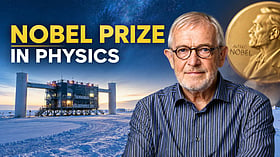
Francis Halzen wins Nobel Physics Prize for Antarctic ‘ghost particle’ hunt
The Kathmandu Post
1 month ago
Antarctic Ice Opens A Stairway To Heavens
Free Press Journal
1 month ago
Francis Halzen Wins Nobel Physics Prize For Antarctic 'Ghost Particle' Hunt
Slashdot
1 month ago
Nobel Prize Physics 2026: Francis Halzen Wins Neutrino
Informed Clearly
1 month ago
IceCube, high-energy neutrinos, and Francis Halzen win 2026’s Physics Nobel
Big Think
1 month ago
South Pole neutrino hunter wins Nobel Prize in Physics
TechCentral
1 month ago
Nobel Physics 2026: How Antarctica's Ice Became A Window To The Universe
NDTV
1 month ago
I’m a physicist who worked on the Nobel-winning neutrino search – here’s how a c...
The Conversation
1 month ago
Nobel Prize in Physics awarded to ‘ghost particle’ scientist
Semafor
1 month ago
Nobel physics prize hails 'ghostly messengers' from space
Inquirer.net (Philippines)
1 month ago
Nobel prize in physics 2026: high energy cosmic neutrinos
The Guardian - Main
1 month ago
Neutrino physicist wins 2026 Nobel Physics Prize
Ars Technica - Science
1 month ago
Scientist wins Nobel Prize in Physics for work on demystifying rare ‘ghost parti...
The Independent
1 month ago
Why Nobel physicist Francis Halzen built a giant ice cube to catch 'ghost partic...
Times of India
1 month ago
Nobel physics prize honours work on ‘ghostly messengers’ from outer space
The Citizen (South Africa)
1 month ago
Francis Halzen wins Nobel Physics Prize for breakthrough neutrino research
India Today
1 month ago
Francis Halzen wins 2026 Nobel Prize in Physics
Daily Maverick
1 month ago
Who Is Francis Halzen? Meet The ‘Neutrino Man’ Who Won The 2026 Nobel Physics Pr...
Free Press Journal
1 month ago
Francis Halzen wins Nobel Prize in Physics for work on ‘ghost particles’
Al Jazeera - News
1 month ago
Francis Halzen wins Nobel physics prize for work on ghost particles
Global News (Canada)
1 month ago
Nobel physics prize awarded for discovery of ‘ghostly messengers’ from the cosmo...
The Conversation
1 month ago
Francis Halzen wins Nobel Physics Prize for Antarctic ‘ghost particle’ hunt
Free Malaysia Today
1 month ago
Francis Halzen wins Nobel Prize in physics for work on mysterious ghost particle...
Korea Times
1 month ago
‘Ghost particle’ hunter Halzen wins Nobel Physics Prize
Cyprus Mail
1 month ago
Belgian physicist wins Nobel for turning Antarctic ice into a telescope
Euronews
1 month ago
Nobel Prize In Physics 2026 Awarded To Francis Halzen For High-Energy Neutrino D...
Free Press Journal
1 month ago
Nobel Prize in Physics honours work on 'ghost messengers from space'
ABC Australia
1 month ago
Francis Halzen awarded physics Nobel for discovery of high-energy neutrinos of a...
Scroll.in
1 month ago
Francis Halzen wins Nobel Prize in physics for work on high-energy neutrinos of...
Washington Times
1 month ago
Francis Halzen wins Nobel Prize in physics for work on high-energy neutrinos of...
New York Post
1 month ago
Physicist hunting 'ghost particles' under South Pole ice since the 1980s wins No...
VnExpress International
1 month ago
Francis Halzen wins Nobel Prize in physics for work on high-energy neutrinos of...
Business Line - Home
1 month ago
More about the Nobel prize winner in Physics
The Economic Times (India)
1 month ago
Francis Halzen Awarded 2026 Nobel Prize in Physics for IceCube Neutrino Observat...
Aravot
1 month ago
Nobel Physics Prize honours work on ‘ghost messengers from space’
Free Malaysia Today
1 month ago
Who is Francis Halzen? The 82-year-old Nobel Prize winner in physics
The Independent
1 month ago
Neutrino experiment pioneer Francis Halzen wins Nobel Prize in Physics
Globe and Mail - World
1 month ago
Nobel Prize in Physics awarded for scientist’s groundbreaking neutrino discovery...
The Independent
1 month ago
Francis Halzen wins Nobel Prize in physics for work on high-energy neutrinos fro...
NPR Top Stories
1 month ago
Francis Halzen wins Nobel Prize in physics for work on high-energy neutrinos of...
Phys.org
1 month ago
Nobel prize in physics goes to Francis Halzen for south pole work on neutrinos
The Guardian - Main
1 month ago
Francis Halzen wins 2026 Nobel Prize in physics
Japan Times
1 month ago
Physics Nobel 2026 goes to Francis Halzen for discovery of high-energy neutrino...
The Hindu
1 month ago
Francis Halzen wins 2026 Nobel Prize in Physics
Rappler
1 month ago
Nobel Prize in Physics awarded to Francis Halzen for groundbreaking work on cosm...
Times of India
1 month ago
Francis Halzen wins Nobel Prize in physics for work on high-energy neutrinos of...
Stuff.co.nz
1 month ago
Francis Halzen Wins Nobel Prize In Physics For Work On High-Energy Neutrinos Of...
World News - Breaking News, Top Stories
1 month ago
Francis Halzen wins 2026 Nobel Prize in Physics
South China Morning Post
1 month ago
Nobel prize in physics awarded for discovery of high-energy neutrinos
New Scientist
1 month ago
Nobel Prize in Physics Is Awarded to Francis Halzen
The New York Times - Homepage
1 month ago
Nobel Physics Prize goes to Francis Halzen for neutrino work
Deutsche Welle (DW) English
1 month ago
Francis Halzen wins 2026 Nobel Prize in Physics
Channel NewsAsia (CNA)
1 month ago
Francis Halzen awarded Nobel in Physics for discovery of high-energy neutrinos
India Today
1 month ago
Nobel Prize in Physics goes to Francis Halzen
Hacker News
1 month ago
2026 Nobel Prize in Physics awarded to Francis Halzen for discovery of high-ener...
Scientific American
1 month ago
Francis Halzen wins Nobel Physics Prize for Antarctic 'ghost particle' hunt
The Express Tribune
1 month ago
Nobel physics prize awarded for detection of ghostly neutrinos
Nature
1 month ago
Daily briefing: Physics Nobel for founder of neutrino-hunting observatory
Nature