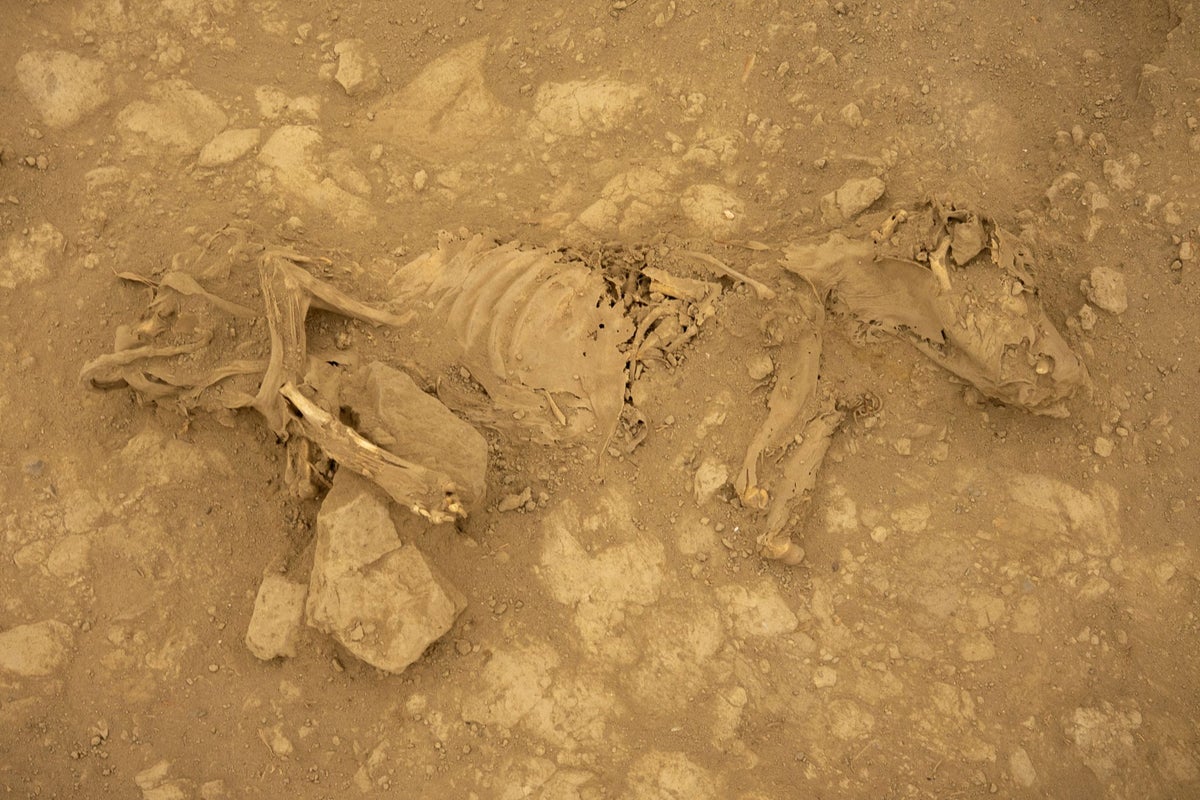
Archaeologists in Peru uncover about 1,200-year-old remains of hairless dogs at an ancient Wari Empire burial site. Multiple sources report that the discovery includes remarkably preserved mummies, as well as puppies buried alongside humans, indicating that dogs were intentionally included in at least some funerary practices.
The finds provide the first physical evidence in the region for a distinctive type of hairless dog. Observations from the remains, including dental features and hints about diet, are used to suggest how these animals were cared for and treated in the past. One outlet emphasizes how the arrangement of burials and the condition of the dogs offer clues about breeding and husbandry, while also pointing to evidence that some animals may have been discarded or otherwise managed differently.
Together, the coverage focuses on what the remains reveal about ancient Peruvian relationships with these dogs, and on why the discovery matters for understanding the breed’s presence and care during the Wari period.