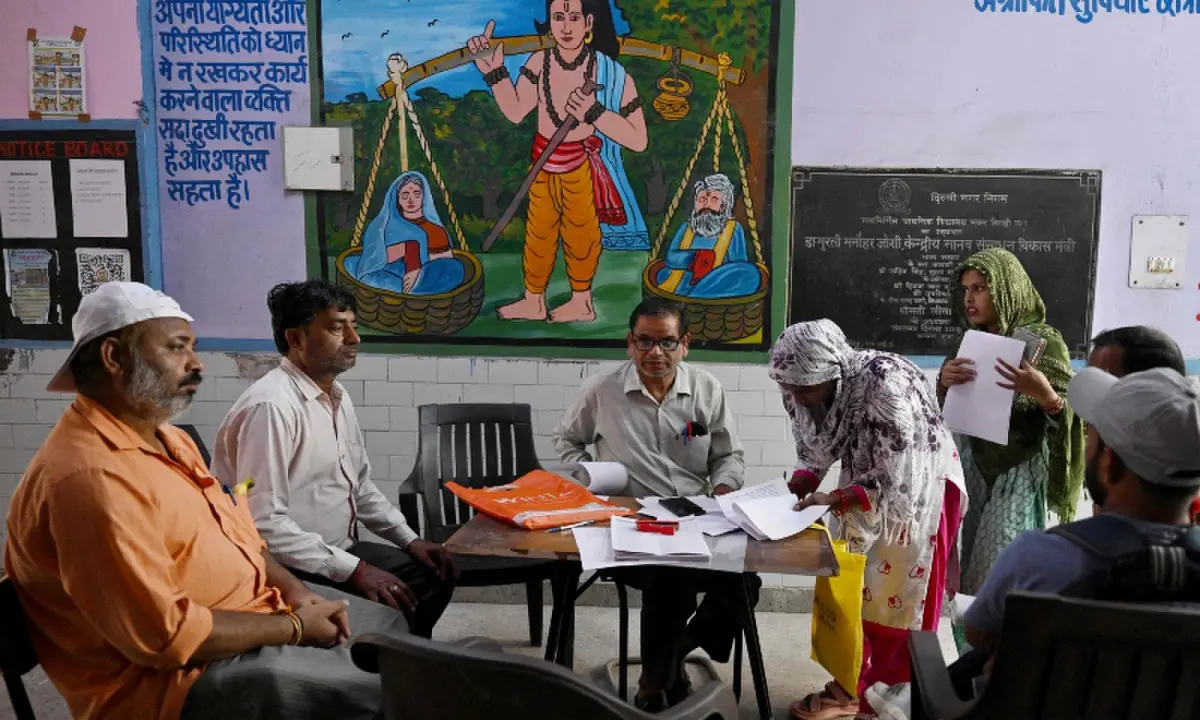
India is conducting a large voter list overhaul that requires people whose names are being reviewed to prove their eligibility again, prompting widespread concern. Stories highlighted by multiple outlets describe voters such as Laddli Khatun submitting documents in Delhi as part of the Election Commission of India’s Special Intensive Revision (SIR), with many saying they struggle to link themselves—directly or through parents or grandparents—to the rolls from 2002-03.
Reported figures cited by opponents and Indian media say more than 133 million names have been removed from the draft rolls, including tens of millions marked as deceased. Critics and opposition parties argue the process shifts the “burden of proof” onto voters and could lead to mass disenfranchisement, particularly affecting women, minorities and people living in poverty or with limited access to records. The Election Commission denies wrongdoing and says the revision follows legal procedures.
Outlets also report that automated checks flag “logical discrepancies” and additional cases for further review, with independent analysis suggesting Muslims are disproportionately represented among those flagged. The Supreme Court has said exclusion from electoral rolls does not by itself establish foreign citizenship, though some media reports describe people being accused of being undocumented migrants after being removed. Demonstrations in New Delhi include calls for the chief election commissioner to resign, allegations that the exercise favours Prime Minister Narendra Modi’s BJP, and concerns that those excluded may face broader citizenship consequences.