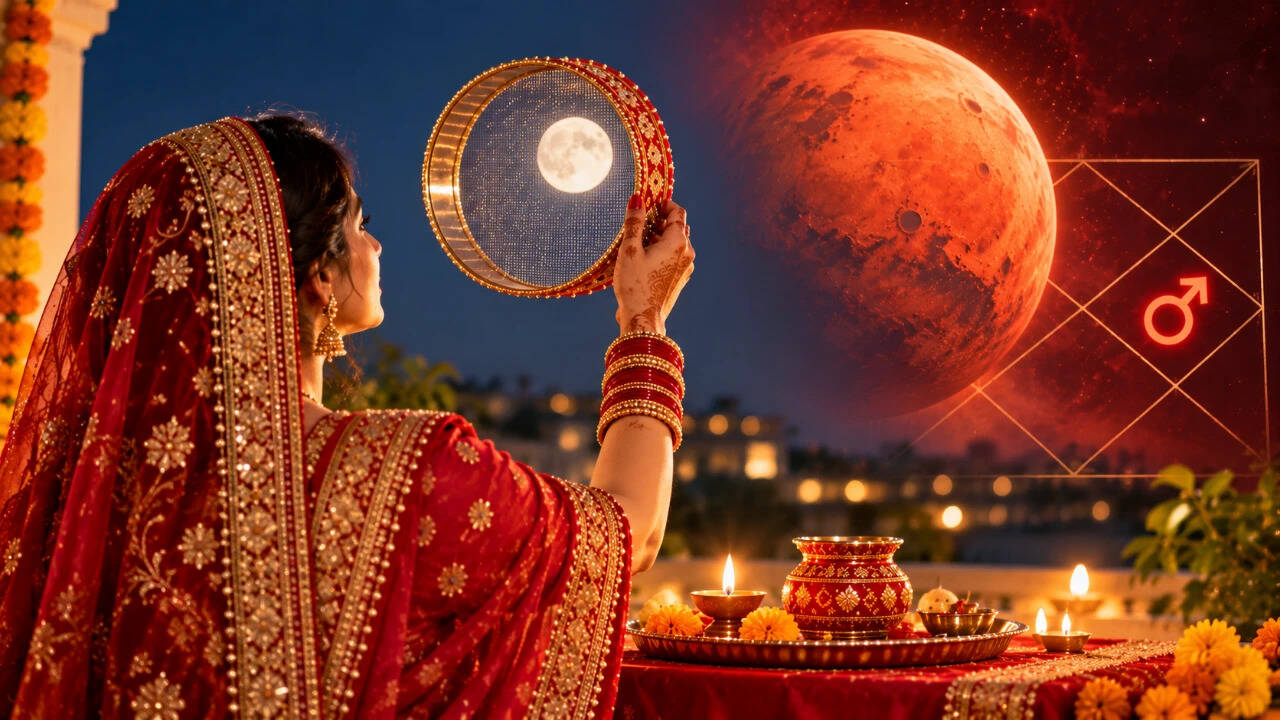
Karwa Chauth in 2026 is widely reported as falling on October 29, with fasting observed from sunrise to moonrise and the fast ending after the moon is sighted. Multiple outlets describe the rituals as centred on worshipping figures such as Karva Mata (Karwa/“Karva Mata”), along with moon and related deities, followed by offering water after seeing the moon.
Several articles add cultural and practical detail. Times of India provides city-wise or location-based timing guidance, including examples for Delhi NCR, and describes preparations such as home decorations and wearing traditional attire. NDTV focuses on timing guidance such as moonrise visibility by city and on the calendar basis for why the date can shift year to year.
Outlets also differ in emphasis about who observes the fast. One Times of India story highlights that traditions can include support for “Manglik” women, tying the festival’s perceived benefits to horoscope themes involving Mars and an “exalted Moon.” Free Press Journal covers how unmarried women may observe Karwa Chauth voluntarily, including possible variations in fasting strictness and rituals compared with the more commonly described married-women observance.