


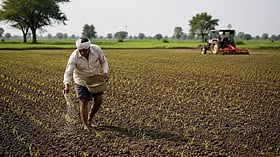
Wheat sowing in India is progressing slowly, with acreage reaching about 11,000 hectares as of Oct 23, well below the roughly 27,000 hectares reported for the same period last year. Multiple outlets cite Agriculture Ministry data and link the delay to deficient southwest monsoon conditions, which reduce residual soil moisture and can constrain irrigation for the winter rabi season.
Outlets also note that India received 13% below-normal rainfall during the June–September monsoon, with particular pressure in major wheat-growing states. Punjab and Rajasthan are described as facing rainfall deficits and below-normal reservoir storage at the end of September, affecting water availability during planting. Beyond wheat, coverage for other rabi crops is said to be down, including lower sowing for rice and pulses. The government’s stated target for wheat output in 2026–27 is 121 million tonnes, slightly above the prior season’s record output of 120.7 million tonnes. While both reports focus on the same underlying figures, one additionally highlights regional concerns and the effect on farmers’ cropping plans.
All sources converge that reduced monsoon rainfall and irrigation access are the main drivers behind the slower start to wheat sowing this season.


