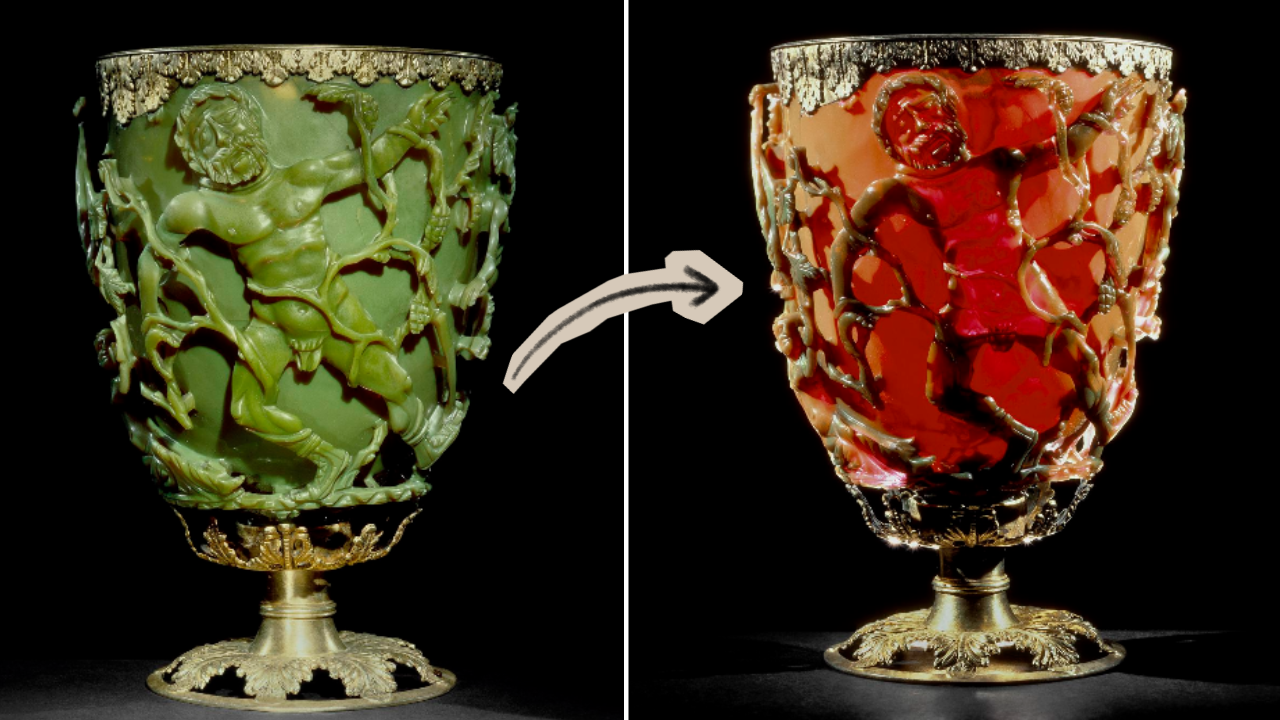
Researchers report recreating the color-shifting glass used in the ancient Roman Lycurgus Cup, an artifact dated to about the 4th century AD. The team focuses on reproducing the cup’s distinctive optical effects, which emerge from a material structure containing extremely small metal nanoparticles.
Across reports, the key context is how the effect works and why it matters. The Lycurgus Cup’s glass is described as dichroic, producing jade green when viewed in reflected light and ruby red when light passes through it, depending on the light source position. One account emphasizes the scale and novelty of the replication work as a scientific advance that goes beyond artistic restoration, while another highlights the artifact’s long-standing status and explains the “reflected versus transmitted” color change more explicitly. Both frame the achievement as a step toward further research using similar materials, with one also noting a modern art component inspired by the recreated glass.