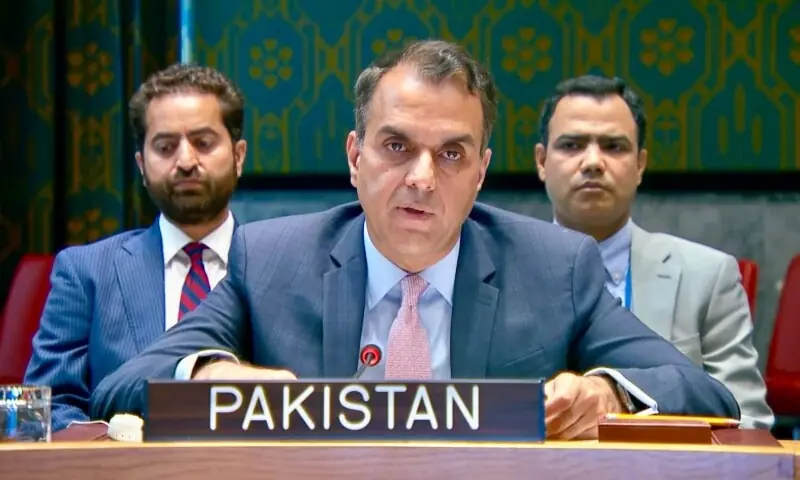
Pakistan warns that tensions around Iran’s nuclear programme have “sharply deteriorated,” and urges all parties to exercise restraint and pursue diplomacy rather than escalation. Acting Permanent Representative Ambassador Usman Jadoon makes the call during a UN Security Council briefing focused on Iran and nuclear non-proliferation, citing mounting tensions and a lack of consensus as reasons a diplomatic settlement is more urgent.
The nuclear dispute centres on international concerns about Iran’s activities and verification of its non-proliferation commitments under the non-proliferation regime. The 2015 agreement between Iran and world powers aimed to limit Tehran’s nuclear programme in return for sanctions relief, but the United States withdrew in 2018 and later efforts to restore the accord failed. Pakistan also calls for the International Atomic Energy Agency (IAEA) to handle technical questions without political interference, arguing that any non-compliance concerns should be addressed through competent technical bodies.
Across outlets, the emphasis is on Pakistan’s diplomatic messaging—restraint, avoiding destabilizing rhetoric, and reinforcing IAEA technical engagement—while the broader context is framed around the stalled attempt to revive the 2015 nuclear deal and current divisions within the Security Council.