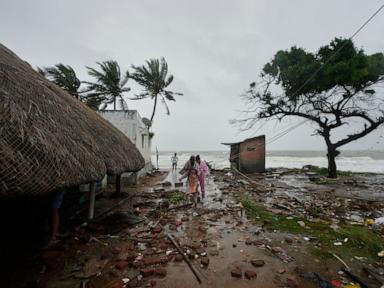
Cyclone Arnab makes landfall on India’s southeastern coast and lashes parts of Andhra Pradesh with strong winds and heavy rain, prompting flash-flood warnings. Dawn reports no initial deaths, while local accounts describe flooding and damage to trees and coastal infrastructure as residents move through waterlogged streets.
Several outlets link the storm’s intensification to unusually warm sea-surface temperatures over the Bay of Bengal and to broader climate-change risks. One report says experts also consider possible influence from El Niño conditions as background ocean and atmospheric warming can amplify extreme weather. Another focuses on the exposure of infrastructure along the coastline, highlighting how the same regions that are investing in large data-centre clusters face heightened hazards.
Across coverage, the emphasis differs between immediate impacts and preparedness, climate and ocean conditions that may influence storm strength, and the longer-term vulnerability of high-value assets. Even where all outlets refer to extreme-weather risk, they vary in whether they lead with the human toll, the meteorological drivers, or the infrastructure exposure.