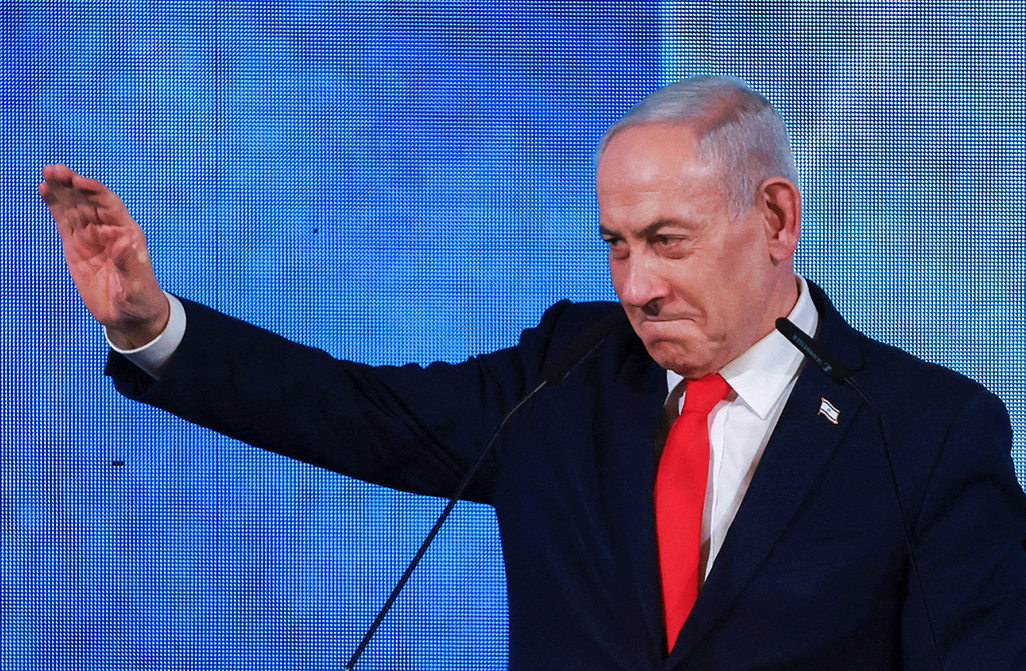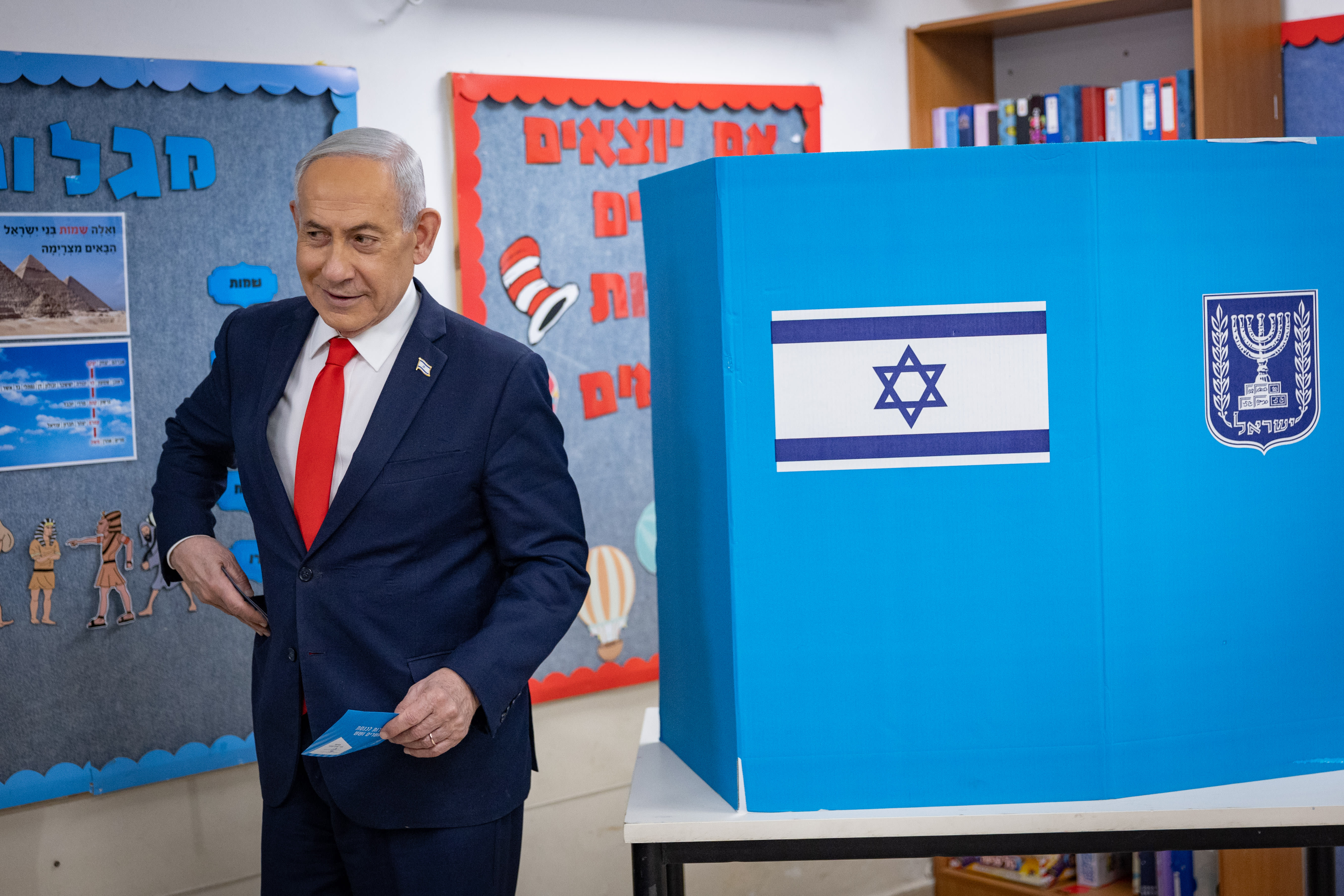
Israel’s general election finishes with no clear path to government: Benjamin Netanyahu’s bloc wins 53 seats, but falls short of the Knesset majority needed to govern on its own. The opposition bloc led by Gadi Eisenkot wins 48 seats, also short of a majority, setting up weeks of coalition negotiations.
Outlets agree that Likud and its allies are the largest single bloc, but they differ in how they frame the immediate political options. Some coverage emphasizes the arithmetic of the vote and the fact that neither side can form a majority without additional partners. Other reporting highlights that the opposition may weigh forming a unity government with Netanyahu or partnering with Israeli-Arab parties, which performed unusually well.
Several sources also point to broader implications for the Middle East, describing the stalemate as opening a negotiating period while Netanyahu remains in a caretaker position. Coverage notes that Arab parties achieve record support in combined terms, which becomes a key factor in coalition math.