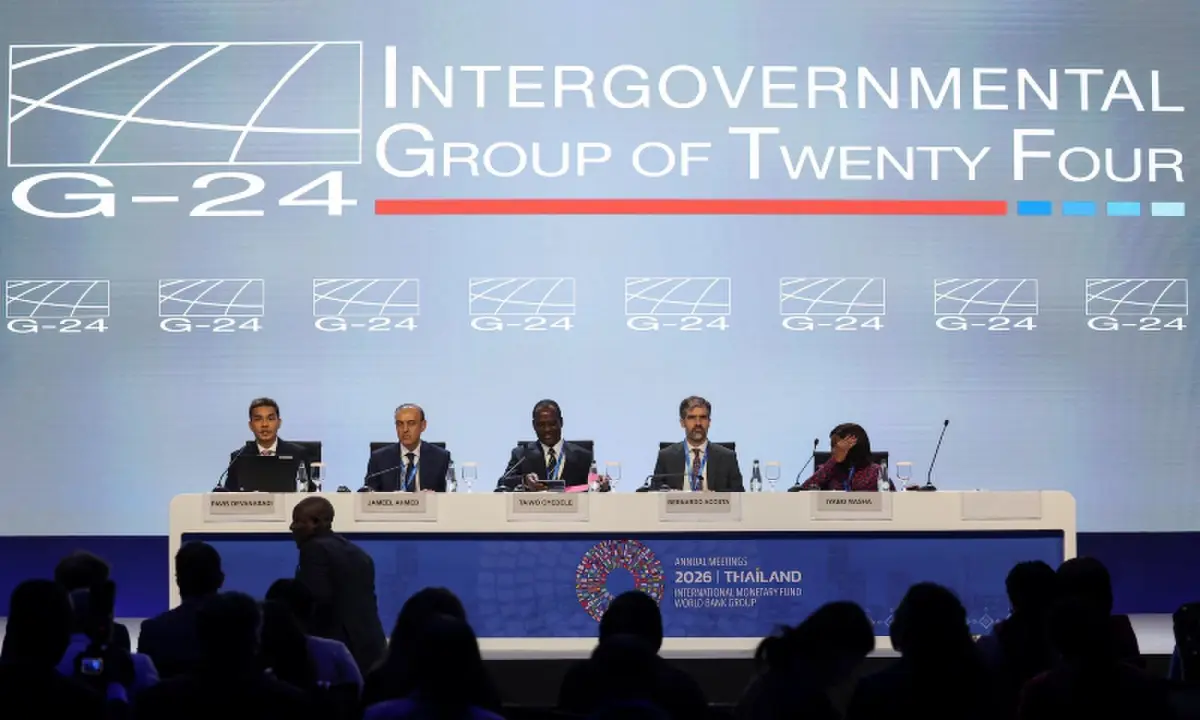
Pakistan assumes the chairmanship of the Group of 24 (G-24) of developing nations, with Finance Minister Muhammad Aurangzeb saying the country will use the role to strengthen the collective voice of developing economies. The chairmanship comes with an emphasis on advancing a more “responsive” and “fair” international financial system, along with calls for renewed international cooperation and stronger multilateral institutions. The reporting also links the agenda to support for development financing, addressing climate shocks, and reducing the effects of global economic fragmentation.
The finance minister sets out three strategic priorities: putting development at the centre of global economic policymaking, reinforcing multilateral frameworks, and working toward a development-oriented international financial architecture. The coverage describes a focus on macroeconomic stability as a foundation for investment, productivity, employment and shared prosperity, and highlights the goal of moving developing and low-income economies beyond crisis management toward sustainable growth.
Across outlets, the framing differs slightly: Dawn foregrounds Pakistan’s detailed policy priorities and broader themes such as multilateral governance and climate shocks, while The Express Tribune leads more directly with the prime minister’s view of the appointment as a diplomatic milestone intended to raise Pakistan’s voice in global economic affairs.