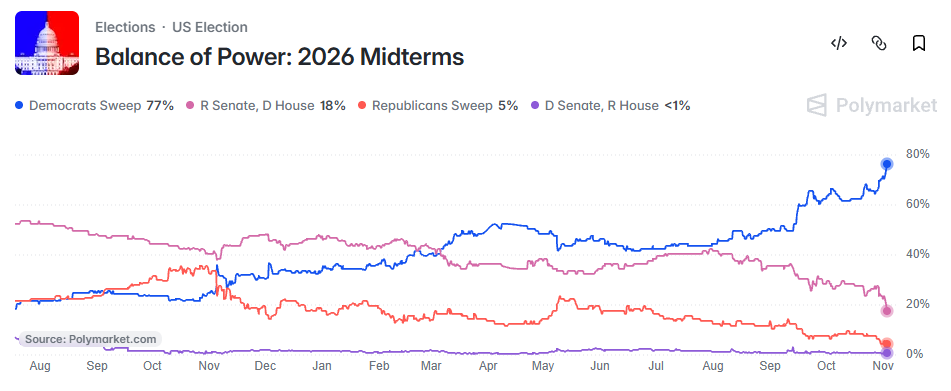
Multiple outlets frame election night as hinging on which party controls the Senate, while also pointing to early signals from specific House contests. ZeroHedge emphasizes how traders and major banks view the House result as largely priced, shifting attention to the “toss-up” Senate races where outcomes could change market sentiment.
ZeroHedge highlights odds cited from Polymarket ahead of the vote and notes Goldman’s view that the Senate is the main potential source of surprise. It describes the Senate math—Democrats needing net gains to take control—and lists several states Cook Political Report rates as toss-ups.
The New Republic takes a different approach, focusing on “domino theory” expectations: if voters shift in one swing area, neighboring or related districts may follow. It lays out eight House races it expects could yield early results that serve as indicators for how the night will unfold, citing Cook Political Report rankings and suggesting which outcomes would signal movement for Democrats.
Together, the coverage agrees that both early House results and late/closer Senate contests are likely to shape how quickly observers update their expectations, but they differ in whether markets or polling-theory and specific district dynamics take priority.