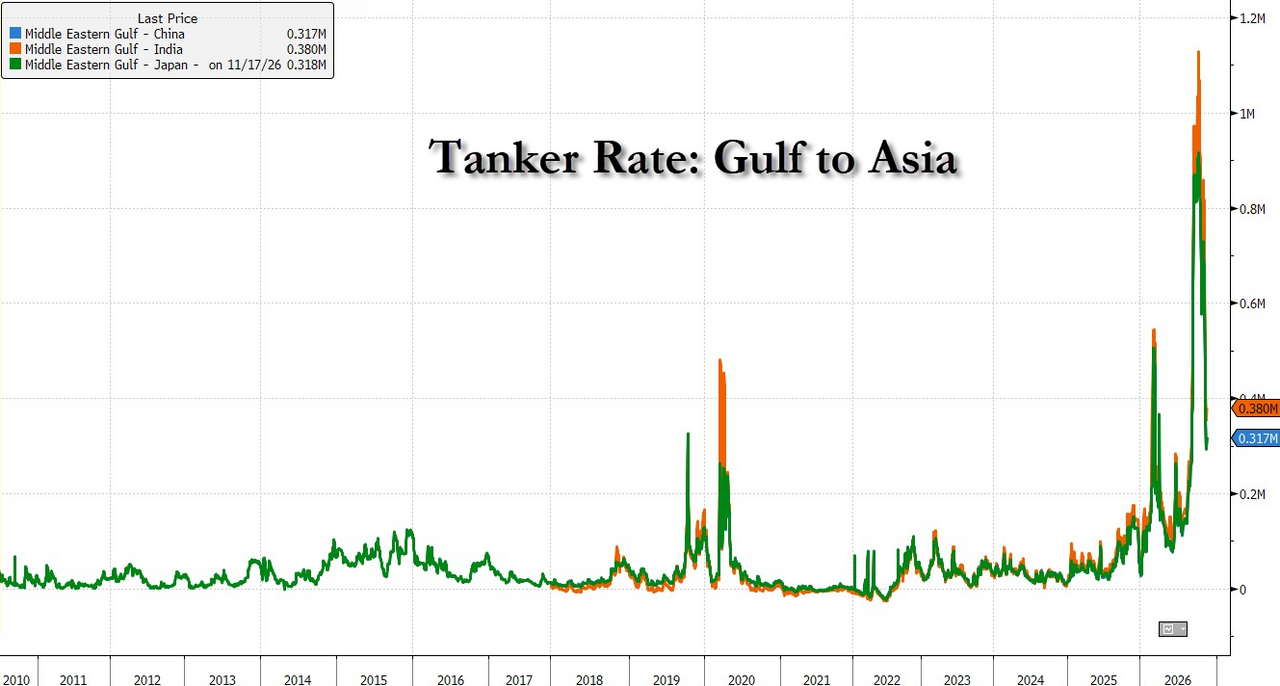
Smaller oil tankers are increasingly used to move crude exports through the Strait of Hormuz as attacks on larger supertankers continue to disrupt shipping capacity. Multiple outlets report that trade is shifting toward Suezmax and Aframax vessels, often supporting “shuttle” and ship-to-ship transfer practices in the Gulf of Oman.
Bloomberg and OilPrice (cited by ZeroHedge) both link the trend to higher risk for very large crude carriers (VLCCs) and rising incidents in the area, which reduce the availability of the larger ships that typically dominate the route. OilPrice/ZeroHedge further cites data discussed by Bloomberg indicating that smaller tankers carried the most crude out of the strait since the war began, with a rebound beginning around September.
The reporting also highlights different angles on Iran’s posture. ZeroHedge/ OilPrice emphasizes Iran’s targeting of supertankers and references to Iran reporting tanker incidents involving mines. It also notes statements from Iran’s top negotiator and parliament speaker suggesting navigation conditions will not return to pre-war norms. Bloomberg focuses more directly on how the operational shift helps sustain oil flows amid the squeeze on supertankers.