Unknown
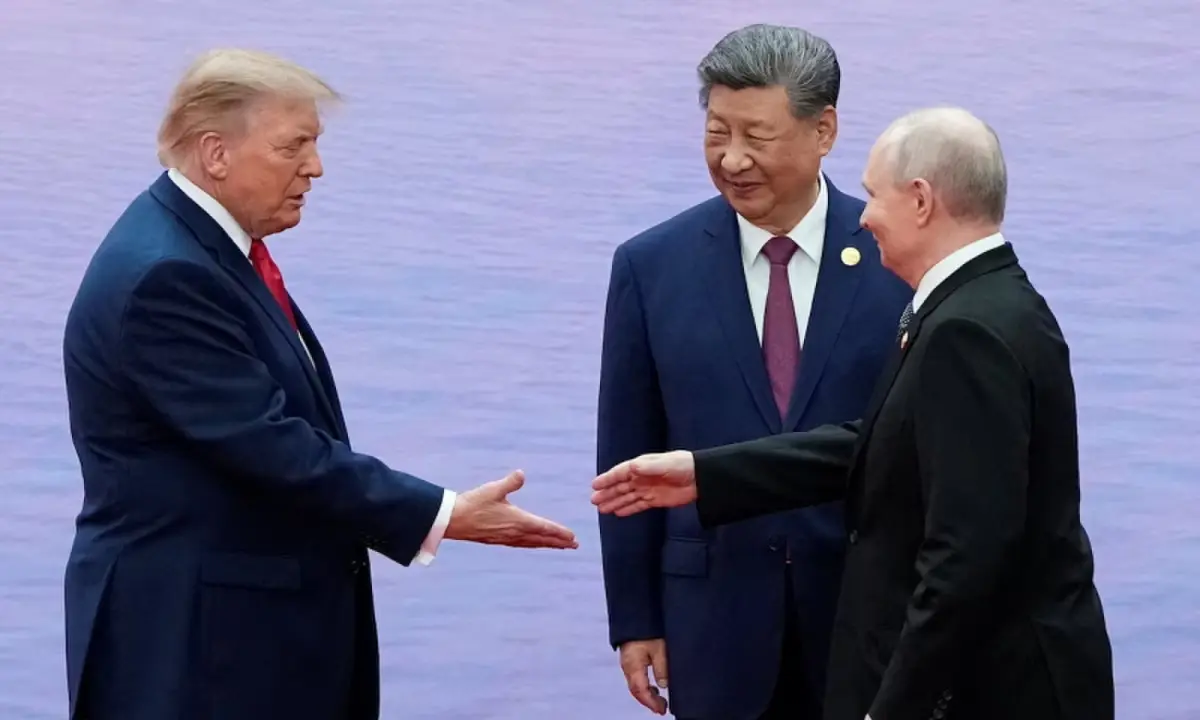
Trump, Xi, Putin conclude historic meeting on Ukraine war, nuclear arms
The Kathmandu Post
Unknown
APEC live: Xi opens summit; flanked by Putin, Trump in 'family photo'
Nikkei Asia
Unknown
Trump, Xi and Putin hold historic trilateral meeting
Nikkei Asia
Unknown
Xi, Trump, Putin put nuclear arms, Ukraine war on table at historic summit
Nikkei Asia
Unknown
APEC live: Trump tells Putin 'We've had a great relationship for many years'
Nikkei Asia
1 hour ago
Once unthinkable, Trump-Xi-Putin summit makes Russia and Beijing the biggest win...
Dawn (Pakistan)
1 hour ago
Ukraine was main topic at Trump-Putin meeting, Kremlin says
Korea Times
2 hours ago
China paints Xi as maker of historic talks with Trump, Putin
Hong Kong Free Press
2 hours ago
Trump's personalised diplomacy hits its limits with 3-way summit
Dawn (Pakistan)
3 hours ago
Trump, Xi and Putin discuss North Korea, nuclear risks at first trilateral talks
NK News
3 hours ago
What historic Xi-Trump-Putin trilateral summit signals for global diplomacy
Channel NewsAsia (CNA)
3 hours ago
Trump gets the grand welcome but little else from Xi and Putin
Cyprus Mail
3 hours ago
Trump, Xi, and Putin: The Three Caudillos
The Dispatch
3 hours ago
China revels in Xi’s ‘Yalta 2.0’ moment
Financial Times - World
4 hours ago
Rival summit on Ukraine pushes for European role in talks to end war
The Independent
4 hours ago
What Trump's meetings in Asia reveal
The Economic Times (India)
5 hours ago
Takeaways from the historic summit among Trump, Xi and Putin
Inquirer.net (Philippines)
5 hours ago
Trump, Xi, Putin Summit Makes History But Not Much Else
Real Clear Politics
6 hours ago
Trump, Xi, Putin release ‘peace declaration’ from unprecedented summit
Rappler
6 hours ago
China-Russia-US trilateral summit declaration towards peace
South China Morning Post
6 hours ago
Trump, Xi and Putin release 'peace declaration' from unprecedented summit
Channel NewsAsia (CNA)
6 hours ago
Trump, Xi, and Putin meet for trilateral summit and issue peace declaration
India Today
7 hours ago
No major agreements from Trump summit with Putin, Xi
CBS News
7 hours ago
The Big Three in Yalta-like summit to calm unsettled waters, by Owei Lakemfa
Vanguard (Nigeria)
7 hours ago
China, US, Russia issue ‘Declaration toward Peace’ after first summit
Hong Kong Free Press
8 hours ago
Trump to speak Friday about summit with Xi and Putin; Zelenskyy meets with U.S....
CBS News
8 hours ago
China-Russia-US Heads of State Declaration toward Peace
Macau News
8 hours ago
APEC leaders back Shenzhen trade agenda as Xi meets Trump and Putin
Macau News
8 hours ago
Trilateral Talks Yield Few Concrete Results
Bloomberg - Markets
8 hours ago
Trump, Xi and Putin release 'peace declaration' from unprecedented summit
GMA News Online / News
9 hours ago
Inside the historic summit between Trump, Xi and Putin
PBS NewsHour
9 hours ago
Trump’s historic summit with Xi, Putin
NBC News - World
10 hours ago
Trump, Xi, and Putin End Summit With ‘Joint Declaration of Peace’
The American Conservative
10 hours ago
3 takeaways from Trump, Xi and Putin's historic summit
PBS NewsHour
10 hours ago
Here's what Trump's meeting with Xi and Putin accomplished as he leaves China
CBS News
12 hours ago
Trump, Xi, Putin Hold Historic Trilateral Talks
Foreign Policy
12 hours ago
Trump China trip: Iran and Ukraine not in 'peace declaration' and more takeaways
ABC News US
12 hours ago
Will the Shenzhen summit safeguard world peace?
Al Jazeera - News
13 hours ago
Trump, Xi and Putin release joint ‘peace declaration’ after unprecedented trilat...
7News Australia
13 hours ago
Xi, Trump and Putin ‘peace declaration’ suggests summit is more than a photo op
South China Morning Post
13 hours ago
Three of a kind? Xi hosts Trump and Putin as Ukraine war grinds on
France 24 - Europe
13 hours ago
Xi-Trump-Putin trilateral meeting: Trump's recognition of China and Russia as 'p...
France 24 English
13 hours ago
Trump, Xi, Putin agree on energy and targeting ICC; no breakthrough on Iran, Ukr...
Washington Times
14 hours ago
Trump touts ‘unbelievable’ summit with Putin and Xi, though peace deals remain e...
NBC News
14 hours ago
Xi and Putin turn well-intentioned Trump into their submissive tool
Washington Examiner
14 hours ago
Trump, Xi, Putin conclude historic summit, but what did the talks actually achie...
Jerusalem Post
14 hours ago
Trump, Xi and Putin hold historic meeting
The Age (Melbourne)
14 hours ago
Trump, Xi and Putin hold historic meeting
Sydney Morning Herald
14 hours ago
Trump, Xi and Putin hold historic meeting
Brisbane Times
14 hours ago
Trump Flaunts Camaraderie With Xi and Putin but Has Little to Show for It
The New York Times - World
14 hours ago
Trump, Xi and Putin hold rare summit but deliver no breakthroughs on nuclear ris...
Fast Company
14 hours ago
Shenzhen summit opens door to great power peace dialogue
Asia Times
15 hours ago
5 takeaways on Trump’s unprecedented summit with Putin, Xi
The Hill
15 hours ago
Xi Jinping, Trump, Putin Meet In Historic Summit, Discuss 'What Is Democracy'
NDTV
15 hours ago
Trump, Putin, Xi issue 4-point declaration after historic summit
Fox News
15 hours ago
Trump-Xi-Putin summit: Five things you need to know
Al Jazeera - News
15 hours ago
Trump, Putin, Xi agree to nuclear risk talks
Vanguard (Nigeria)
15 hours ago
Trump calls Putin his friend, Xi Jinping hugs POTUS in trilateral summit
The Hill
15 hours ago
Trump, Xi, and Putin hold first trilateral summit with key peace declaration
India Today
15 hours ago
Xi-Trump-Putin summit: What did it achieve?
Deutsche Welle (DW) English
15 hours ago
Xi Jinping, Donald Trump and Vladimir Putin have held trilateral talks ― but wha...
Deutsche Welle (DW) English
16 hours ago
Trump-Xi-Putin summit in China: What the three leaders agreed on and what they l...
Mint (India)
16 hours ago
What did Trump, Xi and Putin get out of their historic meeting?
BBC News
16 hours ago
UN reform, denuclearization, and friendship: Takeaways from historic Trump-Putin...
Washington Examiner
16 hours ago
Trump, Xi, Putin's Trilateral Evokes Images of Yalta and Beyond
Bloomberg - Politics
16 hours ago
What Trump, Xi, Putin's historic meeting achieved
The Economic Times (India)
16 hours ago
Europe Tonight: Trump, Putin and Xi hold talks as Ukraine allies meet in Berlin
Euronews
16 hours ago
Takeaways from the historic summit between Trump, Xi and Putin
Korea Times
16 hours ago
Trump, Xi and Putin release 'peace declaration' from unprecedented summit
Korea Times
16 hours ago
Trump, Xi or Putin: Who fared best at China summit?
The Economic Times (India)
17 hours ago
Bulletin PM briefing: Trump meets Putin and Xi at historic summit
The Independent
17 hours ago
Trump, Xi, Putin Set New Priorities After Historic Meeting in China
Bloomberg - Politics
17 hours ago
Trump, Xi, and Putin hold trilateral summit in Shenzhen focusing on nuclear peac...
India Today
17 hours ago
China, Russia and US agree peace declaration with no mention of Ukraine and Iran...
The Guardian - World
17 hours ago
Nuclear arms, energy supplies - but no Kim: the main takeaways from a historic A...
South China Morning Post
17 hours ago
China, US, Russia issue 'Declaration toward Peace'
Inquirer.net (Philippines)
17 hours ago
Trump, Xi or Putin: Who fared best at China summit?
Bangkok Post
17 hours ago
Trump, Xi, Putin issue joint 'peace declaration' after historic summit
Daily Post Nigeria
17 hours ago
Takeaways from the historic summit between Trump, Xi and Putin
Winnipeg Free Press (Canada)
17 hours ago
Trump, Xi and Putin hold historic trilateral talks in China
Nigerian Eye
17 hours ago
Shenzhen summit shows the power the US, China and Russia wield – and their limit...
The Conversation
18 hours ago
China, Russia and the US: 3 presidents, 3 nuclear powers and 1 historic preceden...
South China Morning Post
18 hours ago
Trump, Putin and Xi release 'peace declaration' after historic meeting
BBC News
18 hours ago
Trump, Xi Jinping and Putin hold trilateral summit in Shenzhen addressing peace...
India Today
18 hours ago
Trump Spends Entire Summit Fangirling Over Putin
New Republic
18 hours ago
Trump Warmly Greets 'My Friend' Putin, Who Says Ukraine Not Interested In Peace
ZeroHedge
18 hours ago
NATO secretary general calls Trump, Putin and Xi meeting "normal"
Ukrainska Pravda
18 hours ago
Trump, Xi, Putin summit: What was it all about?
France 24 English
18 hours ago
Trump, Xi, Putin wrap up historic summit with nuclear arms control on agenda
Radio Free Asia (RFA)
18 hours ago
Xi, Trump and Putin Wrap Historic Trilateral in China
Bloomberg - Markets
18 hours ago
Trump, Xi Jinping and Putin meet for historic trilateral summit at APEC in Shenz...
India Today
18 hours ago
Trump, Xi, Putin End Historic Summit With Denunciation of Nuclear War
The Wall Street Journal - World
18 hours ago
China, US, Russia issue 'peace declaration' after first summit
Buenos Aires Times
18 hours ago
No movement on a Ukraine deal after Trump's meeting with Putin and Xi
CBS News
18 hours ago
‘Really making history’: five takeaways from the meeting between Trump, Xi and P...
The Guardian - World
19 hours ago
No major breakthroughs as Trump, Xi and Putin sit down for historic meeting
Belfast Telegraph
19 hours ago
Trump, Xi and Putin hold first-ever three-way talks, discussing nuclear arms and...
BNN Bloomberg
19 hours ago
Asia watches from the outside waiting to see if Xi-Trump-Putin talks bear fruit
South China Morning Post
19 hours ago
Trump wraps China summit with Xi and Putin
CBS News
19 hours ago
Winners and Losers From Trump, Xi and Putin's Summit To Decide World's Fate
Newsweek
19 hours ago
Trump, Putin and Xi declare 'peace' after leaders summit
Toronto Sun
19 hours ago
China, US, Russia issue ‘peace declaration’ after first summit
The Punch (Nigeria)
19 hours ago
Handshakes, hugs and subtle power plays: decoding the Xi-Trump-Putin dynamic in...
South China Morning Post
19 hours ago
US, China, Russia sign ‘peace declaration’ after historic Trump, Xi, Putin meeti...
Dawn (Pakistan)
19 hours ago
Trump, Xi and Putin’s Warless Peace Declaration: Dissected
Newsweek
19 hours ago
Trump sits down with Xi Jinping and Vladimir Putin for historic meeting
CBS News
19 hours ago
Trump holds historic meeting with Xi and Putin
NBC News
19 hours ago
Trump, Xi and Putin hold landmark talks in Shenzhen
Semafor
20 hours ago
Trump, Putin and Xi say nuclear war ‘must never be fought’ in joint peace declar...
Scroll.in
20 hours ago
‘Groundbreaking’ Trump-Xi-Putin summit: Five key takeaways
Al Jazeera - News
20 hours ago
Putin, Trump and Xi Call for UN Reform, Nuclear Dialogue in ‘Declaration on Peac...
Kyiv Post
20 hours ago
China, US, Russia Issue Joint ‘Peace Declaration’ After First Leaders’ Summit
Nigerian Eye
20 hours ago
What to know about Xi, Putin and Trump's historic trilateral summit
France 24 English
20 hours ago
APEC summit: Trump, Xi, Putin talks end with 'peace declaration'
Deutsche Welle (DW) English
20 hours ago
Xi, Trump and Putin hail ‘groundbreaking’ meeting
Financial Times
20 hours ago
China, US, Russia issue ‘peace declaration’ after first summit
Vanguard (Nigeria)
20 hours ago
Trump greets Putin: 'He's my friend'
The Hill
20 hours ago
Trump, Xi, Putin hold first-ever three-way talks
Korea Times
20 hours ago
Trump calls Putin a ‘friend’ during sideline meeting at APEC
Washington Examiner
20 hours ago
Behind Trump Meeting, Xi and Putin Share a Vision of Usurping U.S. Power
The New York Times - World
20 hours ago
China and Russia release 'peace declaration' after Trump, Xi, Putin meeting
Dawn (Pakistan)
20 hours ago
Trump meets with Xi Jinping and Vladimir Putin in historic sit-down | Special Re...
CBS News
20 hours ago
First Thing: Trump, Xi and Putin hold historic trilateral meeting in China
The Guardian - US News
20 hours ago
Trump, Xi, Putin issue 4-point 'declaration toward peace' after summit
The Hill
20 hours ago
China issues 'peace declaration' agreed with Trump and Putin
Middle East Eye
21 hours ago
Trump meets with 'friends' Xi, Putin: 'We are really making history’
The Hill
21 hours ago
China-Russia-U.S. trilateral summit: Xi, Putin, Trump call for cooperation to co...
The Hindu
21 hours ago
Trump, Xi, & Putin Hold First-Ever Trilateral Summit As A Multipolar World T...
ZeroHedge
21 hours ago
Trump, Putin and Xi talk nuclear weapons and Ukraine
Sydney Morning Herald
21 hours ago
Trump, Putin and Xi talk nuclear weapons and Ukraine
Brisbane Times
21 hours ago
Trump, Putin and Xi talk nuclear weapons and Ukraine
The Age (Melbourne)
21 hours ago
Trump, Xi and Putin Meet: What Was the Outcome of the Summit?
NBC News
21 hours ago
APEC Summit 2026 In China: Key Takeaways From Trump-Xi-Putin Talks On Nukes, War...
Free Press Journal
21 hours ago
China, Russia release ‘peace declaration’ after Trump, Xi, Putin meeting
Free Malaysia Today
21 hours ago
What Trump, Xi and Putin agreed at historic summit in China
The Independent
21 hours ago
Putin displayed rarely seen gesture when meeting with ‘friend’ Trump
Metro
21 hours ago
Trump, Putin and Xi Hold First Meeting
The Rio Times
21 hours ago
Watch: Trump calls for ‘open, respectful dialogue’ on global issues at trilatera...
The Hindu
21 hours ago
Nuclear arms control dominates superpower three-way as US, Chinese and Russian p...
7News Australia
21 hours ago
Xi, Putin, Trump reaffirm nuclear war 'must never be fought' in joint declaratio...
India Today
21 hours ago
Trump, Xi & Putin sign 'Declaration Toward Peace', take 4 big pledges
Times of India
21 hours ago
'Who is he?' Trump jokes with Putin ahead of historic trilateral meeting with Xi
Times of India
22 hours ago
First-ever meeting with Donald Trump, Vladimir Putin and Xi Jinping ends with no...
Daily Mail - News
22 hours ago
Xi, Trump, and Putin Summit Makes History but Not Much Else
TIME.com
22 hours ago
Trump, Xi and Putin approve a joint peace declaration without mentioning Ukraine
Ukrainska Pravda
22 hours ago
Leaders of the US, China and Russia meet in Shenzhen to discuss nuclear arms and...
India Today
22 hours ago
Putin on historic trilateral summit with Trump and Xi: 'Nobody expected everythi...
PravdaReport
22 hours ago
Donald Trump, Vladimir Putin and Xi Jingping pledge 'no nuclear wars must be fou...
Mirror
22 hours ago
'We are making history,' says Trump at historic trilateral with Xi and Putin
France 24 English
22 hours ago
Trump, Xi and Putin Hold Unprecedented Trilateral Meeting
Bloomberg - Markets
22 hours ago
What Happens After the Hugs and Handshakes as Xi, Trump and Putin Meet
Bloomberg - Politics
22 hours ago
Putin, Trump, and Xi Jinping Adopt Peace Declaration
Nasha Niva
22 hours ago
APEC final day in photos: Trump, Xi and Putin shake hands; Takaichi kept at a di...
CNBC - Top News
22 hours ago
Trump says summit with Xi, Putin ‘making history’
Hong Kong Free Press
22 hours ago
APEC Summit: Lots of gloss, little real progress?
France 24 English
22 hours ago
US, China can help end Ukraine war, Trump tells Xi before trilateral with Putin
Daily Maverick
22 hours ago
Xi, Trump, Putin: historic summit ends, outcome unclear
France 24 English
22 hours ago
(6th LD) Trump, Xi, Putin hold unprecedented 3-way summit with nuclear arms redu...
Yonhap
22 hours ago
Trump's historic summit with Xi, Putin marks diplomatic milestone, but breakthro...
Fox News
22 hours ago
Trump, Xi and Putin meet in Shenzhen
Globe and Mail - World
23 hours ago
Who is he? He is my friend: Trump greets Putin at the APEC summit
The Hindu
23 hours ago
Xi, Trump and Putin hold unprecedented trilateral summit in China
Dawn (Pakistan)
23 hours ago
Trump calls Putin ‘my friend’ as the pair shake hands
Globe and Mail - World
23 hours ago
'Making history': Trump, Putin and Xi meet in unprecedented China summit
World & Nation
23 hours ago
WATCH: Trump's trilateral meeting with Xi and Putin begins
ABC News US
23 hours ago
APEC Summit: Trump, Putin, Xi hold 'historic' meeting
France 24 English
23 hours ago
The Latest: Trump meets Putin and Xi for historic talks in China
Winnipeg Free Press (Canada)
23 hours ago
Trump, Xi and Putin meet for historic trilateral summit in China
Globe and Mail - World
23 hours ago
Apec Summit: Trump, Putin and Xi's Statements in Full at Unprecedented Talks
Bloomberg - Politics
23 hours ago
Trump, Xi and Putin hold historic first trilateral summit in ‘groundbreaking’ st...
Sun Online (Maldives)
23 hours ago
Trump, Xi and Putin Meet for Trilateral Summit
Bloomberg - Politics
23 hours ago
Xi Hosts 'Groundbreaking' Trilateral With Trump, Putin
Bloomberg - Politics
23 hours ago
(5th LD) Trump, Xi, Putin hold unprecedented 3-way summit with nuclear arms redu...
Yonhap
23 hours ago
Xi, Trump and Putin begin unprecedented summit in China
Dawn (Pakistan)
23 hours ago
Trump, Xi and Putin meet as global alliances hang in the balance
NPR Top Stories
23 hours ago
US, Russia and China hold trilateral meeting in Shenzhen to discuss key global i...
India Today
1 day ago
Trump, Xi and Putin focus on nuclear arms, energy and Ukraine in Shenzhen talks
India Today
1 day ago
Vladimir Putin ‘in excellent mood’ after meeting with ‘friend’ Donald Trump
The Independent
1 day ago
Trump puts nuclear weapons in spotlight at unprecedented summit with Xi and Puti...
Japan Times
1 day ago
Trump Meets Xi And Putin In Historic Summit—‘We Are Choosing A Different Course’
Forbes
1 day ago
Trump, Xi and Putin show different priorities for China summit
Washington Times
1 day ago
Xi-Trump-Putin trilateral breaks historic ground
South China Morning Post
1 day ago
Who’s who in Shenzhen: the priorities revealed by Xi-Trump-Putin summit rosters
South China Morning Post
1 day ago
Watch: Trump, Putin and Xi sit down for historic three-way talks
Euronews English
1 day ago
Watch: Trump, Putin and Xi sit down for historic three-way talks
Euronews
1 day ago
Trump, Putin, and Xi meet in Shenzhen for historic trilateral talks on global se...
India Today
1 day ago
Trump-Xi-Putin Share Historic Summit with Ukraine, Iran War at Top of Agenda
Breitbart News
1 day ago
Xi Jinping, Donald Trump and Vladimir Putin begin unprecedented summit in China
France 24 English
1 day ago
(4th LD) Trump, Xi, Putin hold unprecedented 3-way summit with nuclear arms redu...
Yonhap
1 day ago
China, US, Russia leaders issue 'peace declaration' after summit
VnExpress International
1 day ago
Xi, Trump and Putin hold unprecedented summit in China
VnExpress International
1 day ago
China, US, Russia issue 'peace declaration' after first summit
VnExpress International
1 day ago
Xi, Trump and Putin begin unprecedented summit in China
VnExpress International
1 day ago
Extraordinary moment Trump greets Putin at Apec summit: ‘Who is he? He’s my frie...
The Independent
1 day ago
Trump, Putin, and Xi Jinping meet in Shenzhen for trilateral talks on global iss...
India Today
1 day ago
Xi, Trump and Putin begin unprecedented summit in China
Vanguard (Nigeria)
1 day ago
Xi calls for a world free of nuclear weapons at summit
RTE News (Ireland)
1 day ago
Trump praises ‘great relationship’ with Putin after meeting, as Ukraine war take...
CNBC - Finance
1 day ago
Trump meets with ‘friend’ Putin and China’s Xi in bid to discuss nuclear arms an...
Stuff.co.nz
1 day ago
We are really making history, says Trump as meeting with Xi and Putin begins
IrishExaminer.com
1 day ago
Trump, Putin and Xi Begin 3-Way Talks Without Aides in Shenzhen
Kyiv Post
1 day ago
Live Updates: Trump, Xi and Putin Meet for Their First Summit
The New York Times - World
1 day ago
Historic trilateral talks begin: What will Trump, Xi & Putin discuss
Times of India
1 day ago
Xi Hosts ‘Groundbreaking’ Trilateral Meeting With Trump, Putin
Bloomberg - Politics
1 day ago
'3 Nuclear Powers At One Table': Historic Xi-Trump-Putin Meeting In China
NDTV
1 day ago
Trump, Xi and Putin Hold Talks at APEC Summit
Bloomberg - Markets
1 day ago
Trump, Putin, and Xi Begin Trilateral Meeting in Shenzhen
Nasha Niva
1 day ago
Nuclear arms at the center of the Shenzhen trilateral meeting
France 24 English
1 day ago
Trump meets Putin and Xi as trilateral US, Russia, China talks begin
Al Jazeera - News
1 day ago
(3rd LD) Trump, Xi, Putin hold unprecedented 3-way summit, with N. Korea likely...
Yonhap
1 day ago
Watch: Trump greets 'my friend' Putin as pair shake hands
BBC News
1 day ago
(URGENT) Trump, Xi, Putin begin their first-ever trilateral summit in China
Yonhap
1 day ago
Xi, Trump and Putin begin unprecedented trilateral talks in Shenzhen
Channel NewsAsia (CNA)
1 day ago
Xi, Trump and Putin meet for landmark trilateral talks at Apec
South China Morning Post
1 day ago
US Russia and China leaders meet in Shenzhen to discuss global and regional issu...
India Today
1 day ago
What Trump said to Putin ahead of first-ever joint meeting with Xi in China
The Independent
1 day ago
Trump holds bilateral meetings with Putin, Xi
Brisbane Times
1 day ago
Trump holds bilateral meetings with Putin, Xi
The Age (Melbourne)
1 day ago
Trump holds bilateral meetings with Putin, Xi
Sydney Morning Herald
1 day ago
Trump Calls Putin His "Friend" as They Meet in China for Ukraine War Talks
Novinite
1 day ago
Who is he? Trump ribs 'friend' Putin before one-on-one meeting in China
India Today
1 day ago
Watch: Smiling Trump greets ‘friend’ Putin with joke before crunch China meeting
The Independent
1 day ago
Wan-faced Putin is visibly awkward as Trump jokes 'Who is he?' before reassuring...
Daily Mail
1 day ago
Trump-Xi-Putin Meet Explainer: What could the rare Troika summit mean for India...
Business Line - Home
1 day ago
Trump boasts Putin is 'my friend' and tells Xi they should work to end the war i...
Daily Mail
1 day ago
China: Trump calls Putin his "friend" as leaders meet amid in Shenzhen
Euronews English
1 day ago
Trump praises his ‘friend’ Putin as Xi prepares to host historic trilateral meet...
The Independent
1 day ago
Trump boasts Putin is 'my friend' and tells Xi they should work to end the war i...
Daily Mail - News
1 day ago
APEC summit: Trump seeks nuclear arms cuts, but few concrete results expected
France 24 English
1 day ago
Trilateral summit in Shenzhen highlights US Russia and China geopolitical strate...
India Today
1 day ago
Yalta in Shenzhen?
Dawn (Pakistan)
1 day ago
Trump, Xi and Putin take centre stage at APEC
Sydney Morning Herald
1 day ago
Trump, Xi and Putin take centre stage at APEC
The Age (Melbourne)
1 day ago
Trump, Xi and Putin take centre stage at APEC
Brisbane Times
1 day ago
Nuclear arms and ending Iran and Ukraine wars top Trump-Xi-Putin meeting agenda
Belfast Telegraph
1 day ago
Wan-faced Putin is visibly awkward as Trump jokes 'Who is he?' before reassuring...
Daily Mail - News
1 day ago
“He’s My Friend”: Trump to Putin
Bloomberg - Technology
1 day ago
The Shenzhen international system and the trilateral summit between the US China...
India Today
1 day ago
Kremlin claims Ukraine was the main topic of Putin and Trump's meeting
Ukrainska Pravda
1 day ago
Ukraine War Dominates Trump's Interactions With Xi, Putin Ahead Of Trilateral
NDTV
1 day ago
Trilateral summit in Shenzhen focuses on international order and diplomacy
India Today
1 day ago
Trump points at Putin and jokes ‘who is he?’ before saying ‘he’s my friend’
Metro
1 day ago
Europe Today: Xi, Trump and Putin together in a historic trilateral meeting
Euronews
1 day ago
Nuclear arms, wars in Iran and Ukraine to be on the agenda at Trump-Xi-Putin mee...
Globe and Mail - World
1 day ago
Trump and Xi hold bilateral talks at Shenzhen summit ahead of Russia talks
India Today
1 day ago
U.S., China Can Help End Ukraine War, Trump Tells Xi Before Trilateral With Puti...
The Moscow Times
1 day ago
Trump says he and Putin have a 'great relationship' at meeting
BBC News
1 day ago
Trump holds meeting with Putin on sidelines of APEC summit in China, says 'great...
Jerusalem Post
1 day ago
Putin Returns to APEC ‘Family Photo,’ Testing Western Leaders
The New York Times - World
1 day ago
‘It’s my friend’: Moment Trump greets Putin at China summit
Al Jazeera - News
1 day ago
Trump says during meeting with Xi that US and China want to help end war in Ukra...
Ukrainska Pravda
1 day ago
US and China want to help end Ukraine war, Trump says ahead of trilateral with R...
Euronews English
1 day ago
(2nd LD) Trump, Xi, Putin set to hold historic trilateral summit; U.S.-N. Korea...
Yonhap
1 day ago
'He's My Friend': Donald Trump Excitedly Greets Vladimir Putin At Crunch Summit
HuffPost UK
1 day ago
Nuclear arms and ending wars in Iran and Ukraine will top the agenda at Trump-Xi...
News Laundry
1 day ago
Ending Wars, Controlling Nukes Will Top Agenda At Trump-Xi-Putin Meeting
World News - Breaking News, Top Stories
1 day ago
Leaders of US, Russia and China meet in Shenzhen for trilateral summit
India Today
1 day ago
(LEAD) Trump, Xi, Putin set to hold historic trilateral summit; U.S.-N. Korea me...
Yonhap
1 day ago
Zelenskyy says he expects debrief from US envoys on Trump’s talks with Xi and Pu...
Euronews English
1 day ago
Nuclear arms and ending wars in Iran and Ukraine will top the agenda at Trump-Xi...
The Independent
1 day ago
Zelensky stated that Trump and Xi are capable of forcing Putin to stop the war
Nasha Niva
1 day ago
'He's my friend': Trump meets with Putin in China for high-stakes talk on Ukrain...
Washington Times
1 day ago
Trump wants to talk nuclear with Putin and Xi
Al Jazeera - News
1 day ago
Trump, Xi, Putin begin historic meeting with Ukraine war on agenda
Al-Monitor
1 day ago
China and Russia release 'peace declaration' after Trump, Xi, Putin meeting
Al-Monitor
1 day ago
Trump, Xi, Putin conclude historic meeting on Ukraine war, nuclear arms
Al-Monitor
1 day ago
Trump, Xi and Putin release 'peace declaration' from unprecedented summit
Al-Monitor
1 day ago
US, China can help end Ukraine war, Trump tells Xi before trilateral with Putin
Al-Monitor
1 day ago
Trump Meets ‘My Friend’ Putin for First Time in Over a Year
Bloomberg - Politics
1 day ago
China, US, Russia issue 'Declaration toward Peace' after first summit
Al-Monitor
1 day ago
China, US, Russia issue 'peace declaration' after first summit
Al-Monitor
1 day ago
Trump says summit with Xi, Putin 'making history'
Al-Monitor
1 day ago
Xi, Trump and Putin begin unprecedented summit in China
Al-Monitor
1 day ago
Trump pushes for three-way nuclear deal as Russia and China show little interest
NBC News
1 day ago
‘No Decisions Without Ukraine’: Zelensky Warns Ahead of China Summit
Kyiv Post
1 day ago
Trump, Xi and Putin meeting: Nuclear arms, Ukraine war and Iran on agenda
Business Line - Home
1 day ago
Trilateral summit in Shenzhen sees the US Russia and China discuss key strategic...
India Today
1 day ago
Trump Pushes for Reluctant Xi to Curb China’s Nuclear Arsenal
Bloomberg - Politics
1 day ago
Trump meets Xi and Putin in China with nuclear arms and two wars on the table
Star Tribune
1 day ago
Xi, Putin blast West's protectionism & sanctions before meeting Trump
Times of India
1 day ago
Zelenskyy says Trump and Xi Jinping can force Putin to end war
Ukrainska Pravda
1 day ago
Trump, Xi and Putin to hold high-stakes trilateral summit
Financial Times - World
1 day ago
Trump, Xi and Putin hold first-ever three-way talks, discussing nuclear arms and...
Winnipeg Free Press
1 day ago
Trump, Putin begin talks in China amid 33rd meeting of APEC leaders
The Express Tribune
1 day ago
APEC Leaders’ Summit opens in China's Shenzhen ahead of Xi-Trump-Putin trilatera...
The Express Tribune
1 day ago
Ukraine's Zelenskyy reacts to Trump meeting Putin amid ongoing war in Ukraine
NBC News - World
1 day ago
Trump set for historic summit with Putin, Xi
NBC News - World
1 day ago
Zelenskyy Says US Envoys to Brief Allies on Trump-Xi-Putin Talks
Bloomberg - Politics
1 day ago
US Envoys to Debrief Kyiv on Trump’s Shenzhen Talks, Zelensky Says
Kyiv Post
1 day ago
I watched Trump, Xi and Putin gather in China. Here are my top takeaways
CNBC - Finance
1 day ago
Putin Slams Western Moves as Trump Arrives in China
Jowhar.com
1 day ago
Shut out of meeting, Zelenskyy says what he would say to Trump, Xi and Putin
NBC News
1 day ago
Trump, Xi and Putin hold historic talks
Brisbane Times
1 day ago
Trump, Xi and Putin hold historic talks
The Age (Melbourne)
1 day ago
Trump, Xi and Putin hold historic talks
Sydney Morning Herald
1 day ago
Experts discuss trilateral meeting of Trump, Xi and Putin in Shenzhen
India Today
1 day ago
Zelenskyy announces meeting of Ukrainian team with Trump's envoys and European l...
Ukrainska Pravda
1 day ago
Zelenskyy says sanctions from U.S. and China would force Russia into a ceasefire...
NBC News - World
1 day ago
Experts analyse the geopolitical impact of the trilateral summit between Trump,...
India Today
1 day ago
Putin, Trump and Xi Pose for APEC Family Photo Ahead of Historic Summit
Bloomberg - Politics
1 day ago
Ukraine Urges Trump, Xi to Press Putin to End War
Kyiv Post
1 day ago
Xi, Putin condemn sanctions as Trump arrives in China
The Hill
1 day ago
Xi, Putin blast Western ‘protectionism’ and sanctions as Trump lands in China
Cyprus Mail
1 day ago
Putin in Spotlight at APEC Group Photo After Decade of Isolation
Bloomberg - Politics
1 day ago
Trump arrives in China for historic meeting with Xi, Putin
CNBC - Top News
1 day ago
Xi and Putin urge freer trade ahead of Trump summit meeting
Jowhar.com
1 day ago
Watch: Putin, Xi, Trump meet ahead of APEC family photo, trilateral
Times of India
1 day ago
Foreign minister outlines what Ukraine expects from Trump and Xi at talks with P...
Ukrainska Pravda
1 day ago
Putin slams sanctions ahead of summit with Trump, Xi
Channel NewsAsia (CNA)
1 day ago
Putin slams Western sanctions ahead of summit with Trump, Xi
Free Malaysia Today
1 day ago
Putin Slams Sanctions Ahead of Summit with Trump, Xi
Kyiv Post
2 days ago
The U.S.-Chinese-Russian Summit and the Future of Trilateral Nuclear Talks
War on the Rocks
2 days ago
Xi and Putin Blast Western 'Protectionism,' Sanctions Before Meeting Trump at AP...
The Moscow Times
2 days ago
Xi and Putin Blast Western 'Protectionism,' Sanctions as Trump Lands in China
The Moscow Times
2 days ago
Putin meets old friend Xi before Trump visits for an unprecedented meeting
Metro
2 days ago
Xi warns against trade protectionism, Putin slams sanctions ahead of Trump meet
India Today
2 days ago
Three things to watch as Trump, Xi and Putin meet in China
CNBC - Finance
2 days ago
Xi, Putin blast Western 'protectionism', sanctions before meeting Trump at APEC
The Express Tribune
3 days ago
Shenzhen hosts historic trilateral meeting between China US and Russia leaders
India Today
4 days ago
U.S.-China-Russia trilateral summit to take place in Shenzhen on Nov. 19- Xinhua
Investing.com
4 days ago
Putin's Generals Push To Scrap Promise Not To Kill Zelensky, Days Before Trump-X...
ZeroHedge
4 days ago
Ukraine Reacts With Real Exasperation At Putin's Latest Absurd Proposal To End W...
HuffPost UK