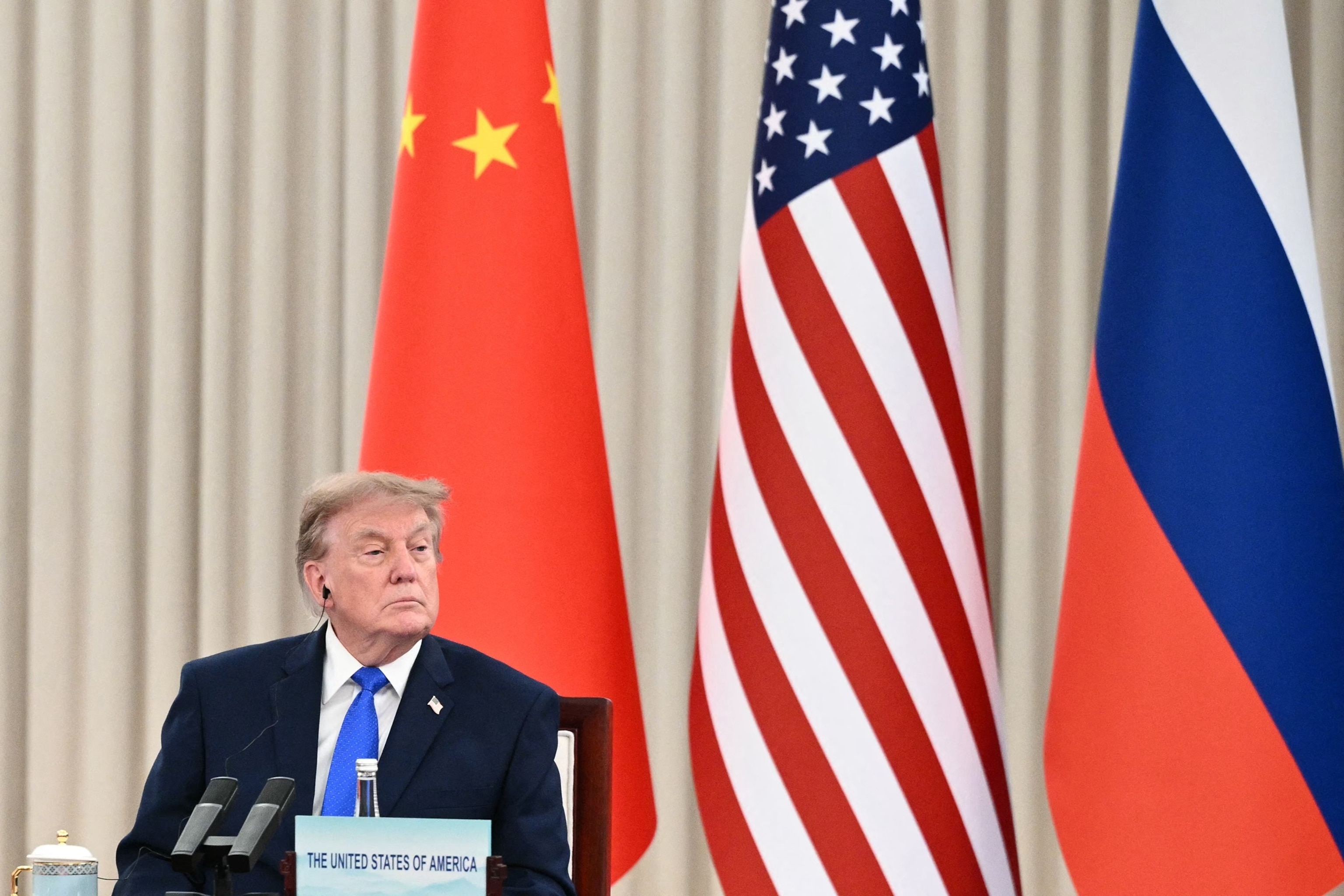
Russian President Vladimir Putin meets with Donald Trump and Xi Jinping in Shenzhen, and Kremlin-linked commentators frame the gathering as a “new Yalta.” Outlet coverage focuses on what Putin gains from the diplomacy and what he does not secure—especially regarding Ukraine. Several summaries note that the summit’s declaration leaves Ukraine unmentioned, with no clear agreement on ceasefire or concessions reported in the provided descriptions.
Context differs by emphasis. One account highlights that Putin publicly rejects a ceasefire while Trump reportedly tells European allies that Putin is serious about peace talks, suggesting a contrast between stated positions and reported messaging. Other outlets describe the meeting as a diplomatic or propaganda “victory” that delivers international attention without establishing new negotiated spheres of influence.
Some coverage underscores that the “Yalta” framing is more rhetorical than substantive, arguing that Russia’s position is not fundamentally changed. Others stress that, even without an “Yalta” outcome, Putin benefits from sitting down with Trump and Xi. Across sources, the shared theme is that Putin’s outcome is partial: political signalling and visibility are gained, but Ukraine-related commitments appear absent from the summit outcomes described.