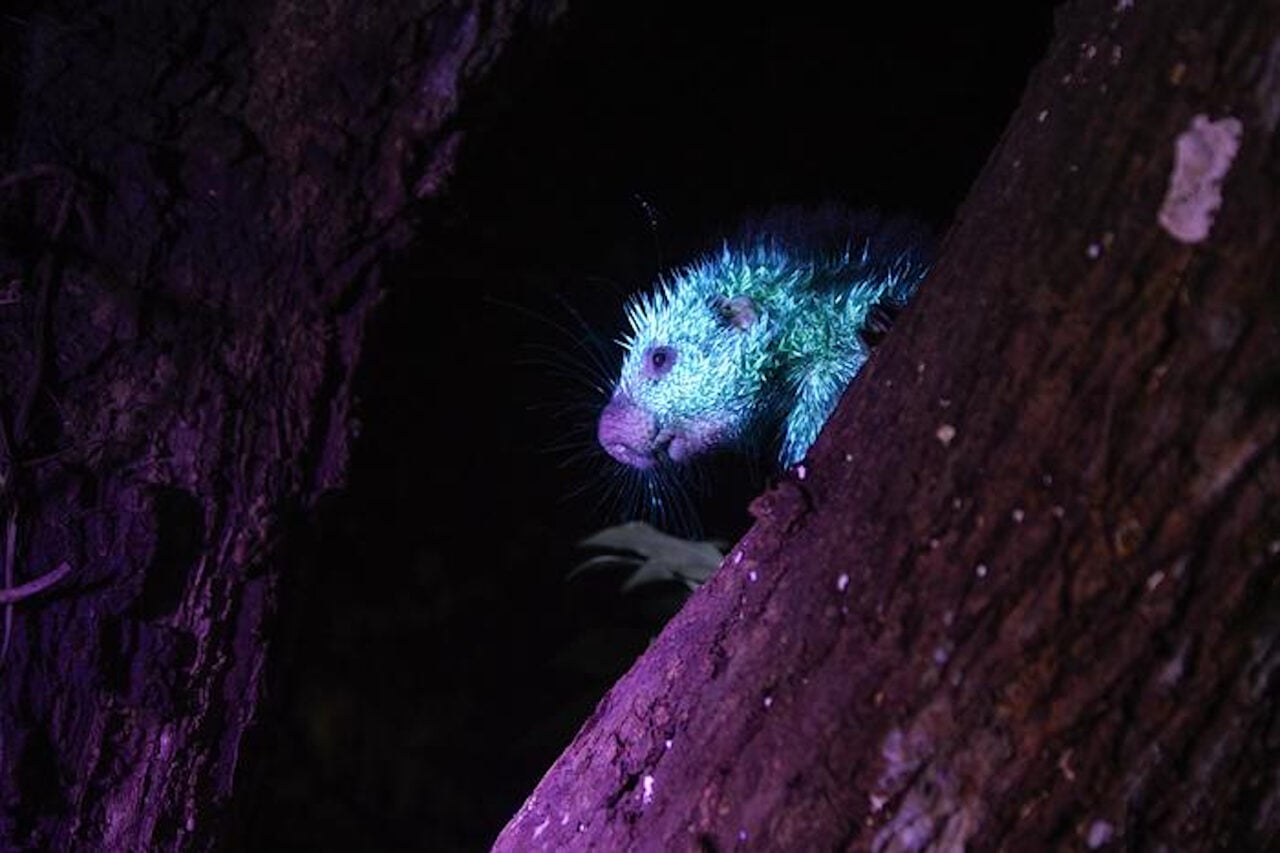
Biologists report that Mexico’s hairy dwarf porcupine displays ultraviolet-induced glow, showing photoluminescence in its tissue. The discovery adds new information about an animal long described as secretive and poorly studied.
Across the outlets, the emphasis is on what the glow means in a broader scientific context. Phys.org frames the finding using the concept of photoluminescence—where short-wavelength light is absorbed and re-emitted at longer wavelengths—and notes that such effects have been documented in more mammals, often from museum specimens rather than live animals. Gizmodo highlights the limited prior knowledge and the shift toward direct observations under UV light, while echoing concerns that data on the species remain scarce.
Both sources present the glow as a starting point for better study of the porcupine’s biology, but they focus on observation and background rather than immediate practical applications.