
Researchers report progress in advanced pancreatic cancer by targeting a biological mechanism linked to aggressive tumour behaviour. According to The Conversation (France), about 97% of patients diagnosed with advanced-stage pancreatic cancer die within five years, highlighting the need for new treatments. The reported study focuses on a drug strategy that aims at a specific protein considered difficult or “impossible to block.” The researchers describe how the medication is designed to interfere with the pathway that enables these tumours to resist existing therapies. They state that the approach can significantly improve outcomes, including doubling survival rates compared with prior expectations described for this stage of disease. The coverage emphasizes the shift from general treatment methods toward therapies that act on defined molecular targets. It does not cite a broader set of comparative results in the provided excerpts, but the central message across the source text is consistent: a targeted drug approach against a challenging protein mechanism shows promise in extending survival for patients with advanced pancreatic cancer.
Pancreatic cancer research targets a previously “undruggable” protein, improving survival rates
Researchers report progress in advanced pancreatic cancer by targeting a biological mechanism linked to aggressive tumour behaviour. According to The Conversation (France), about 97% of patients diagn...
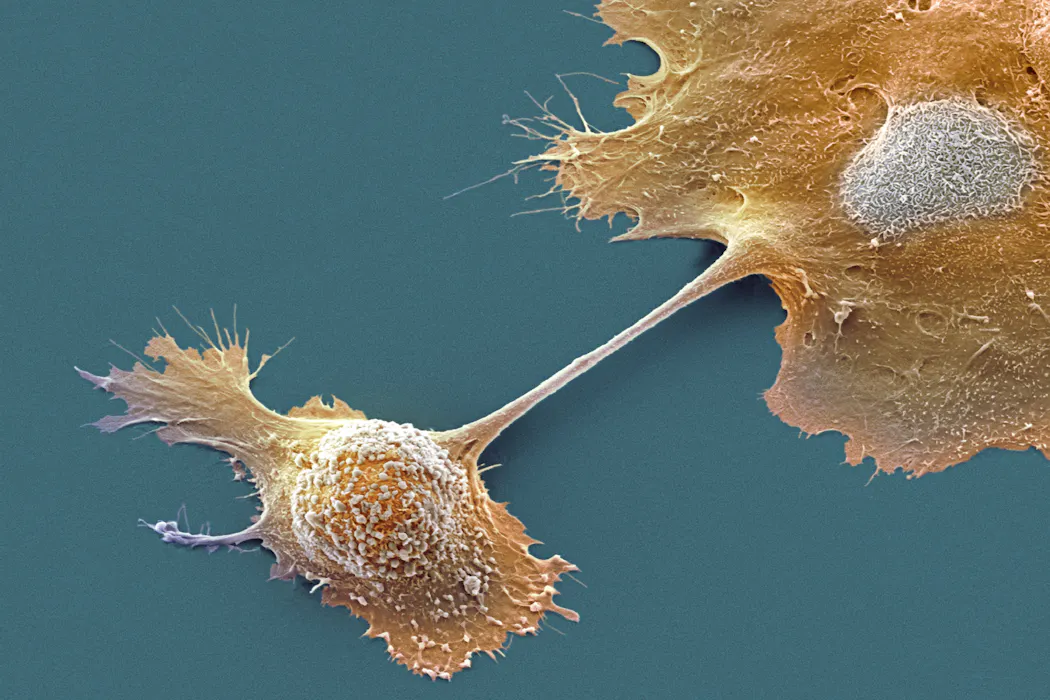
- Advanced pancreatic cancer has a high mortality rate, with about 97% of patients dying within five years after diagnosis.
- Researchers are developing a medication that targets a protein linked to tumour aggressiveness.
- The targeted protein is described as previously “undruggable” or difficult to block.
- The reported approach is said to double survival rates for patients with advanced disease.
- The reports focus on interfering with a specific mechanism thought to drive resistance and poor outcomes.
Environ 97 % des patients atteints d’un cancer du pancréas à un stade avancé décèdent dans les cinq ans qui suivent leur diagnostic. Des chercheurs ont mis au point un moyen de cibler le mécanisme qui rend ces tumeurs si redoutables.
13 hours agoEnviron 97 % des patients atteints d’un cancer du pancréas à un stade avancé décèdent dans les cinq ans qui suivent leur diagnostic. Des chercheurs ont mis au point un moyen de cibler le mécanisme qui rend ces tumeurs si redoutables.
13 hours ago
Law Firms Issue Deadlines for Lead Plaintiffs in Phreesia (PHR) Securities Fraud Lawsuit
Multiple law firms are publicizing a securities class action involving Phreesia, Inc. (NYSE: PHR). The notices say the l...

Missing Victorian hiker Samuel Whitsed vanishes on WA’s Bibbulmun Track
Police and search efforts continue regarding the disappearance of Samuel Robert Whitsed, a 27-year-old hiker who was las...
WHO and Africa CDC launch US$518 million joint Ebola preparedness and response plan
The World Health Organization (WHO) and the Africa Centres for Disease Control and Prevention (Africa CDC) have launched...