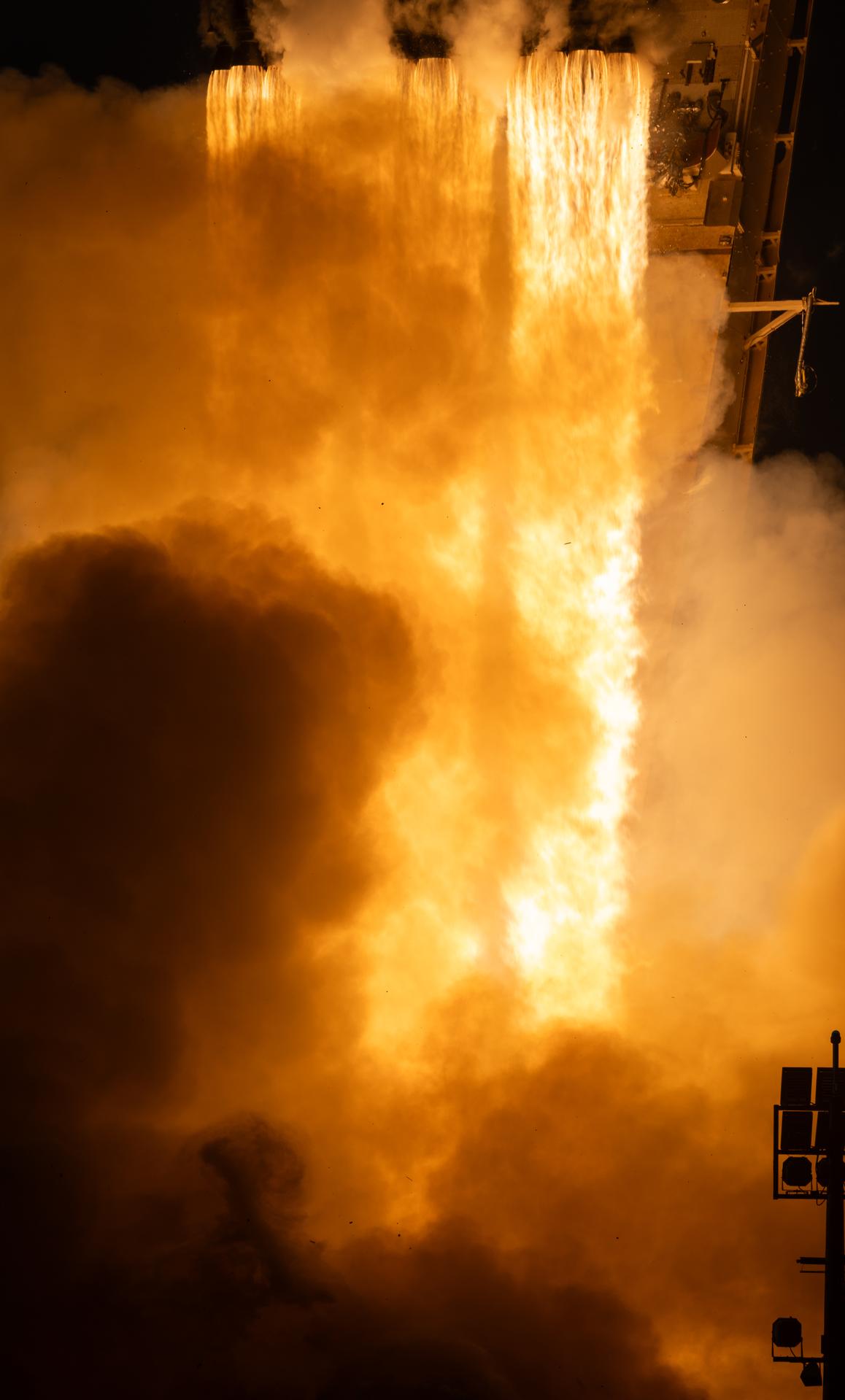
NASA launches its Nancy Grace Roman Space Telescope on a SpaceX Falcon Heavy rocket, beginning a multi-year mission to map large parts of the sky and probe fundamental questions about the universe. After liftoff from Kennedy Space Center, the observatory heads to a final observing location about 1 million miles from Earth and begins a campaign of wide-field surveys.
Roman is designed to view a much larger area of the sky than the Hubble Space Telescope and to collect data suited to studying exoplanets and major cosmic mysteries. Multiple outlets report Roman will search for distant planets, including potentially habitable worlds, while also investigating the “dark universe” by studying dark matter and dark energy. Reporting also emphasizes Roman’s role in surveying galaxies and looking for signals such as supernovae, large-scale patterns in galaxy distributions, and effects like microlensing that can reveal dark matter.
Outlets differ mainly in focus: some highlight the exoplanet “Earth twin” search and technical upgrades such as a coronagraph to reduce starlight glare, while others center on how Roman’s wide, deep mapping helps characterize dark energy and refine understanding of the universe’s expansion and structure. Several outlets also note the observatory’s planned surveys, its longer journey to its destination, and that NASA intends to make the data widely available for researchers.