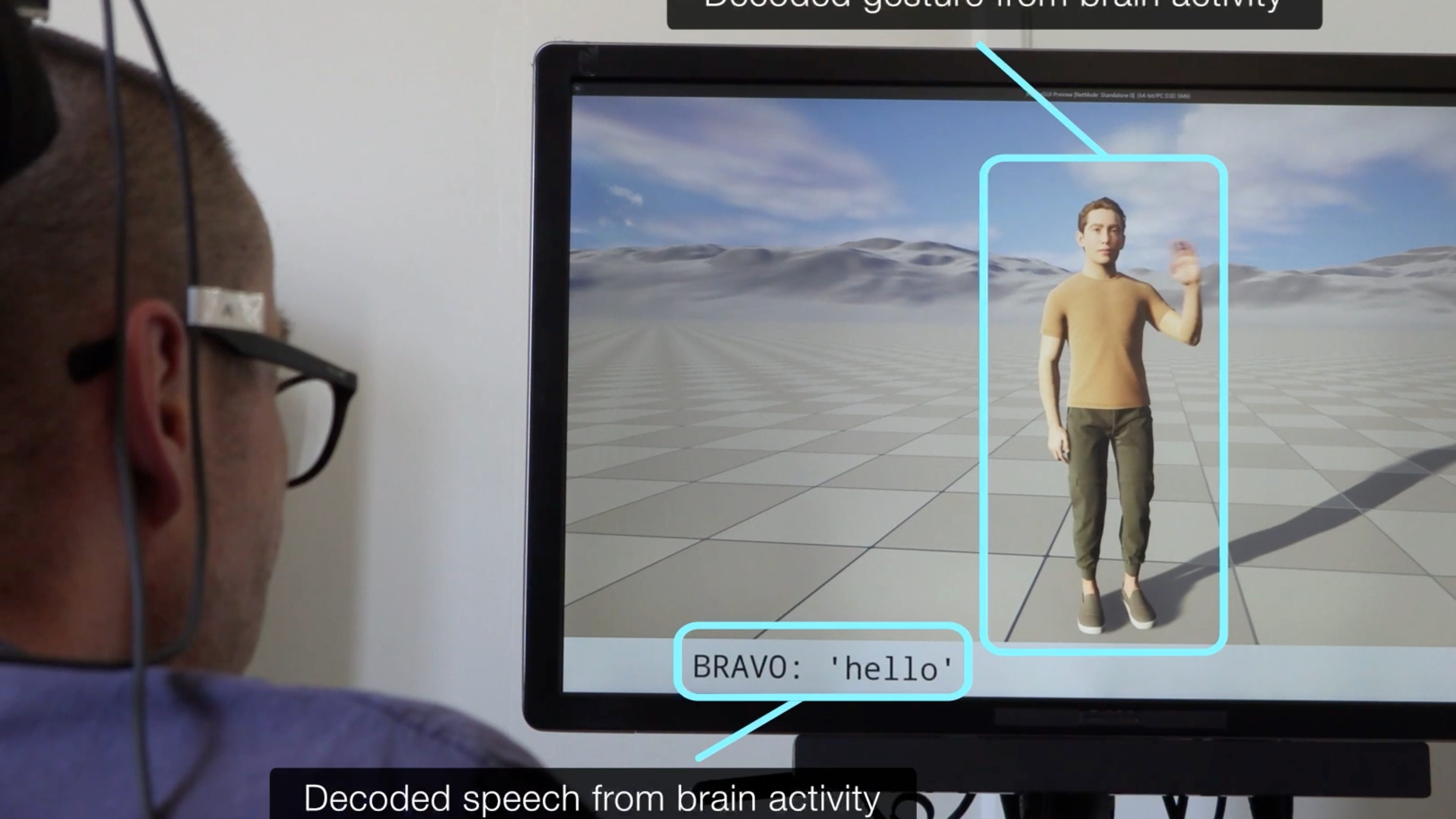
Researchers report a brain-implant system that enables people with paralysis to communicate using both speech and gesture at the same time. The approach uses a larger brain implant and translates signals into a digital avatar that can produce combined vocal and movement outputs.
The outlets describe the advance as building on earlier work in which brain implants typically let participants either speak or move, but not both simultaneously. The use of an avatar is presented as the key mechanism for coordinating the two forms of expression, aiming to support more natural, “expressive interaction.” The sources frame the study as an experimental step that could broaden what paralysed people can do with brain-computer interfaces.
Coverage is largely aligned on what the system achieves and what it improves relative to prior implants. However, the emphasis varies: one outlet highlights the potential for more expressive interaction, while another focuses on the technical change—an increased implant capability that allows simultaneous speech and gesturing through the avatar.