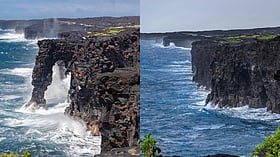
Hōlei Sea Arch, a well-known natural landmark on Hawaii’s Big Island, collapses into the Pacific Ocean after being visible in late September and disappearing by Sunday night, Sept. 27. The arch, which was about 90 feet (around 27 meters) tall, had stood for roughly half a millennium. The National Park Service (NPS) confirms the collapse, and the area is described as remote and rugged coastline within Hawaiʻi Volcanoes National Park.
Multiple outlets report that the arch was naturally formed by ocean-wave erosion and estimate its age at roughly 550 years (some sources cite 500 to 550). The Guardian and CBS News link the collapse to a period of rough storms in recent weeks, while other reports note the exact timing is not witnessed. NBC News says a prominent map listing changes to “Permanently closed,” reflecting the loss of the feature.
Some accounts add longer-term context. Reports describe signs of coastline instability over time, including earlier park closures related to observed cracks, and mention geological influences associated with the 2018 Kīlauea eruption and summit collapse. While some outlets emphasize storm conditions as an immediate factor, others focus on erosion and gradual coastal change as the underlying cause. No single moment of collapse is captured publicly.