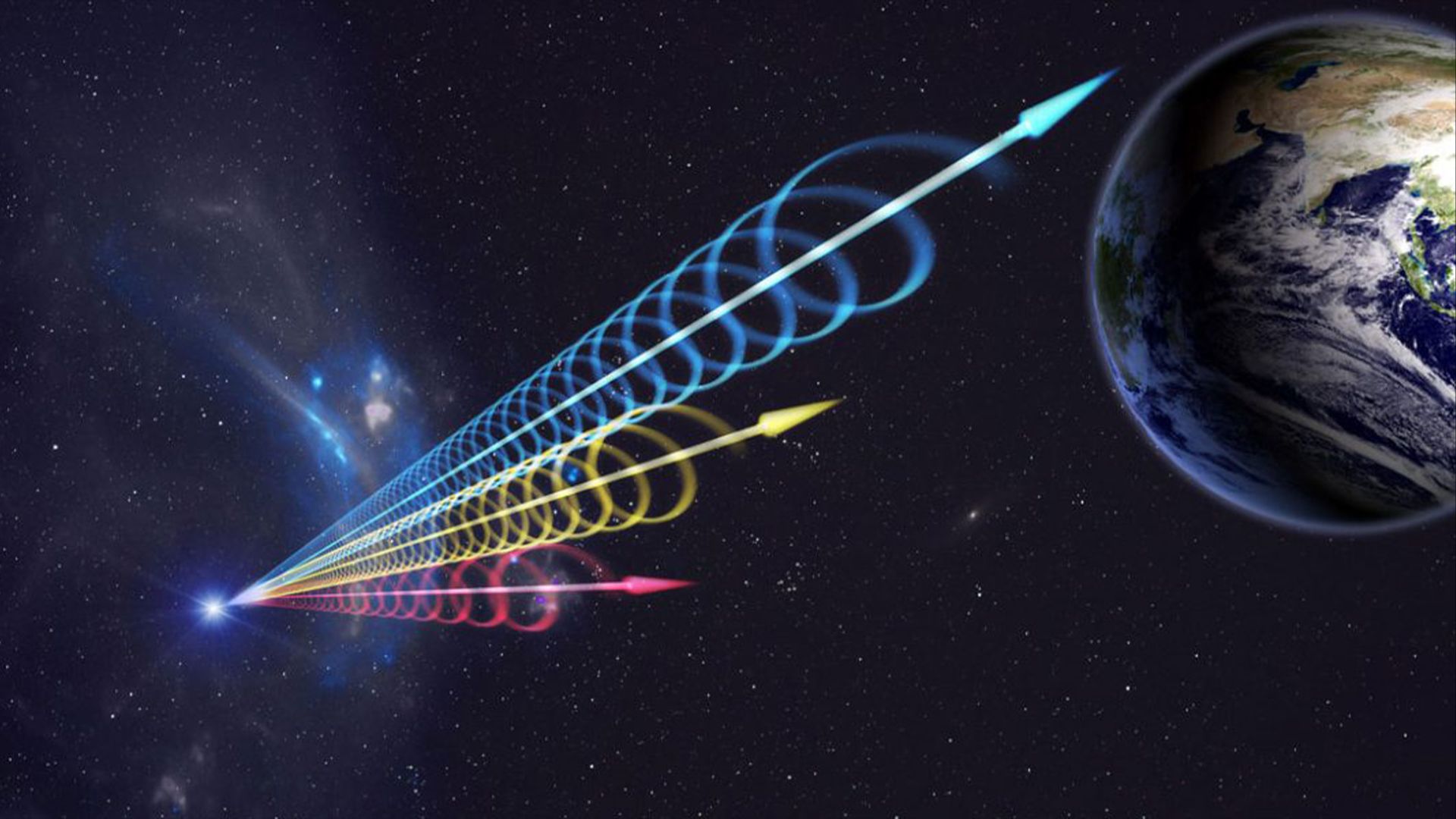
NASA reports that astronomers using the James Webb Space Telescope identify the host galaxy of the most distant fast radio burst (FRB) detected to date. FRBs are brief, millisecond-long flashes of radio waves from deep space. They were first found in 2007, and their origins remain unclear, partly because many FRBs are observed only once and then do not repeat.
By measuring the location of the FRB relative to its distant environment, Webb provides a new constraint on where such events occur. Both outlets describe the observation as the farthest FRB yet, emphasizing the importance of linking the radio signal to a specific galaxy. This step helps researchers compare candidate FRB sources—such as extreme astrophysical events—against the kinds of galaxies and conditions in which the bursts originate.
While the outlets focus on the same Webb result, they differ mainly in phrasing: one highlights Webb’s distance and implied origin, and the other frames the finding as a record-setting observation that offers additional clues.