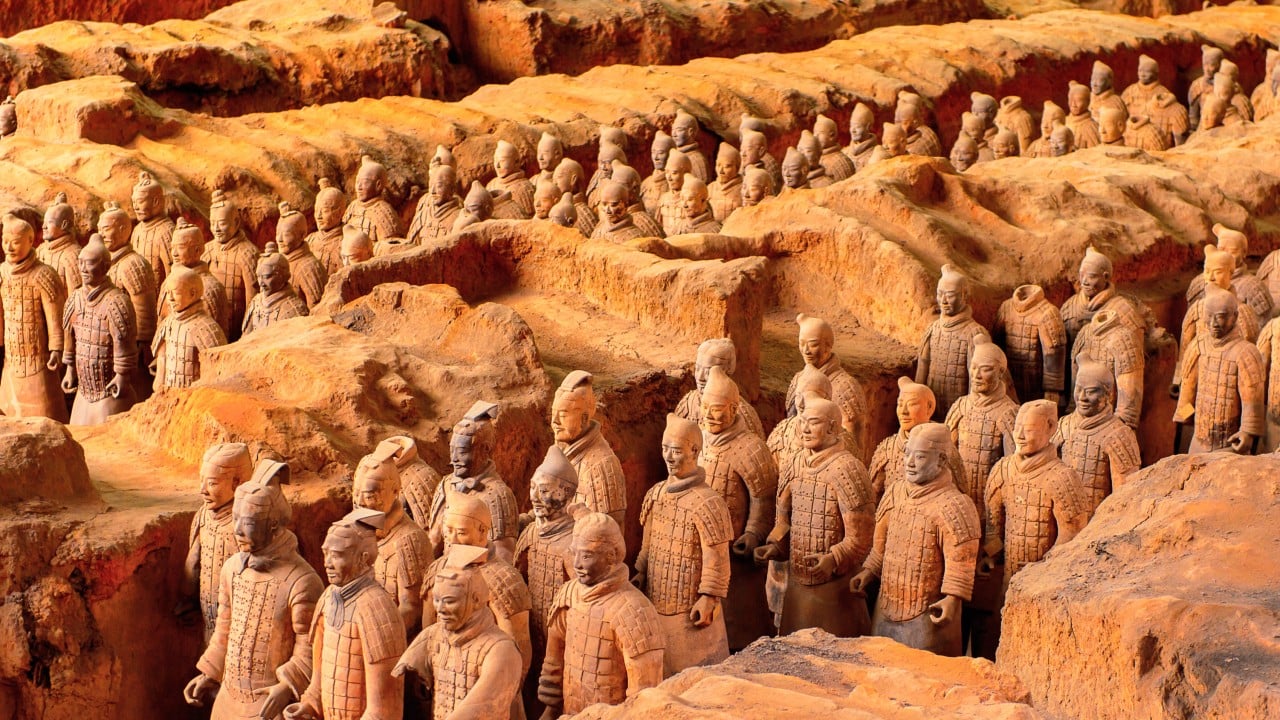
The Terracotta Army—thousands of life-size figures buried with Qin Shi Huang near Xi’an to guard the emperor in the afterlife—has a new research finding about who made it. SCMP reports that some workers were mainly adult women and minors, based on fingerprint evidence from terracotta batches excavated about 5 metres underground near one of China’s oldest cities. The army was buried after Qin Shi Huang’s death in 210BC, with the burial complex located about 35km northeast of Xi’an.
Phys.org and multiple other outlets describe similar conclusions: that previous assumptions of an all-male workforce are challenged by research using fingerprint patterns. They frame the work as new clues that women and children “lent a helping hand” in making the figures, including components such as chariots, horses, and weapons. Mail Online and Daily Mail emphasise the mystery of the builders but provide limited additional detail beyond the idea that fingerprints reveal evidence about the workforce.
All outlets agree the study uses fingerprints to infer maker demographics, linking it to broader context about the construction of the underground army. Differences lie mainly in how specific the gender-and-age composition is portrayed and how much supporting context each outlet includes.