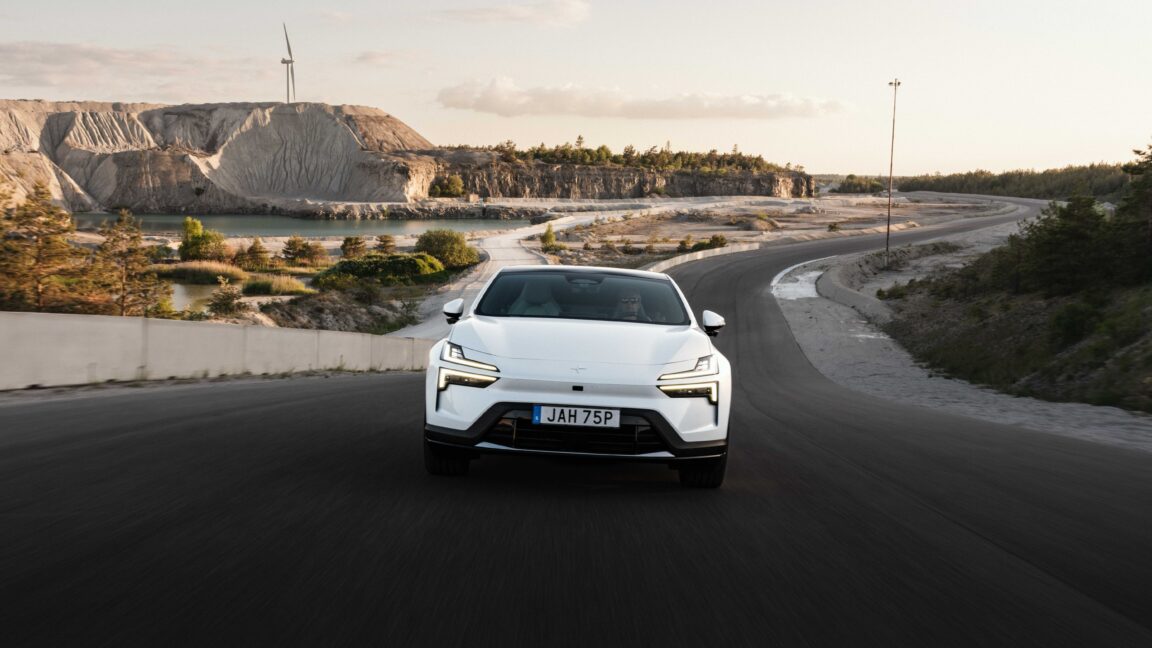
Polestar and the University of Oxford run a controlled on-track study to measure what driving a performance EV feels like, rather than relying only on spec-sheet metrics. Drivers wear physiological and eye-tracking equipment while completing runs on a Swedish racetrack in two versions of the Polestar 4.
Outlets report that the setup includes electrodes and monitoring devices such as eye trackers and heart-rate monitors. In the testing described, the higher-output Polestar 4 Dual motor with the Performance pack posts measurable differences on matched laps, including stronger peak acceleration than the lower-power rear-motor version and less required steering effort. The study also gathers subjective feedback from drivers, which outlets say favors the performance configuration. The project aims to translate “feel” into quantifiable data that can complement conventional performance figures.