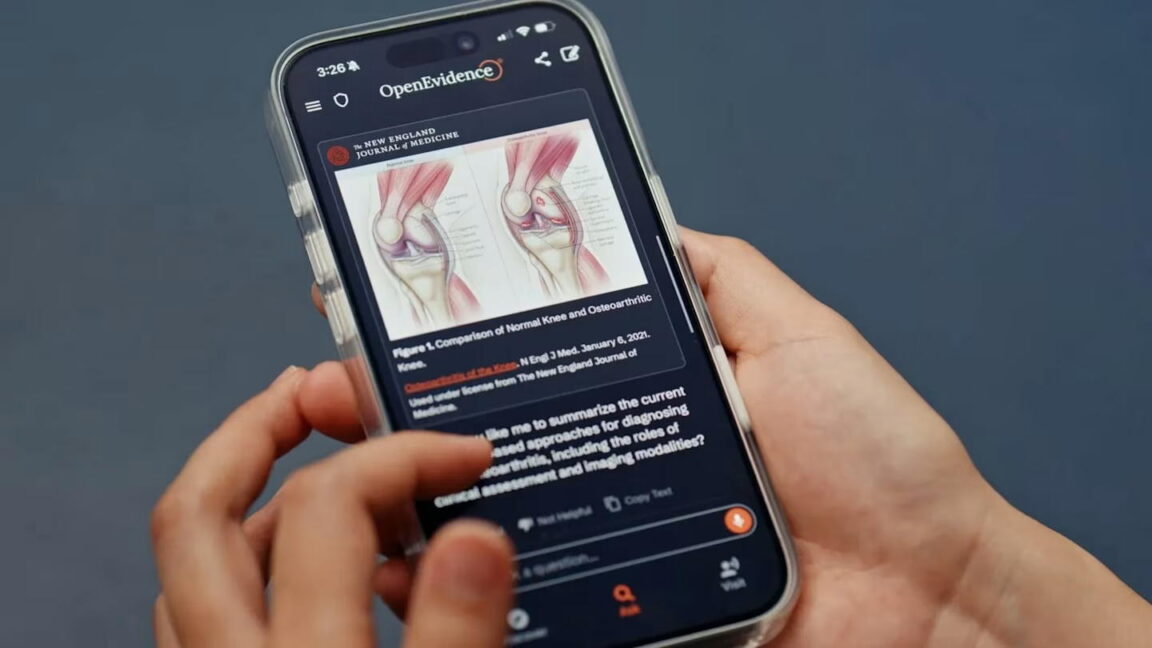
OpenEvidence, an ad-powered AI chatbot startup, is gaining traction among some US doctors and is valued at about $15 billion, according to multiple outlets. Ars Technica reports the company is “booming,” while raising questions about the tool’s reliability and how ads may be integrated.
The Financial Times describes the startup as “viral” and says its founder claims two-thirds of US physicians use it. That reported level of adoption fuels a debate about whether the chatbot improves patient care or introduces risks, particularly around accuracy. Across coverage, both outlets focus on the same central tension: widespread clinician use on one side, and uncertainty about performance and implications for care on the other.
While the reports emphasize different aspects—Ars Technica foregrounds concerns about accuracy alongside business momentum, and the Financial Times emphasizes adoption and the scale of claimed usage—both connect OpenEvidence’s growth to ongoing questions about patient outcomes and oversight.