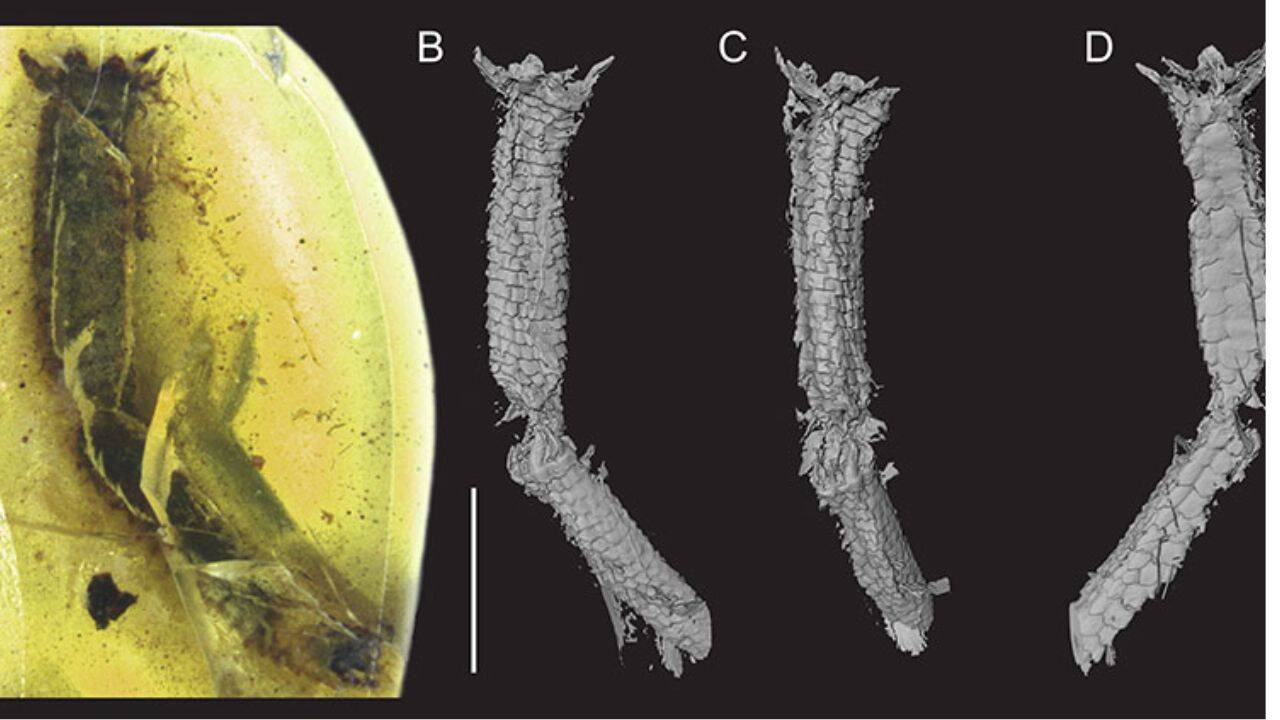
Scientists report a lizard fossil preserved in Myanmar amber that shows signs of deliberate tail shedding about 99–100 million years ago. Researchers use X-ray micro-computed tomography to examine the Cretaceous specimen, finding a pattern consistent with intentional detachment, similar to how modern lizards drop their tails to escape predators.
The findings help clarify when this widespread predator-avoidance behavior first emerged in lizards and how it may relate to later abilities such as tail regeneration. Across coverage, both outlets emphasize the same central question—when lizard tail shedding originated—and describe amber preservation as the key to studying the behavior in deep time, rather than inferring it indirectly from modern species.