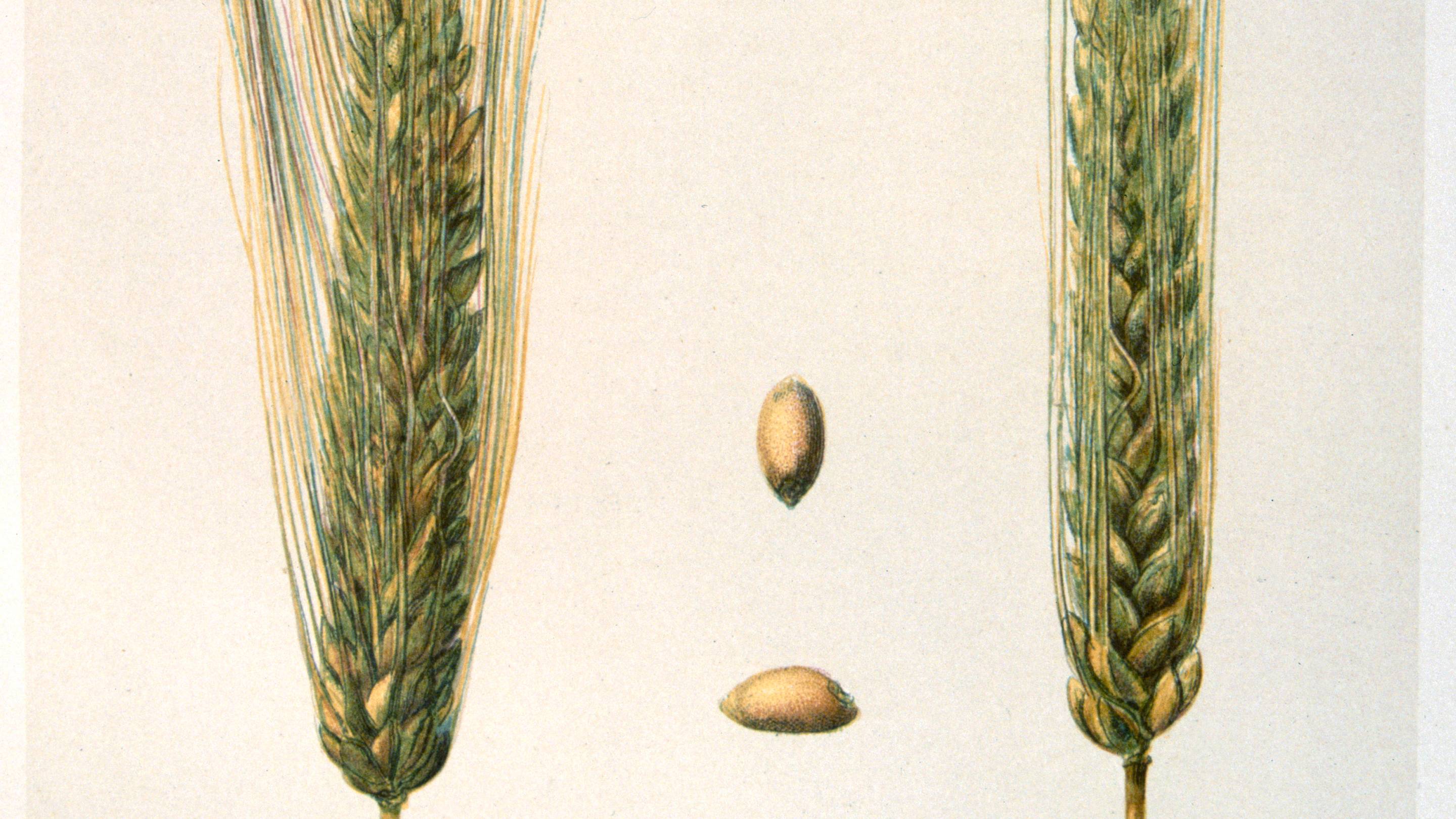
An Italian farmer, Claudio Grossi, finds an ancient wheat variety stored in his attic and identifies it as a heritage crop he later traces to an early text. Multiple outlets describe the grain as unusual in appearance, including reports of “seven ears on one stalk.” The discovery is presented as potentially valuable for agriculture under increasingly dry and climate-stressed conditions.
Both reports say the variety—described as Triticum turgidum and linked to a multi-generational or over-a-century history—shows stronger drought resilience than modern wheat types. They also connect the find to broader efforts to preserve crop genetic diversity. One outlet focuses more on the personal story of the discovery and its implication for farmer resilience, while the other emphasizes expert context, including why genetic diversity matters and the potential for further research into nutritional trade-offs of heritage grains for modern farming.