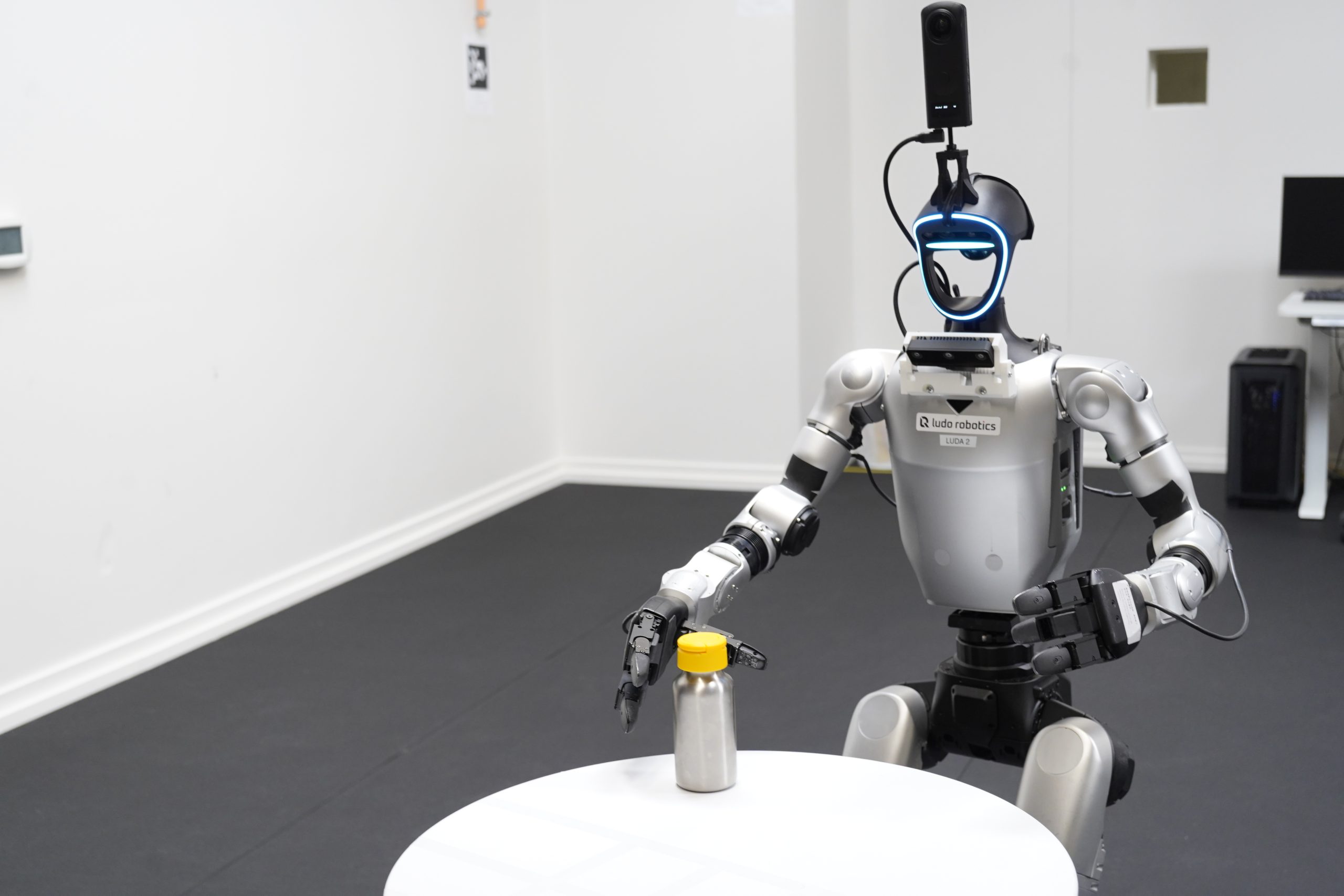
Ludo Robotics, a Palo Alto subsidiary of South Korean video game publisher Krafton, has debuted “Ludi 0.2,” a robotics AI system designed to understand human intent and interact with people in physical settings. The release positions the company as applying its gaming-developed AI experience to robots that must work alongside humans rather than in purely virtual environments.
Across coverage, the story is framed around the challenge of translating “human-in-the-moment” communication into robot behavior. Fast Company emphasizes the broader trend of humanoids moving into everyday work and highlights investment activity in robotics AI, then links Krafton’s approach to game-based AI that responds to unpredictable player decisions. SiliconANGLE focuses on the product announcement itself, describing Ludi 0.2 as centered on interpreting incomplete or changing human instructions for real-world interaction.
Both outlets tie the initiative to Krafton’s AI background, presented differently: SiliconANGLE through the specific model release, and Fast Company through the rationale and industry context for why game coplay concepts and large language models could help robots cooperate with people.