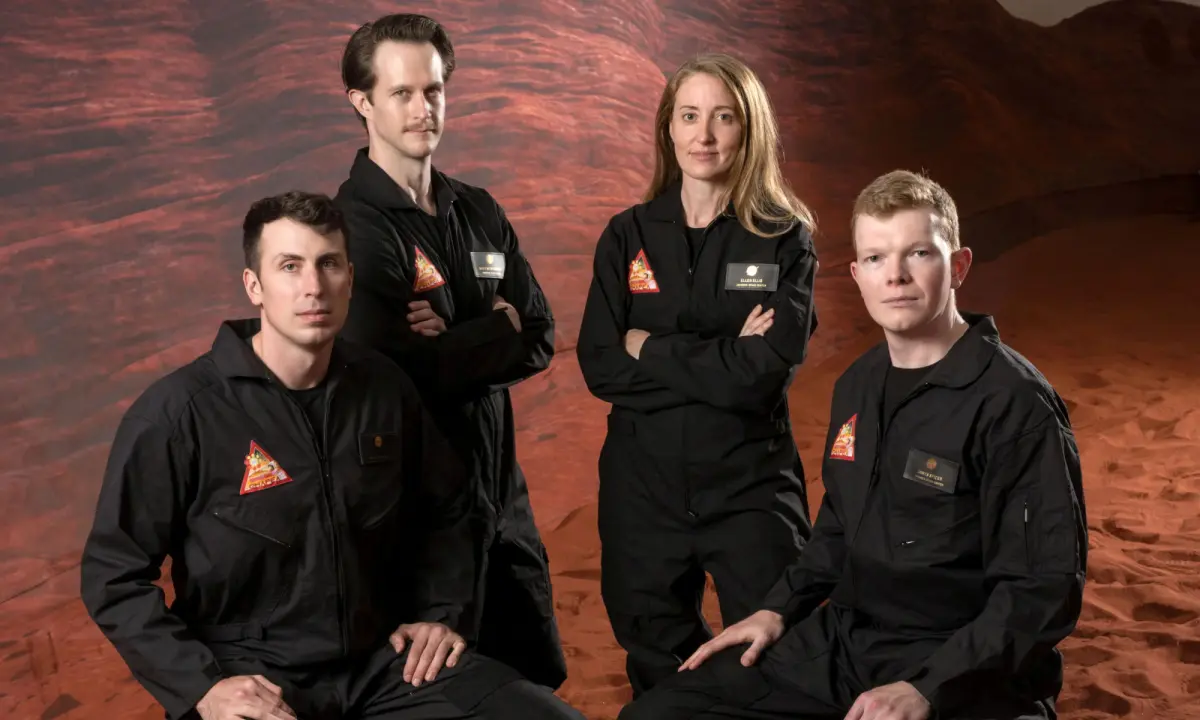
A four-person crew taking part in NASA’s simulated Mars mission emerges from isolation after 378 days in a 3D-printed habitat at the agency’s Johnson Space Center in Houston. The effort, known as the Crew Health and Performance Exploration Analogue (Chapea), is designed to support planning for future human spaceflight to Mars.
The crew entered the habitat on Oct 19, 2025, and during the isolation period carried out tasks intended to mirror life on Mars, including growing crops in simulated Martian soil and operating through delays that recreate interplanetary communications. Crew members also held remarks after emerging, including comments from Ellen Ellis, the mission’s medical officer.
Across outlets, the coverage is largely consistent in describing the mission length, the setting at Johnson Space Center, the 3D-printed habitat, and the simulated Mars activities. Differences in emphasis appear limited based on the information provided, with some outlets giving minimal additional context beyond repeating the core facts of the emergence and mission purpose.