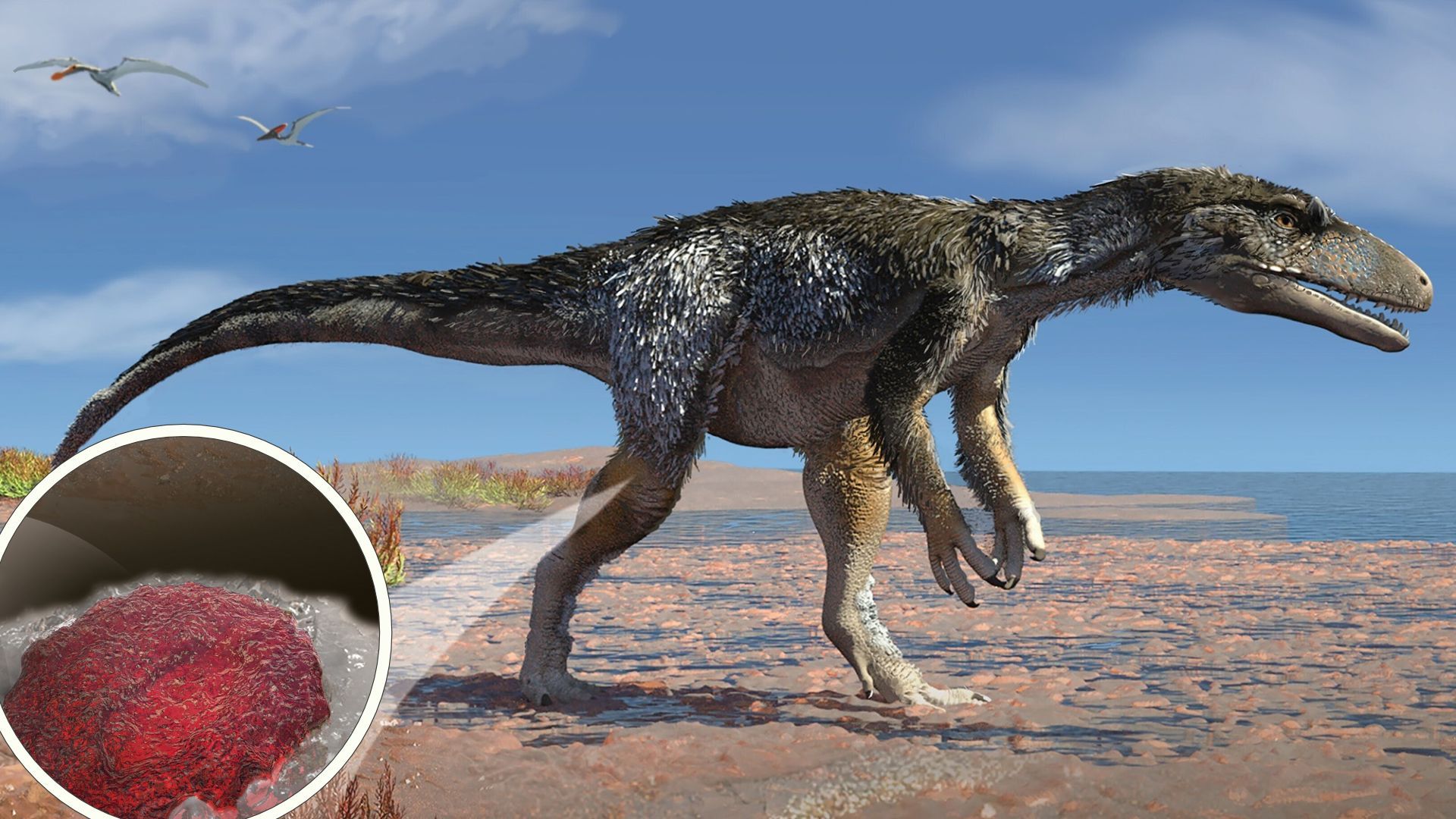
Researchers report chemical signatures and microscopic structures in a Brazilian dinosaur fossil that resemble red blood cells, alongside molecular evidence linked to blood. The findings concern a 115-million-year-old bone from an Aratasaurus, a small meat-eating dinosaur, with tests described as detecting heme and structures that could be preserved blood-cell material.
Several outlets frame the discovery as potentially “world-first” or otherwise exceptional, emphasizing that it would shed light on how soft tissues might survive in fossils. Others stress uncertainty, noting that not all experts agree the evidence definitively shows red blood cells rather than other biological or geological residues.
While the central claim is consistent across coverage—heme-linked chemistry and cell-like microstructures in an Aratasaurus bone—outlets differ in emphasis and certainty. Some highlight the vivid, movie-like implication of dinosaur blood traces; others focus on the molecular specificity (iron-carrying or oxygen-transport related chemistry) and how it relates to haemoglobin and blood pigment.