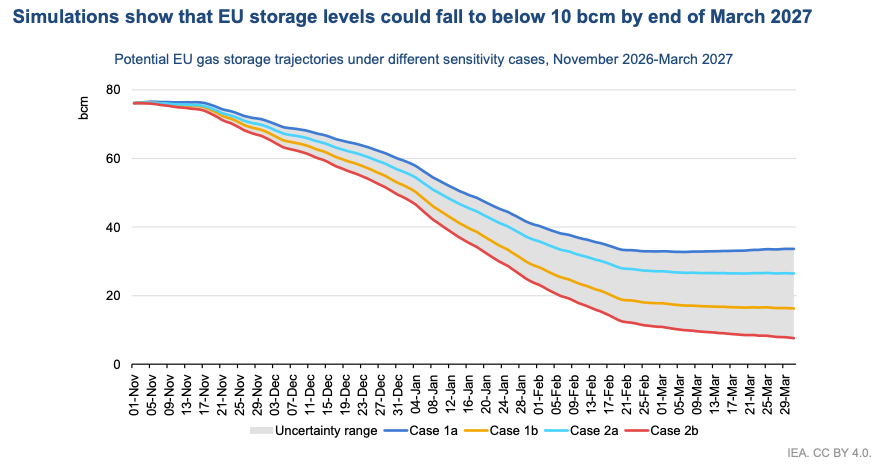
European gas storage enters the 2026/27 heating season at very low levels, leaving the region more exposed to cold weather, supply disruptions, and price swings. Multiple reports cite the International Energy Agency warning that Europe is approaching winter with the lowest inventories in more than a decade, with EU targets for fuller storage not met as temperatures begin to turn colder.
Outlets also connect the storage shortfall to global gas market pressures. The IEA links tightening supply conditions to prolonged disruptions to LNG shipments, including pressure from issues affecting flows through the Strait of Hormuz, while competition for cargoes has pushed prices to the highest levels since the 2022–2023 energy crisis. Some coverage further highlights specific storage figures and dates, including a reported EU fill level of about 75% at the end of October.
Several sources add a weather-risk layer: commentary on potential Arctic or polar-vortex disruption suggests a cold blast could sharply increase heating demand and erode any remaining storage gains. Other coverage frames the issue as a shift from long-term strategy to “real-time” operational risk, emphasizing the reduced buffer that normally absorbs shocks when demand or logistics change.