


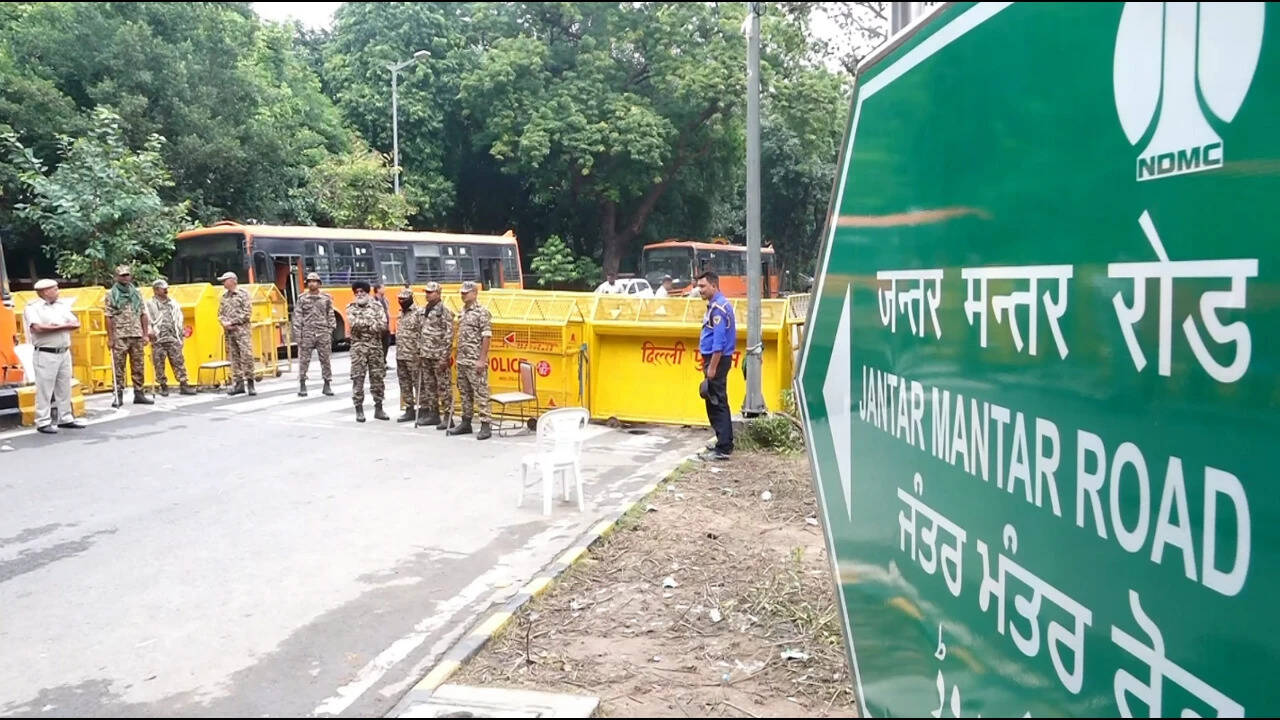
The Supreme Court of India holds that the right to protest does not allow any group to occupy a designated public site indefinitely. The court says protest access must be balanced so public spaces remain available for other people seeking to exercise their own right to peaceful assembly.
Across several reports, the bench led by Chief Justice of India Surya Kant makes clear that even venues earmarked for demonstrations, such as Jantar Mantar and Ramlila Maidan, should have fixed time limits. Outlets also link the remarks to petitions connected to Delhi protests from October that were directed against the Election Commission and the Chief Election Commissioner.
Different outlets emphasize the competing constitutional interests. Some stress that prolonged occupation effectively disenfranchises other citizens, including farmers, workers and trade unions, and can interfere with livelihoods, particularly for daily-wage workers. Another angle highlights concerns raised about how permissions are handled in practice—such as whether granted protest time windows are followed—alongside complaints about economic losses and disruption around protest venues.


