


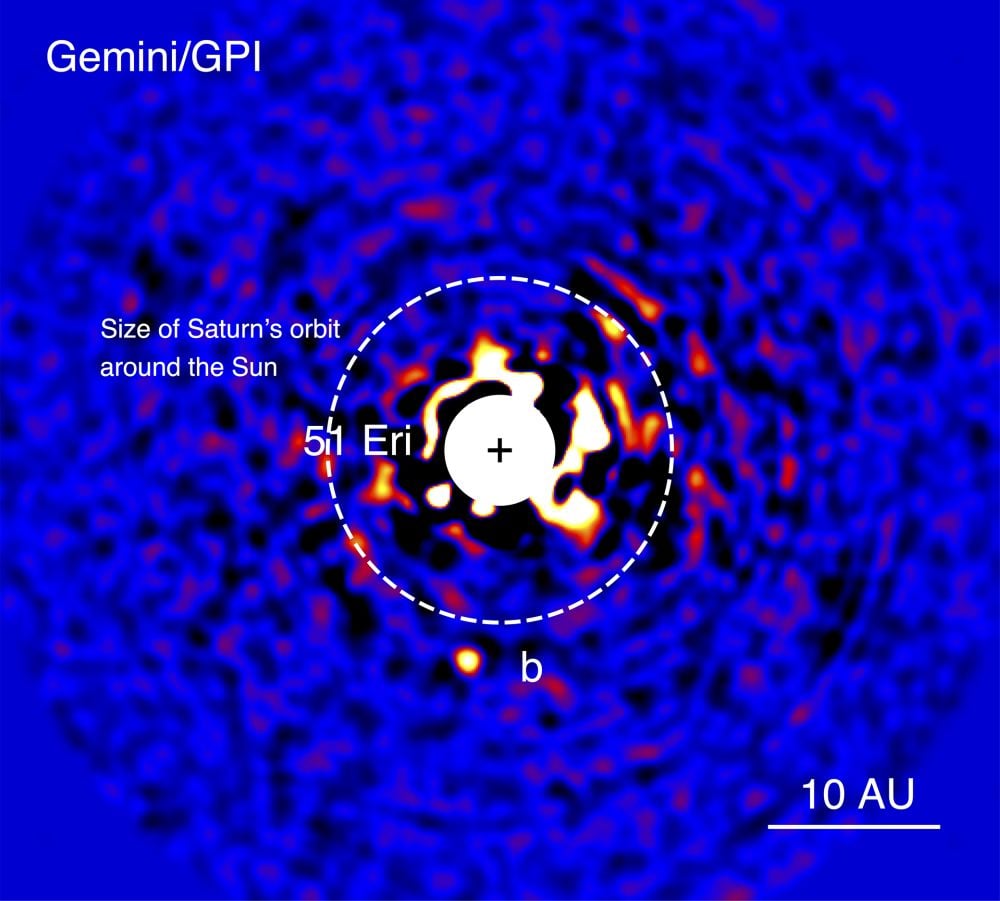
Researchers say they have developed and demonstrated a method that helps the James Webb Space Telescope (JWST) find faint exoplanets that are otherwise lost in the brightness of their host stars. The approach is described as a “digital twin” or glare-removal technique, building on the idea that even advanced tools such as coronagraphs still struggle with starlight overwhelming nearby planetary signals.
Across outlets, the emphasis differs slightly: one report frames the advance as a general capability to detect dim exoplanets more easily despite current limitations, while the other highlights a specific result—an example of a giant planet emerging from older, two-year-old JWST data. Both accounts attribute the challenge to star glare and describe the core goal as improving how JWST images and analyses separate a planet’s faint light from its much brighter star.


