


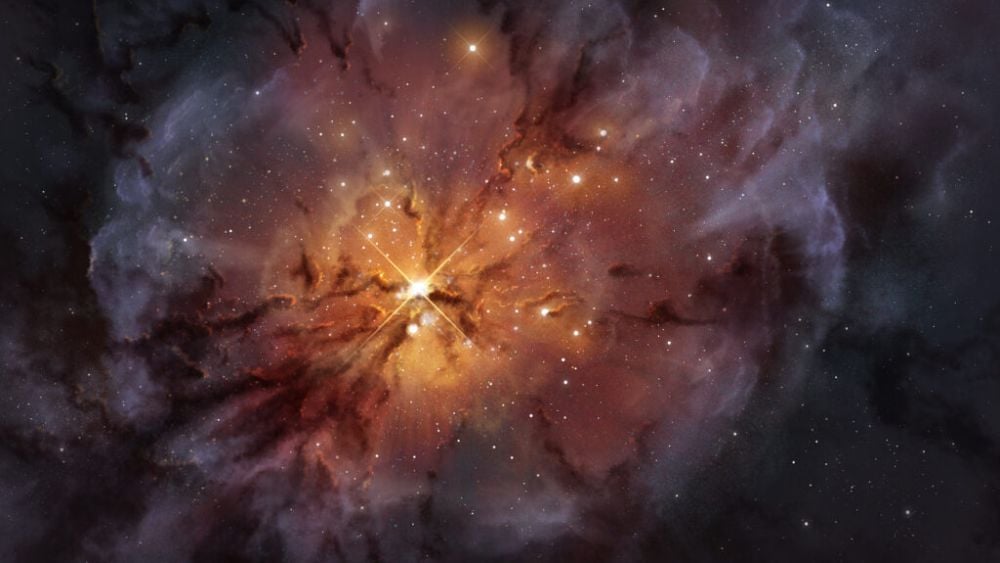
Astronomers using images from the James Webb Space Telescope find an unexpected pattern in the early universe: an overabundance of bright galaxies roughly 400 to 500 million years after the Big Bang. Researchers say this brightness is puzzling because such luminous galaxies should be rarer at that stage of cosmic evolution.
One proposed explanation is that intense ultraviolet radiation from dense clusters of young stars acts like a “leaf blower.” The radiation drives out light-blocking gas and dust from galaxies, making them appear brighter in Webb observations. Both outlets describe the mechanism as being linked to radiation pressure and Lyman-alpha-related effects that clear obscuring material, potentially reconciling the observations with expectations for the early universe.
While coverage is closely aligned, the independent reporting differs in emphasis: one article explicitly frames the solution with the leaf-blower metaphor and details how gas and dust removal boosts apparent brightness; the other highlights the same core finding and explanation but provides less extended context in its summary.


