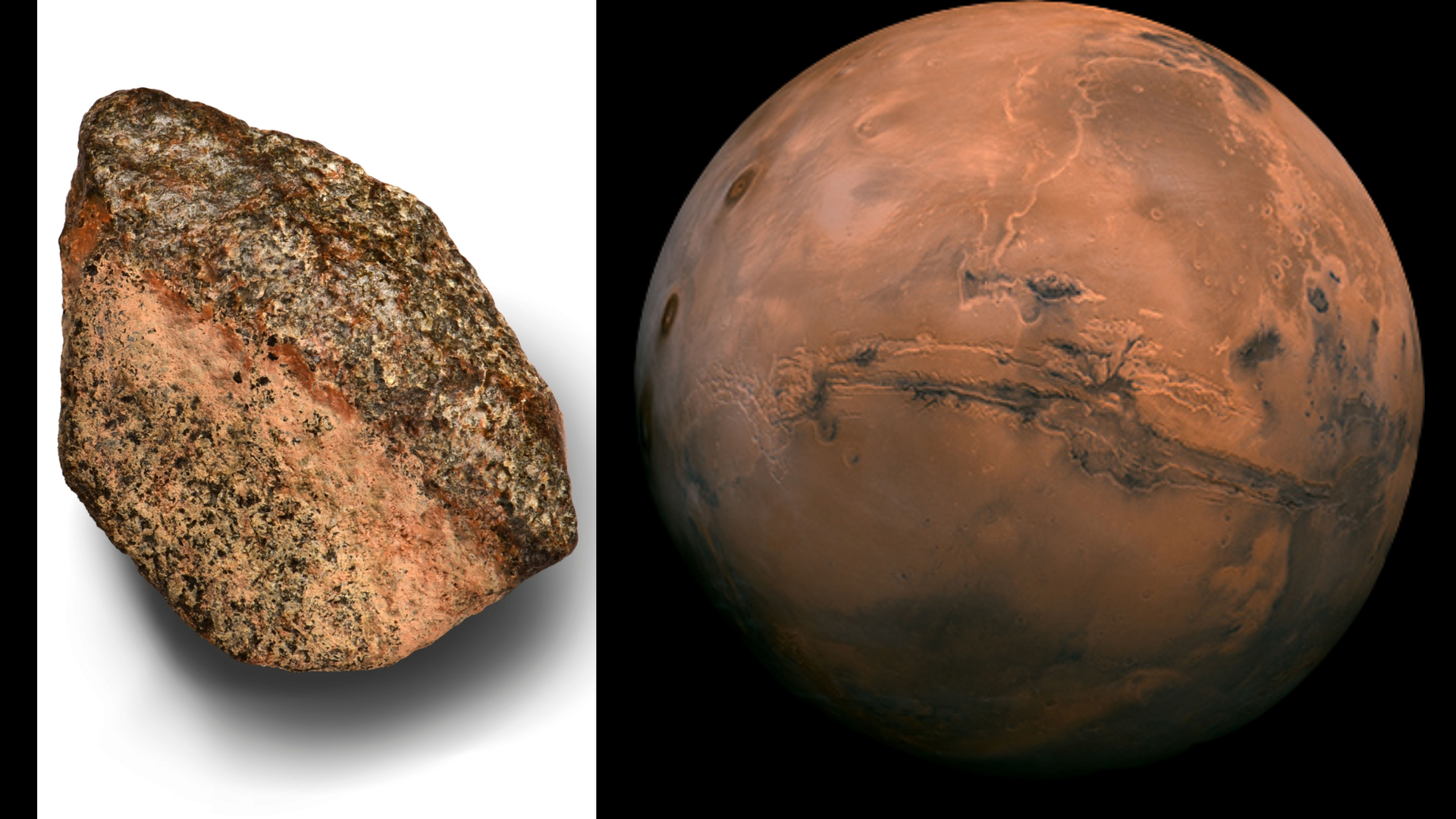
A meteorite discovered in Mali’s Sahara Desert is described as one of the oldest Martian fragments ever found on Earth, with an age reported as more than 4.1 billion years. The find, sometimes framed as a “Rosetta Stone,” is said to preserve information about Mars’ early crust and how the planet may have interacted with water.
Across the coverage, the key scientific theme is what the rock’s mineral composition can reveal. Space.com emphasizes the meteorite’s age and how it may offer a rare view of Mars’ early formation and possible water-related history. PravdaReport focuses more directly on the meteorite’s significance as evidence for liquid-water activity on early Mars, adding that its minerals—along with comparisons to data tied to Mars orbiters—help link it to a specific region on the planet and suggest a more dynamic water cycle than previously assumed.