


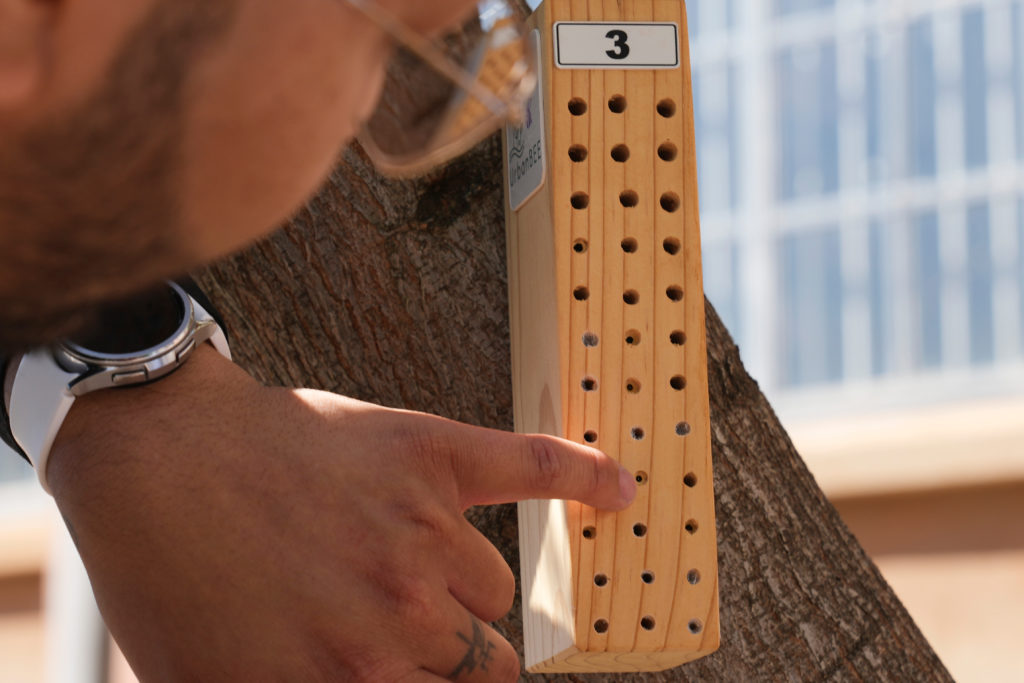
South African citizen scientists are using small nesting “hotels” to find and study solitary bees living in cities. The project highlights that while the hive-dwelling managed western honeybee is well known, the majority of the more than 20,000 bee species worldwide are solitary and therefore harder to locate and monitor.
Across outlets, the reporting centers on the UrbanBEE effort and how volunteers place or observe these structures. The Independent frames the work as research into how city environments affect bee diversity, while other coverage focuses more on the vivid, everyday details of solitary bees using the hotel holes, such as nesting tubes drilled into untreated pine. PBS and multiple outlets describe solitary bees peeking from these small nesting spaces, illustrating how the devices help reveal an otherwise hidden urban pollinator community.
Overall, the articles agree the main goal is better observation of city pollinators and a clearer understanding of how urban settings influence solitary bee populations, with citizen scientists playing a key role in data collection.


