


Mumbai’s drinking water reserves, drawn from seven reservoirs, rise as heavy monsoon rainfall continues over the city and surrounding catchment areas. BMC data cited by multiple outlets show that the combined useful live storage in the seven lakes increases to about halfway of total capacity, crossing the 50% mark on July 18. One report says the seven lakes hold 7,34,891 million litres (ML), or 50.77% of total capacity, after a 0.98% increase over the previous 24 hours. Another outlet reports that by July 12 the total useful live storage is 721,354 ML, or 49.84% of capacity, placing reserves close to 50%. Earlier in the monsoon period, reservoirs were much lower—around 41% on July 8–9—before rainfall led to faster gains over the following days. Several lakes reach higher levels at different times, with Vihar and Tulsi repeatedly reported as at or near full storage during peak wet periods. The BMC continues to track reservoir levels and rainfall patterns, while an ongoing supply management approach (including water cuts earlier) has been described as tied to whether reservoirs overflow and whether rainfall intensity sustains.
Mumbai’s seven lakes reach about 50% storage as monsoon rains boost reserves
Mumbai’s drinking water reserves, drawn from seven reservoirs, rise as heavy monsoon rainfall continues over the city and surrounding catchment areas. BMC data cited by multiple outlets show that the...
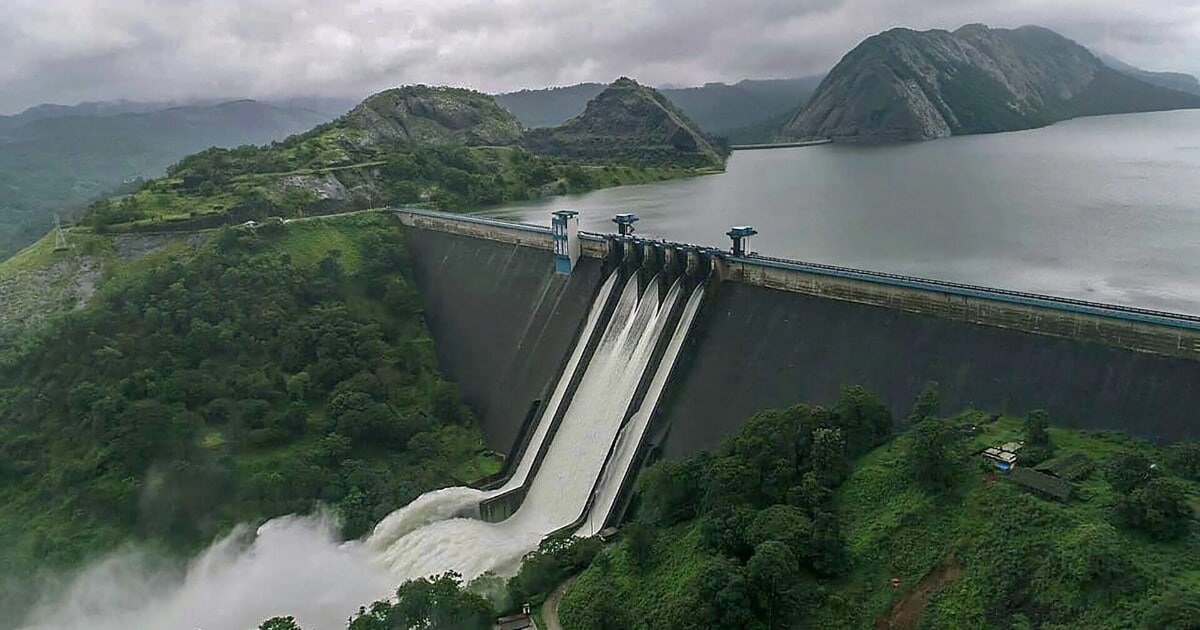
- Mumbai’s seven reservoirs supplying drinking water collectively reach around half of total useful live storage (50.77% reported as of July 18).
- BMC/Hydraulic Engineer’s Department figures show the reserves increase over short periods during heavy monsoon rainfall (e.g., a 0.98% rise in 24 hours reported on July 18).
- By July 12, combined useful live storage is reported at 49.84% (721,354 ML).
- During earlier days, storage is reported around the low-40% range (e.g., 41.36% on July 8–9) before rising with sustained rainfall.
- Vihar and Tulsi are repeatedly reported as reaching full or near-full useful live storage during the wet spells, while other lakes rise more variably.
Mumbai: The total water stock in the seven lakes supplying drinking water to Mumbai has reached 12,11,188 million litres (ML), which is 83.68% of the total useful storage capacity of 14,47,363 ML, according to the Hydraulic Engineer's Department's lake level report released at 6:00 AM on July 25, 2026. The report also states that, in the last 24 hours, there has been a 6.06% increase in the reservoir stock.Among the major reservoirs, Modak Sagar, Vihar and Tulsi lakes are at 100% capacity, while Tansa has reached 98.45%, Bhatsa stands at 82.68%, Middle Vaitarna at 80.73%, and Upper Vaitarna at 68.11%. शुक्रवार , दिनांक २४ जुलै २०२६ सकाळी ६ ते शनिवार , दिनांक २५ जुलै २०२६ सकाळी ६ या २४ तासात झालेल्या पावसामुळे मुंबईला पाणी पुरवठा करणाऱ्या ७ जलाशयांचा साठा ८३.६८ % झाला आहे . गेल्या २४ तासात जलाशय साठ्यात ६.०६ % वाढ झाली आहे. #MyBMCUpdates pic.twitter.com/3pSIk2LwYe— माझी Mumbai, आपली BMC (@mybmc) July 25, 2026 The combined storage of Upper Vaitarna, Middle Vaitarna, Tansa and Modak Sagar is 5,82,619 ML, accounting for 83.88% of their total useful storage capacity of 6,94,582 ML.Rainfall across catchment areasHeavy rainfall continued across the catchment areas over the last 24 hours, with Bhatsa receiving the highest rainfall at 159 mm. This was followed by Upper Vaitarna (131 mm), Middle Vaitarna (93 mm), Tansa (90 mm), and Modak Sagar (84 mm). Meanwhile, Tulsi recorded 16 mm of rainfall, while Vihar received 13 mm.The cumulative rainfall recorded during the ongoing monsoon season has reached 2,817 mm at Tulsi, the highest among the seven lakes. Modak Sagar has received 2,159 mm, followed by Upper Vaitarna (2,106 mm), Vihar (2,069 mm), Tansa (2,036 mm), Bhatsa (1,870 mm), and Middle Vaitarna (1,761 mm).At the Bhandup Complex, 12 mm of rainfall was recorded in the last 24 hours, taking the total seasonal rainfall to 2,214 mm.Overflow statusAccording to the Hydraulic Engineer's Department, Vihar, Tulsi, Tansa and Modak Sagar lakes have already started overflowing this monsoon. Vihar Lake began overflowing on July 7 at 9:00 PM, followed by Tulsi Lake on July 7 at 11:43 PM. Tansa Lake started overflowing on July 22 at 8:51 AM, while Modak Sagar Lake began overflowing on July 23 at 2:07 AM.The report also noted that the Middle Vaitarna WSCPO gate has remained closed since July 6, while water release from Upper Vaitarna has remained suspended since July 6, indicating stable reservoir conditions despite continued rainfall.To get details on exclusive and budget-friendly property deals in Mumbai & surrounding regions, do visit: https://budgetproperties.in/
1 month agoMumbai: Despite four of the seven lakes supplying water to Mumbai overflowing and the combined lake stock reaching 77 percent of capacity, the BMC has decided to continue the 10 percent water cut imposed on May 15, citing concerns over a possible El Niño-induced rainfall deficit in August and September.Stock Rose 16% in Two Days; Modak Sagar, Tansa, Vehar, and Tulsi FullAs of July 24, the seven lakes together hold 11.23 lakh million litres (ML) of water, enough to meet the city's needs for 274 days. Following heavy rainfall in Thane district, where most of the lakes are located, the water stock rose by nearly 16 percent between 6 am on July 22 and 6 am on July 24. Modak Sagar, Tansa, Vehar and Tulsi lakes have already reached full capacity.Maharashtra Govt Introduces Five-Star Rating System For 623 Public Hospitals To Boost Quality And TransparencyHowever, with the weather bureau forecasting low rainfall in August and September due to the expected El Niño effect, the BMC is adopting a cautious approach. "The El Niño effect is likely to persist until next year. The state irrigation department has instructed all civic bodies to plan water availability till August 31, 2027. We will review the situation once all seven lakes are full, likely by September, before taking a decision on withdrawing the water cut," a senior civic official said.Among the remaining lakes, Bhatsa is at 77 percent, Middle Vaitarna at 75 percent, and Upper Vaitarna at 62 percent of their capacities. Mumbai requires 14.47 lakh ML in its seven lakes by October 1 to ensure an uninterrupted year-round supply. The BMC currently supplies 4,100 MLD of water against a daily demand of 4,600 ML. Water stock as on July 24Lakes.....current level(mtrs) ....Full level (mtrs)...useful content (ML)Upper Vaitarna..600.83....603.51....142976Modak Sagar....163.16......163.15...128925Tansa...128.63......128.54...143299Middle Vaitarna....276.74...285...145412Bhatsa...134.70......142.07....527087Vehar...80.52.....80.12....27698Tulsi...139.39.....139.17...8046To get details on exclusive and budget-friendly property deals in Mumbai & surrounding regions, do visit: https://budgetproperties.in/
1 month agoMumbai: Mumbai's water reserves received another major boost following continuous monsoon rainfall, with the combined stock in the seven lakes supplying drinking water to the city rising to 77.62 per cent of their total live storage capacity, according to data released by the Brihanmumbai Municipal Corporation's (BMC) Hydraulic Engineer's Department on Friday.गुरूवार, दिनांक २३ जुलै २०२६ सकाळी ६ ते शुक्रवार, दिनांक २४ जुलै २०२६ सकाळी ६ या २४ तासात झालेल्या पावसामुळे मुंबईला पाणी पुरवठा करणाऱ्या ७ जलाशयांचा साठा ७७.६२ % झाला आहे . गेल्या २४ तासात जलाशय साठ्यात ७.८८ % वाढ झाली आहे. #MyBMCUpdates pic.twitter.com/KGKdkknCcq— माझी Mumbai, आपली BMC (@mybmc) July 24, 2026 The increase comes after heavy rainfall recorded between 6 am on Thursday, July 23, and 6 am on Friday, July 24, 2026. During the 24-hour period, the city's total reservoir stock registered a sharp 7.88 percentage point rise.According to the latest report, the seven reservoirs, Upper Vaitarna, Modak Sagar, Tansa, Middle Vaitarna, Bhatsa, Vihar and Tulsi, now collectively hold 11,23,443 million litres (ML) of water against their total live storage capacity of 14,47,363 ML.Details On Lake LevelsAmong the reservoirs, Modak Sagar, Vihar and Tulsi continue to remain at 100 per cent capacity. Tansa has reached 98.77 per cent, while Middle Vaitarna has climbed to 75.14 per cent. Bhatsa, the city's largest reservoir, now stands at 73.51 per cent of its useful storage capacity, while Upper Vaitarna has reached 62.97 per cent.The catchment areas continued to receive substantial rainfall over the past 24 hours. Upper Vaitarna recorded the highest rainfall at 290 mm, followed by Modak Sagar with 184 mm, Middle Vaitarna with 174 mm, Tansa with 98 mm, Bhatsa with 77 mm, Vihar with 42 mm, and Tulsi with 70 mm. The Bhandup Complex, which houses Mumbai's Master Control Centre for water supply operations, recorded 86 mm of rainfall during the period, taking the season's cumulative rainfall at the complex to 2,202 mm.Four reservoirs have already started overflowing this monsoon. Upper Vaitarna began overflowing on July 6, followed by Vihar and Tulsi on July 7, Tansa on July 22, and Modak Sagar on July 23.Mumbai Weather Update: City Wakes Up To Light Rain, Gusty Winds; IMD Forecasts Heavy Showers, AQI Remains Good The steady rise in lake levels comes as Mumbai continues to receive widespread monsoon showers, significantly strengthening the city's drinking water reserves. With nearly 78 per cent of the annual water storage now filled, the latest increase offers considerable relief and improves the city's water security for the months ahead. To get details on exclusive and budget-friendly property deals in Mumbai & surrounding regions, do visit: https://budgetproperties.in/
1 month agoMumbai's water stock rose to 69.74 per cent after continuous monsoon rain, with Modak Sagar becoming the fourth lake to overflow this season. Officials expect further rainfall to strengthen the city's drinking water reserves.
1 month agoMumbai: Mumbai's drinking water reserves witnessed a gradual rise after continuous rainfall across the catchment areas, with the combined water stock in the seven lakes supplying the city reaching 54.05 per cent of their total live storage capacity on Monday morning.According to the Hydraulic Engineer's Department, due to the rainfall received between 6 am on Sunday, July 19, and 6 am on Monday, July 20, the city's reservoirs now hold 7,82,370 million litres of water, equivalent to 54.05 per cent of the total live storage capacity of 14,47,363 million litres. The reservoir stock increased by 1.66 per cent over the past 24 hours, compared to 52.39 per cent recorded on Sunday, providing further relief to the city's water supply situation.रविवार, दिनांक १९ जुलै २०२६ सकाळी ६ ते सोमवार, दिनांक २० जुलै २०२६ या २४ तासात झालेल्या पावसामुळे मुंबईला पाणी पुरवठा करणाऱ्या ७ जलाशयांचा साठा ५४.०५ % झाला आहे . गेल्या २४ तासात जलाशय साठ्यात १.६६ % वाढ झाली आहे. #MyBMCUpdates pic.twitter.com/XW6aqvNnsy— माझी Mumbai, आपली BMC (@mybmc) July 20, 2026 Details On Lake LevelsAmong the major lakes, Bhatsa, Mumbai's largest source of drinking water, holds 3,45,626 million litres, or 48.20 per cent of its live storage capacity, after receiving 14 mm of rainfall in the past 24 hours. Upper Vaitarna stood at 33.74 per cent capacity, while Modak Sagar reached 82.03 per cent. Tansa was recorded at 86.38 per cent, and Middle Vaitarna stood at 48.22 per cent of its live storage capacity. Meanwhile, Vihar Lake continues to remain 100 per cent full, while Tulsi Lake has reached 100 per cent capacity after receiving 144 mm of rainfall during the past 24 hours.Mumbai Rains Are Back After Brief Interval As Bandra, Byculla & Mulund Lashed With Heavy Showers; Traffic Hit On WEH & Sion-Panvel Highway The catchment areas collectively received substantial rainfall, further boosting reservoir levels and strengthening Mumbai's water security as the southwest monsoon remains active across the region.Today's Weather ConditionsHeavy showers lashed several parts of Mumbai on Monday morning as the IMD issued a Yellow Alert for the city. Schools and colleges remain open despite active monsoon conditions, while rain caused slow-moving traffic at multiple locations across the Mumbai Metropolitan Region.To get details on exclusive and budget-friendly property deals in Mumbai & surrounding regions, do visit: https://budgetproperties.in/
1 month agoMumbai: After a lull of over a week, Mumbai recieved moderate rainfall over the weekend, bringing some relief from the humidity. Several areas recieved above 50 mm rainfall. Mumbai and it's neighbouring districts were issued Yellow Alert for moderate to heavy rainfall on Sunday, which is valid till Monday 8.30 am. While for the next four days, moderate rainfall is expected to continue, says the Indian Meteorological Department's (IMD) forecast for the next five days.As of Sunday morning, the total rainfall recorded so far this monsoon at the Sanctruz observatory was 1606.8 mm, which is 69.29% of the annual average rainfall. While the Colaba observatory recorded 1403.3 mm, which is 66.98% of the annual average.As per local weather forecast for Mumbai city and suburbs for the next 48 hours, the skies will be generally cloudy with possibility of rain to moderate rain spells. The maximum and minimum temperatures will be around 32°C and 26°C respectively.Maharashtra Allows Hotels and Restaurants To Stay Open Till 4 AM For FIFA Club World Cup 2026 Final Screening Meanwhile, with satisfactory rainfall at the catchment areas, the stock at the seven reservoirs supplying water to Mumbai reached 52.39% on Sunday.The usable water stock available at the seven lakes was 7.52 lakh million litres (ML). The total holding capacity of the seven lakes is 14.47 lakh ML. Two lakes which have overflown so far this monsoon are Tulsi and Vihar. The BMC will take decision to reverse the water cut implemented in Mumbai after all lakes are filled to its full capacities.The percentage of water levels at the seven reservoirs as of Sunday morning was-Upper Vaitarna - 31.80%Modal Sagar - 79.12 %Tansa - 84.37%Middle Vaitarna - 47.78%Bhatsa - 46.79%Vihar- 100%Tulsi- 98.33%To get details on exclusive and budget-friendly property deals in Mumbai & surrounding regions, do visit: https://budgetproperties.in/
1 month ago
Caitlin Clark leads Fever to comeback win over Storm with historic 45-point, 10-assist game
Caitlin Clark leads the Indiana Fever to a 110-107 comeback victory over the Seattle Storm, producing a historic offensi...

Royce White appears in blonde wig at Indiana Fever game amid 2027 WNBA Draft bid
Royce White attends an Indiana Fever game wearing a blonde wig as part of a public campaign to be eligible for the 2027...

Angel Reese faces possible WNBA suspension after incident in game vs Portland Fire
Angel Reese is facing the prospect of a suspension after an incident during the Atlanta Dream’s game against the Portlan...