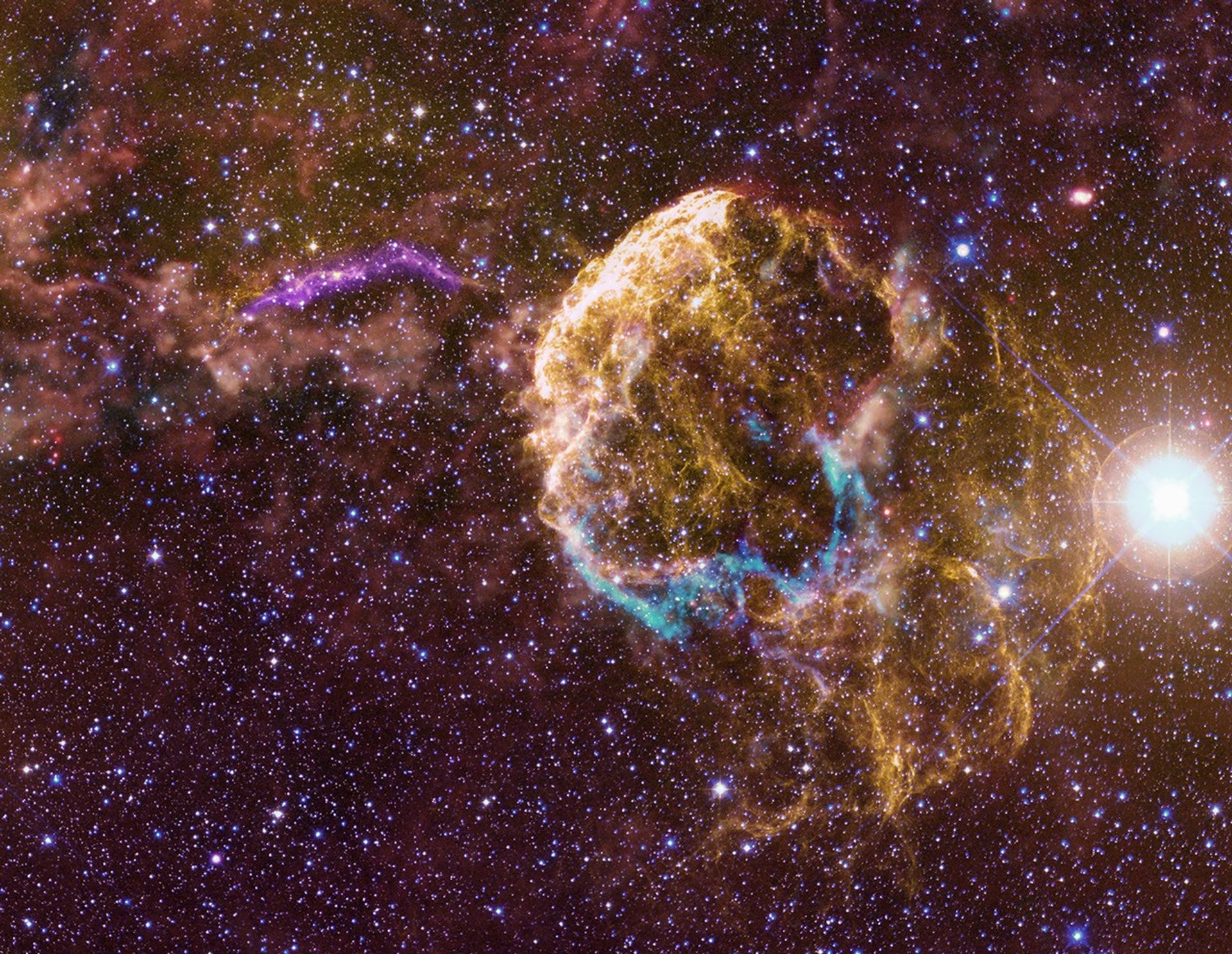
NASA reports that a new study using data from the Fermi mission finds evidence that two supernova remnants may have formed from stars that were once in a binary (“sibling”) system. Supernova remnants are the expanding debris left behind after stars explode. The study proposes that the first star to detonate in the pair sent its companion moving rapidly through space. After that companion traveled for thousands of years, it later undergoes its own supernova explosion, producing a second remnant.
The analysis compares the characteristics of the two remnants and interprets their relationship as consistent with sequential explosions from two formerly bound stars rather than unrelated, independent supernova events. The researchers describe a scenario in which timing and spatial separation between the remnants align with the travel time of a binary companion between the two explosions.
Both NASA and Phys.org describe the same core finding: Fermi observations and related study results suggest a possible link between the remnants and a shared origin in a once-orbiting stellar pair.