


Two Episcopal churches in Richmond, Virginia design and run a “Walking with the Enslaved” pilgrimage intended to confront the city’s history of slavery. The initiative is described as retracing a route associated with the movement of enslaved people through Richmond, a city that served as both a major center of the domestic slave trade and the Confederate capital. Participating churches frame the walk as a way to encourage reflection among local residents and to prompt public engagement with Richmond’s racist past. Coverage also links the pilgrimage to an existing “slave trail” route used as part of a broader citywide walking tour, which explores Richmond’s role in the domestic slave trade. The accounts emphasize that the program is church-led and focuses on historical remembrance rather than a legal or political action. The churches present the walk as an opportunity for participants to learn about and acknowledge how enslaved people were transported and how that legacy remains connected to institutions in the city. All reporting describes the event in terms of education, commemoration, and community outreach centered on a documented path connected to slavery.
Richmond churches hold pilgrimage retracing route of enslaved people
Two Episcopal churches in Richmond, Virginia design and run a “Walking with the Enslaved” pilgrimage intended to confront the city’s history of slavery. The initiative is described as retracing a rout...
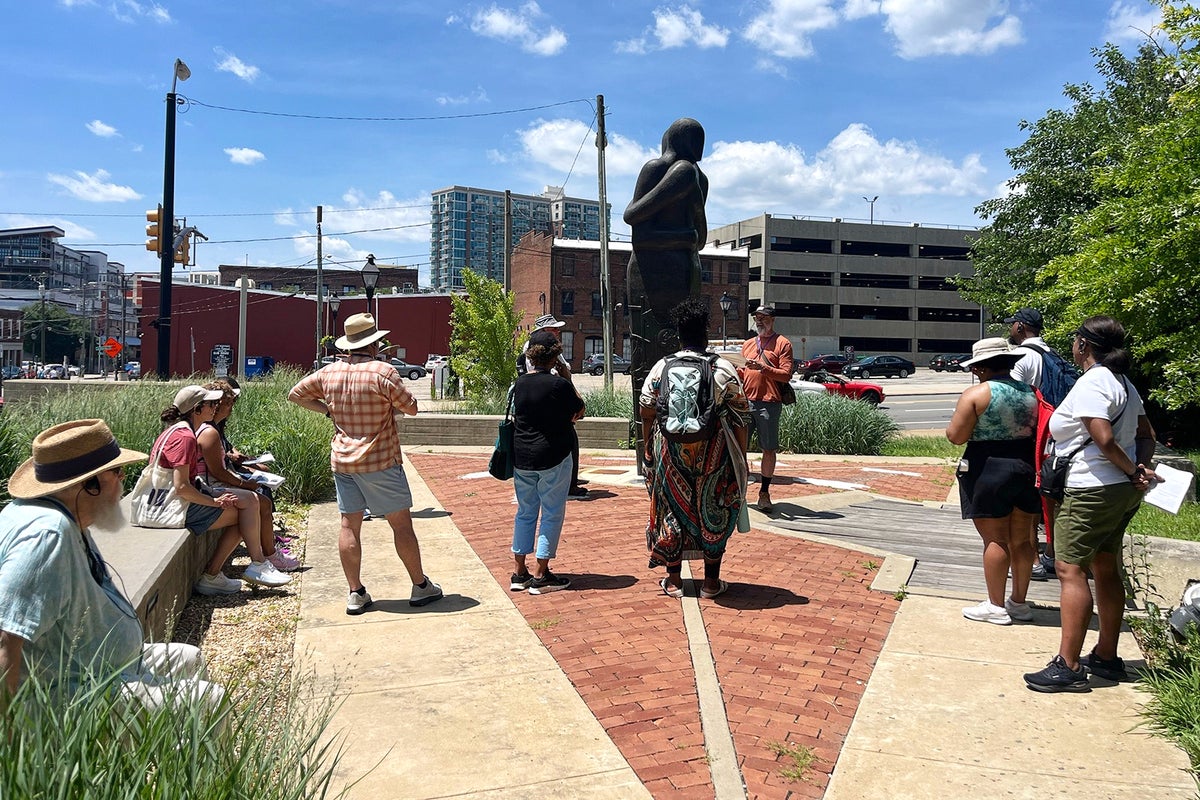
- Two Episcopal churches in Richmond, Virginia organize a “Walking with the Enslaved” pilgrimage.
- The pilgrimage retraces a route connected to the movement of enslaved people through Richmond.
- Reporting describes Richmond as a major hub of the domestic slave trade and as the capital of the Confederacy.
- The walk is connected to a citywide walking-tour framework that includes a “slave trail.”
- The initiative aims to encourage reflection and public awareness of Richmond’s history of racism and slavery.
Today, a path known as the "slave trail" is part of a citywide walking tour exploring Richmond's role as a major hub of the domestic slave trade.
2 months agoTwo Episcopal churches whose histories were shaped by Richmond’s role as a slave-trading center and the capital of the Confederacy have designed a “Walking with the Enslaved” pilgrimage, which they hope will open the eyes of fellow Richmonders to their city’s racist history
2 months ago
ADC says 2027 election win does not require a coalition, says spokesperson
The African Democratic Congress (ADC) says it does not need a coalition of opposition parties to win Nigeria’s 2027 pres...
Iran says diplomacy remains possible six months into war with the United States
Iran says it remains open to diplomacy six months into fighting with the United States that it says has destabilised the...

Milo Yiannopoulos detained by ICE as DHS cites immigration violations
Far-right political commentator Milo Yiannopoulos is currently in U.S. Immigration and Customs Enforcement (ICE) custody...