


Keir Starmer becomes prime minister in July 2024 after Labour’s landslide victory and a campaign focused on “stability and moderation.” Across multiple outlets, his premiership is framed as moving quickly from high expectations to a rapid loss of public support. Sources describe a pattern of declining popularity, rising anger and disappointment, and a sequence of political setbacks that culminate in major losses in devolved, mayoral and local elections. Analysts cited in the coverage point to economic headwinds and other challenges, alongside “unforced errors” and political controversies, as contributors to the government’s deterioration in standing. The Guardian’s reporting and podcast material emphasize that Starmer’s resignation comes after a period in which he is not widely associated with starting illegal wars, triggering grave economic crises, or being accused of large-scale corruption, even as he faces frequent criticism over performance. Together, the articles depict a volatile and increasingly impatient electorate, with the UK set to have a sixth prime minister in seven years.
Keir Starmer resigns after less than two years in office following electoral setbacks
Keir Starmer becomes prime minister in July 2024 after Labour’s landslide victory and a campaign focused on “stability and moderation.” Across multiple outlets, his premiership is framed as moving qui...
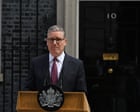
- Keir Starmer takes office as prime minister in July 2024 after Labour’s landslide general election win.
- His government’s popularity declines significantly within less than two years.
- The coverage links the downfall to a combination of political errors, economic pressures, scandals/controversies, and poor election results.
- The UK is set to have a sixth prime minister in seven years following Starmer’s resignation.
- Outlets describe recent devolved, mayoral and local election results as among the most damaging during his tenure.
Keir Starmer took office in July 2024 following a landslide victory at the general election but has since overseen a massive decline in popularity for the government as discontent with his leadership grew
2 months agoThe UK has lost its sixth prime minister in a decade. How did Keir Starmer go from landslide victory to resigning in two years?When the former human rights lawyer, full of ambition, won a landslide in the 2024 general election, hope was in the air. Keir Starmer had arrived on a promise to repair 14 years of Conservative damage. Just two years later, with anger and disappointment swelling across the country, he has been forcibly ejected from the job. He’s a decent man, we’re told repeatedly, but he’s the most disliked prime minister since modern polling began.As Starmer stepped out to the lectern outside Downing Street, he certainly looked the part. Elegant grey suit, immaculately slicked side quiff, and the dignified gravitas you’d expect from a prime minister. But he could not deliver. Continue reading...
2 months agoPM’s demise after landslide victory two years ago points to an increasingly volatile and impatient electorateHistorians will puzzle over this one. Of the six prime ministers that have led Britain over the last decade, with a seventh now on the way, it will be the fall of Keir Starmer that will most perplex the political analysts of the future.They will ponder a man who won a landslide victory in July 2024 only to be pushed out less than two years later, having started no illegal wars, having triggered no grave economic crises, having been accused of no scandalous act of corruption. Continue reading...
2 months agoWhere did it go wrong for the outgoing prime minister? And how much – if at all – did it threaten to go right?Keir Starmer pitched himself as a leader for “stability and moderation” who would rebuild Britain, after Labour’s landslide victory in the 2024 general election.But after two years which have seen unforced errors, economic headwinds, scandals and, most recently, a disastrous set of devolved, mayoral and local election results the UK is set to have its sixth prime minister in seven years. Continue reading...
2 months ago
Barron Trump keeps a reclusive profile amid reported security concerns for Trump family
Barron Trump, the youngest son of former U.S. President Donald Trump, is described by multiple outlets as living a reclu...

Carney rejects Trump’s renaming of Lake Ontario to “Lake America”
US President Donald Trump signs an executive order renaming Lake Ontario as “Lake America,” citing the lake’s portions w...

Ed Davey blood donation attempt disrupted after paperwork issue and travel plans
Liberal Democrat leader Sir Ed Davey was set to donate blood on Friday, but the donation does not go ahead after he fill...