


Astronomers using NASA’s James Webb Space Telescope report new evidence about the interstellar comet 3I/ATLAS, indicating it may be extremely ancient—possibly dating to about 12 billion years ago. Multiple outlets describe the comet as potentially among the oldest objects detected in the solar system, with estimates framed as “up to” that age rather than an exact time since formation. The findings focus on the comet’s chemical and isotopic composition, which researchers say provides clues about the environment in which the comet formed. In particular, reports highlight carbon isotope ratios and other “odd” chemistry that appear inconsistent with a younger origin. Several sources characterize the result as surprising and suggest it may reflect formation in an ancient planetary system or within material that originated in very early cosmic history. While the studies are still being developed through ongoing analysis, the overall message across coverage is that Webb observations are helping narrow the comet’s origin and age, pointing to a timeframe close to the universe’s early history.
NASA’s Webb Telescope suggests interstellar comet 3I/ATLAS may be up to 12 billion years old
Astronomers using NASA’s James Webb Space Telescope report new evidence about the interstellar comet 3I/ATLAS, indicating it may be extremely ancient—possibly dating to about 12 billion years ago. Mul...
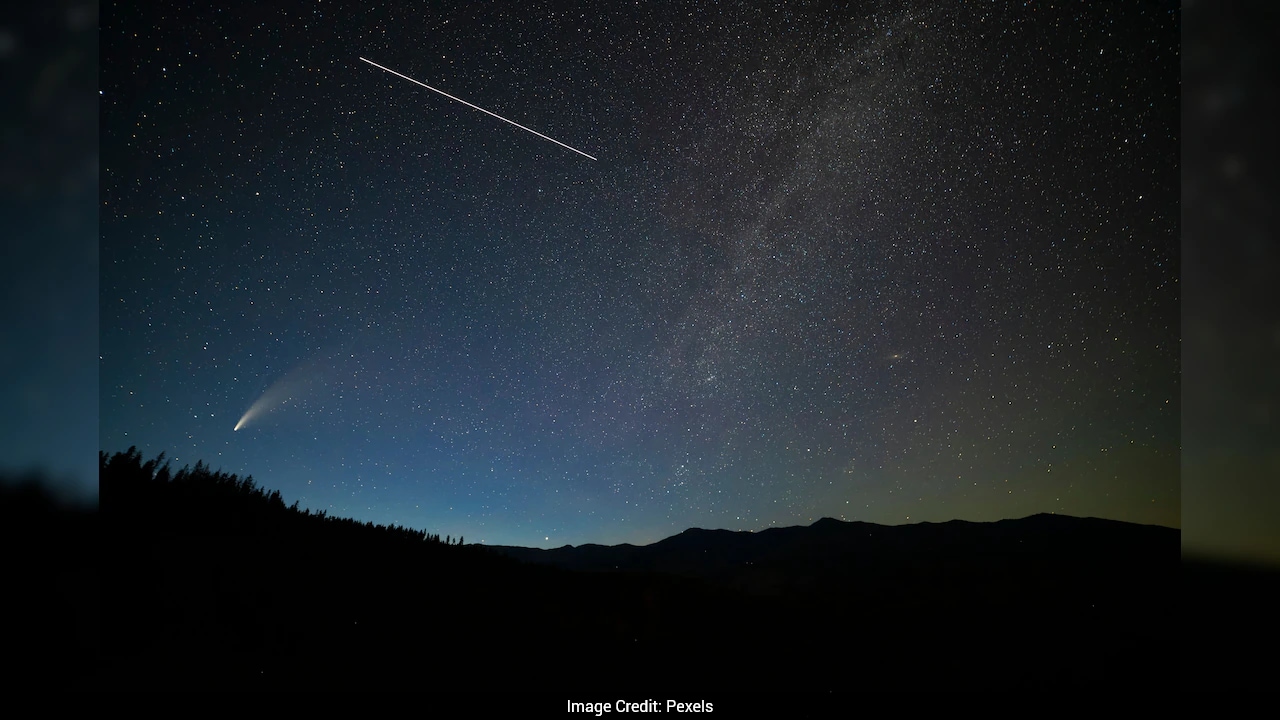
- NASA’s James Webb Space Telescope observes the interstellar comet 3I/ATLAS.
- The comet’s composition and chemistry are used to infer its origin and age.
- Carbon isotope ratios and other chemical signatures suggest an extremely old formation period.
- Reported age estimates reach roughly 12 billion years, described as “up to” or “probably” rather than exact.
- Researchers say the findings imply 3I/ATLAS may have formed in an ancient planetary system or related early material.
NASA's James Webb Space Telescope is finding clues that are leading scientists toward the origins of the interstellar comet 3I/ATLAS.
2 months agoThe findings surprised researchers, who used the comet's composition to better understand the environment in which it formed.
2 months agoThe interstellar visitor likely formed around 12 billion years ago in an ancient planetary system.
2 months agoCarbon isotope ratios offered clues about the composition of the interstellar gas cloud that gave rise to 3I/ATLAS
2 months agoNASA's James Webb Space Telescope reveals the odd chemistry of interstellar comet 3I/ATLAS, which may be 12 billion years old.
2 months ago
London council consults on expanding anti-social behaviour order to cover entire borough
A London council is consulting on expanding anti-social behaviour measures so that a public space protection order (PSPO...
Gene Menez names his 2026 Travers Stakes picks for Saturday’s Midsummer Derby
Gene Menez, a noted racing expert, publishes predictions for the 2026 Travers Stakes ahead of Saturday’s running of the...

Airbus reportedly seeks sale of its U.S. space unit amid satellite strategy shift
Airbus is reportedly seeking to sell its U.S. space unit as part of a broader shift in its satellite strategy. The repor...