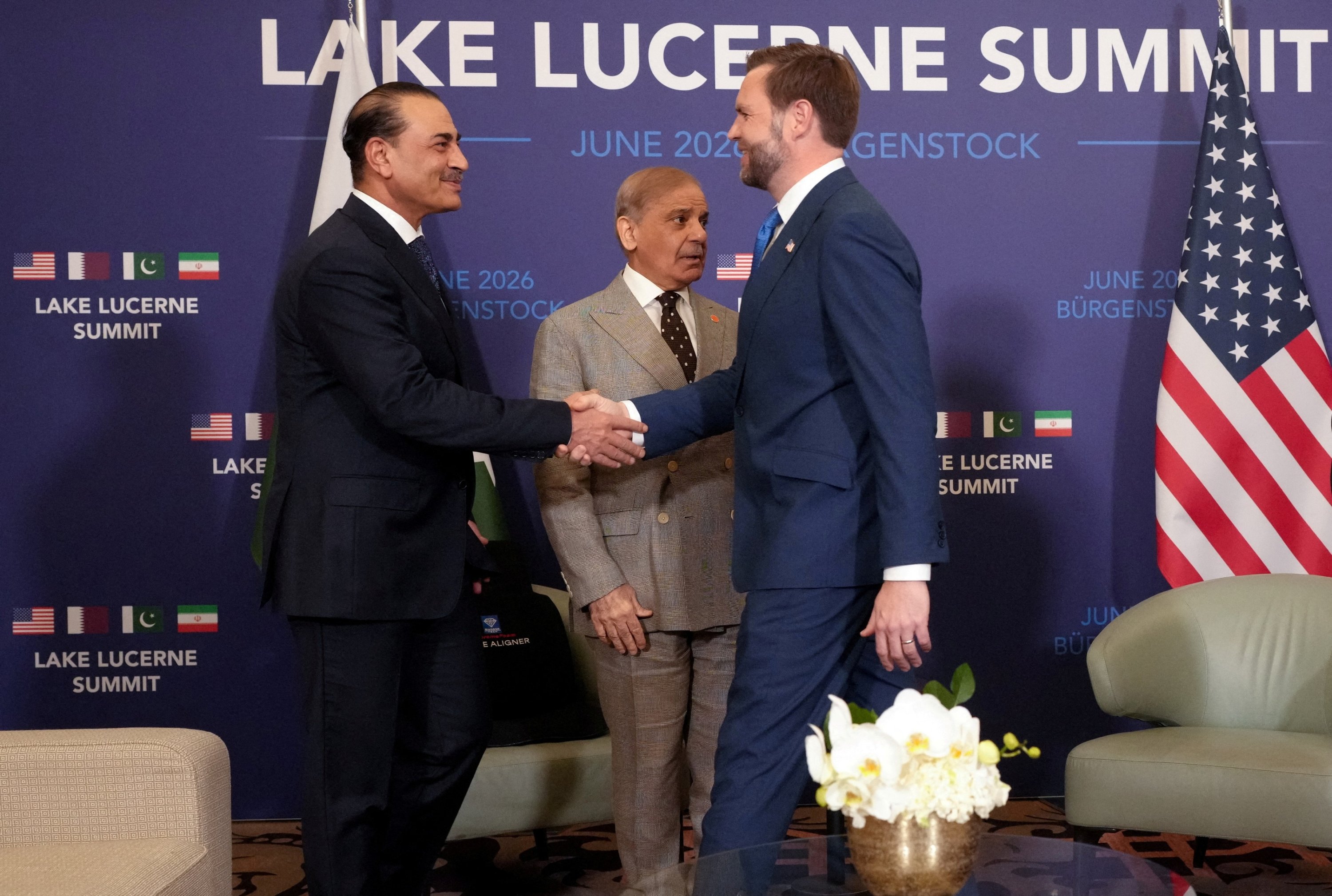
Pakistan’s role in brokering a peace agreement between the United States and Iran during a prolonged period of heightened tensions is generating diplomatic praise and discussion of possible economic benefits, according to multiple outlets. Prime Minister Shehbaz Sharif and army chief Field Marshal Asim Munir attend talks between Iran and the U.S. in Buergenstock, Switzerland, marking the culmination of Pakistan’s months-long involvement in the negotiations. Coverage describes Pakistan’s mediation as contributing to an improved diplomatic standing that could, in turn, help Islamabad attract investment or gain additional international engagement.
At the same time, analysts cited in the reporting say any economic “dividend” is uncertain and is unlikely by itself to resolve deeper, structural challenges facing Pakistan’s economy. They suggest that while improved ties and potential inflows may offer short-term support, broader reforms and domestic policy changes are still needed to address issues such as persistent economic imbalances. Overall, sources agree the mediation strengthens Pakistan’s foreign-policy credentials, but they diverge mainly on how directly and how quickly that translates into measurable economic gains.