


A newly reported study describes an exoplanet system whose orbits appear unusually “wonky,” attributing the configuration to the influence of a strange object within the system. The researchers say the finding offers insight into how planets can form and evolve even when the surrounding stellar environment is unusual—specifically around massive, eccentric bodies. While details vary by outlet, the central point is that gravitational interactions involving this atypical object help account for the planets’ observed orbital dynamics. The work frames the discovery as a step toward understanding the pathways that produce complex planetary architectures, rather than a simple, circular-orbit scenario. By connecting the system’s irregular layout to the presence of the unusual object, the study aims to clarify how such configurations can arise during formation and subsequent orbital evolution. Overall, the reporting emphasizes that the results are used to improve models of planet formation and system stability in environments that are not necessarily straightforward.
Study finds unusual exoplanet system behavior explained by a peculiar object
A newly reported study describes an exoplanet system whose orbits appear unusually “wonky,” attributing the configuration to the influence of a strange object within the system. The researchers say th...
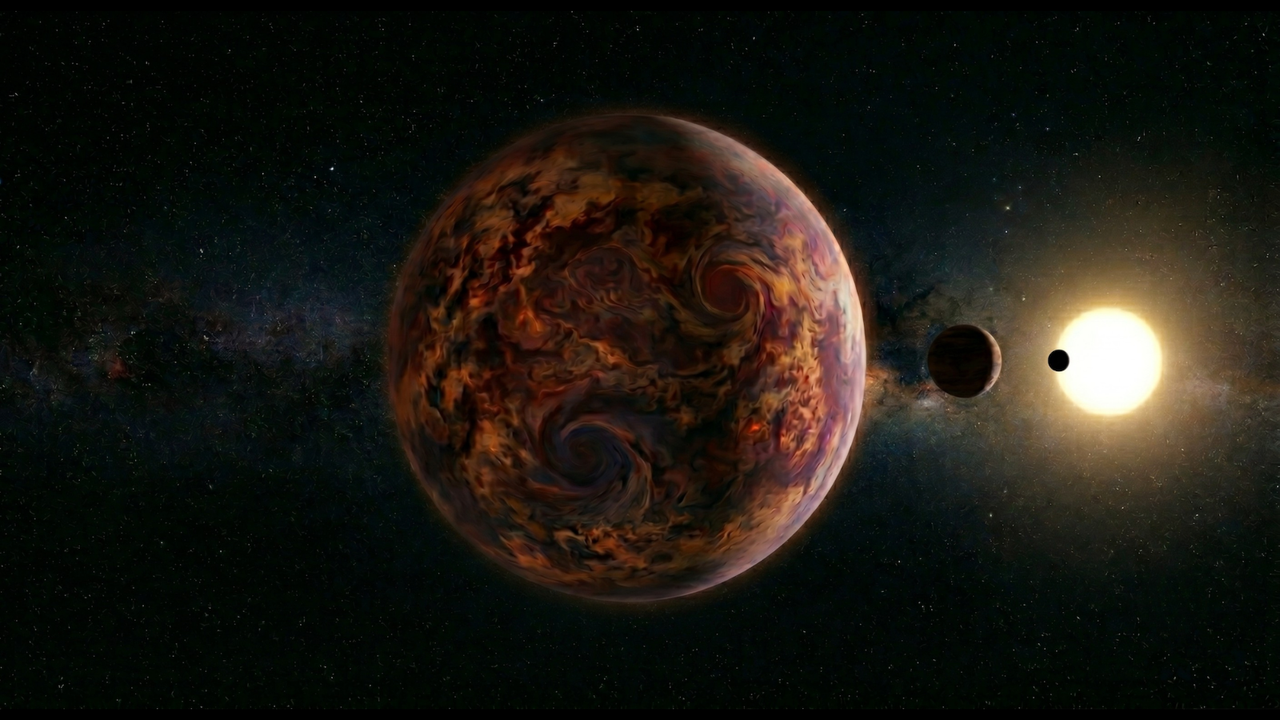
- A study reports an exoplanet system with unusually irregular (“wonky”) orbital behavior.
- The researchers link the system’s configuration to the gravitational effect of an atypical object within the system.
- The findings are presented as evidence for how planets can form in complex environments, including around massive, eccentric objects.
- The discovery is framed as an improvement to understanding of planet formation and orbital evolution processes.
- The reporting is based on the interpretation of the system’s observed orbital dynamics.
This 'improbable' exoplanet system is so wonky because of a weird object within Space
2 months ago"This discovery provides a crucial insight into how planets form even around massive, eccentric objects."
2 months ago
CBC memo tells staff to avoid calling 9/11 “terrorist attacks”
Canadian broadcaster CBC reportedly instructs staff not to describe the 9/11 attacks as “terrorist attacks” in upcoming...

Bushmeat poaching threatens South Africa’s wildlife and tourism economy
Bushmeat poaching reduces wildlife numbers in South Africa, and a North-West University researcher warns this is likely...

Galápagos coral records suggest El Niño events are intensifying with climate warming
Scientists analyze fossil and living coral records from the Galápagos Islands and find evidence that recent El Niño even...