


NASA’s James Webb Space Telescope observes the Cigar galaxy, also known as Messier 82 (M82), revealing previously unseen detail about its stellar population. The galaxy lies about 12 million light-years from Earth and is an edge-on spiral galaxy. Webb’s observations show evidence of intense, rapid star formation occurring within M82, a phase scientists describe as short-lived on astronomical timescales. Sources also note that this elevated star-forming activity is thought to be linked to a past galaxy interaction or merger, which can trigger gas to collapse and form new stars. By pinpointing millions of stars, Webb provides new information about how star formation is distributed and how the galaxy’s structure and environment relate to that process. The findings add to M82’s status as a scientifically significant target for studying how galaxies evolve and how mergers can drive bursts of star birth. The reports emphasize Webb’s ability to resolve stars in regions that were previously difficult to characterize in detail.
James Webb Space Telescope reveals millions of stars in the Cigar galaxy
NASA’s James Webb Space Telescope observes the Cigar galaxy, also known as Messier 82 (M82), revealing previously unseen detail about its stellar population. The galaxy lies about 12 million light-yea...
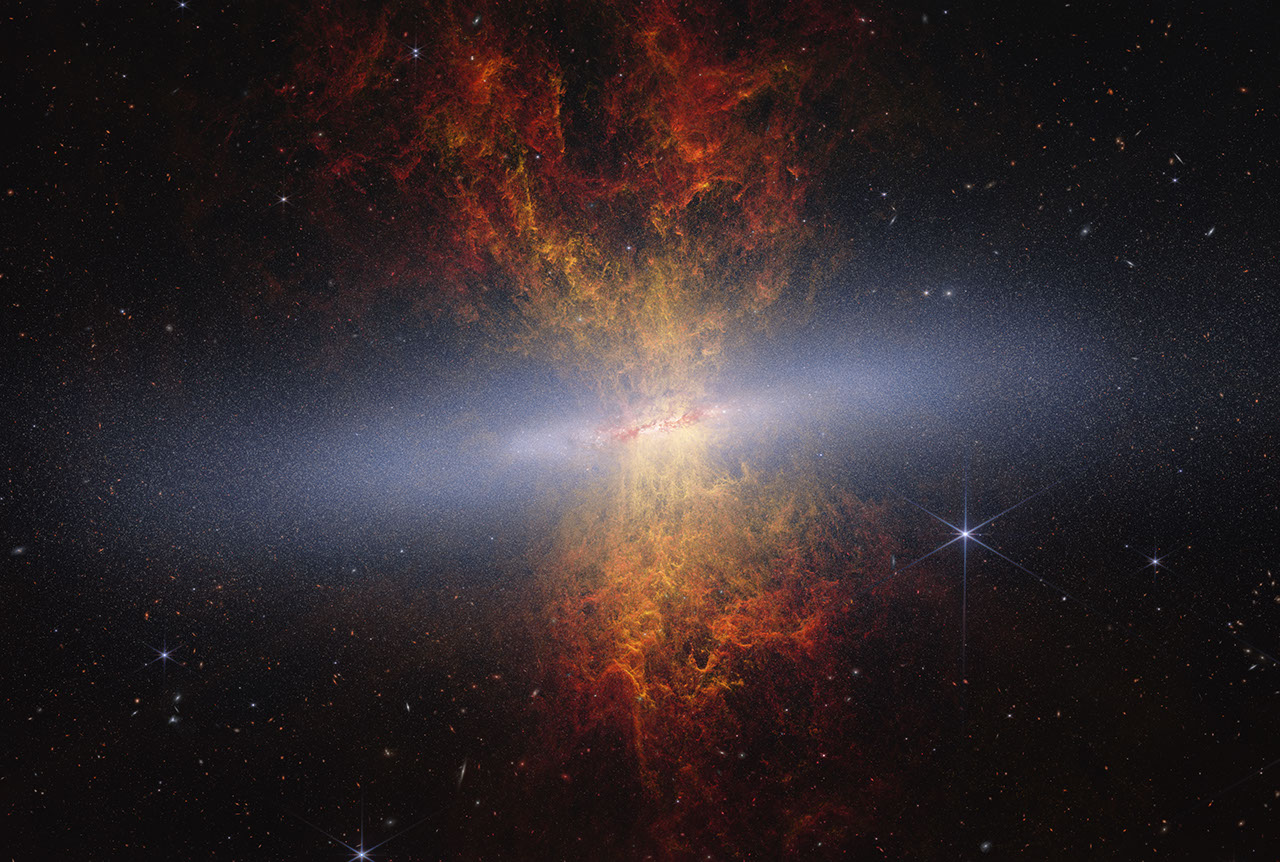
- James Webb Space Telescope observes the Cigar galaxy, Messier 82 (M82).
- M82 is about 12 million light-years away and is viewed edge-on.
- Webb pinpoints millions of stars in M82, revealing previously unseen detail.
- M82 is undergoing rapid, intense star formation.
- The starburst is thought to be triggered by a galaxy merger or interaction and is expected to be short-lived.
Located 12 million light-years away and undergoing rapid star formation, edge-on spiral galaxy Messier 82 (M82) is a scientifically unique sight to behold, and now NASA's James Webb Space Telescope has revealed previously unseen details.
2 months agoLocated 12 million light-years away and undergoing rapid star formation, edge-on spiral galaxy Messier 82 (M82) is a scientifically unique sight to behold, and now NASA’s James Webb Space Telescope has revealed previously unseen details. M82’s intense star formation, thought to be the result of a galaxy merger, will be a short-lived event in astronomical […]
2 months ago
Serbia to hold Ratko Mladić funeral with state and military honours
Serbia says it will arrange the funeral of convicted war criminal Ratko Mladić with state and military honours and will...

Satellite images show Himalayan flash floods erase Nepal-China border crossing
Satellite images released by multiple outlets show that a Nepal–China border crossing in the Himalayas has been complete...

Elizabeth Quigley resigns from BBC citing health problems linked to a neurological condition
Elizabeth Quigley, a BBC journalist and wife of Scottish Deputy First Minister John Swinney, resigns from her role on he...