


Researchers from Curtin University, along with collaborators in Australia, report a more precise age for Earth’s oldest known asteroid impact crater. Multiple outlets say the crater—found at or linked to the North Pole Dome region in Australia—dates to roughly 3 billion years ago. The findings are presented as improved dating of an ancient structure preserved in the Australian outback, allowing scientists to better place early meteorite impacts into Earth’s geological timeline. Coverage emphasizes that, while scientific work continues to refine the broader chronology for the site and surrounding rocks, the impact remains the oldest known example identified on Earth. The reporting also links the result to new evidence about how large space rocks shaped the planet during its earliest history, based on geological dating methods described as “detective work” by the research team. Across sources, the main points are that the crater is identified as Earth’s oldest known asteroid impact, and that the best estimate for its age is about three billion years, with researchers highlighting the role of refined dating in improving the record of early bombardment.
Study dates Earth’s oldest known asteroid impact crater to about 3 billion years ago
Key Points
- Australian researchers using geological evidence date Earth’s oldest known asteroid impact crater to about 3 billion years ago.
- The crater is associated with the North Pole Dome region in Australia (Western Australia).
- The study reports the most precise age yet for the oldest known impact crater on Earth.
- All outlets describe the finding as improving the timeline for Earth’s earliest meteorite impacts.
- The crater is consistently characterized as Earth’s oldest known asteroid impact based on current evidence.
6 sources
4 months ago
47 views

This summary is generated automatically from the reporting of the outlets listed on this page. Follow their links for the full coverage.
How Outlets Covered This Story
PER
PHY
POP
Related Stories

Neena Gupta named to TIME100 Next India 2026 for algebraic geometry work
Mathematician Neena Gupta is selected for the inaugural TIME100 Next India 2026 list, with TIME citing her contributions...
2 sources
8 hours ago

Anthropic researcher claims Claude helped him produce a Riemann Hypothesis proof
An Anthropic researcher, Levent Alpöge, claims he has produced a proof of the Riemann Hypothesis using the company’s Cla...
44 sources
2 days ago
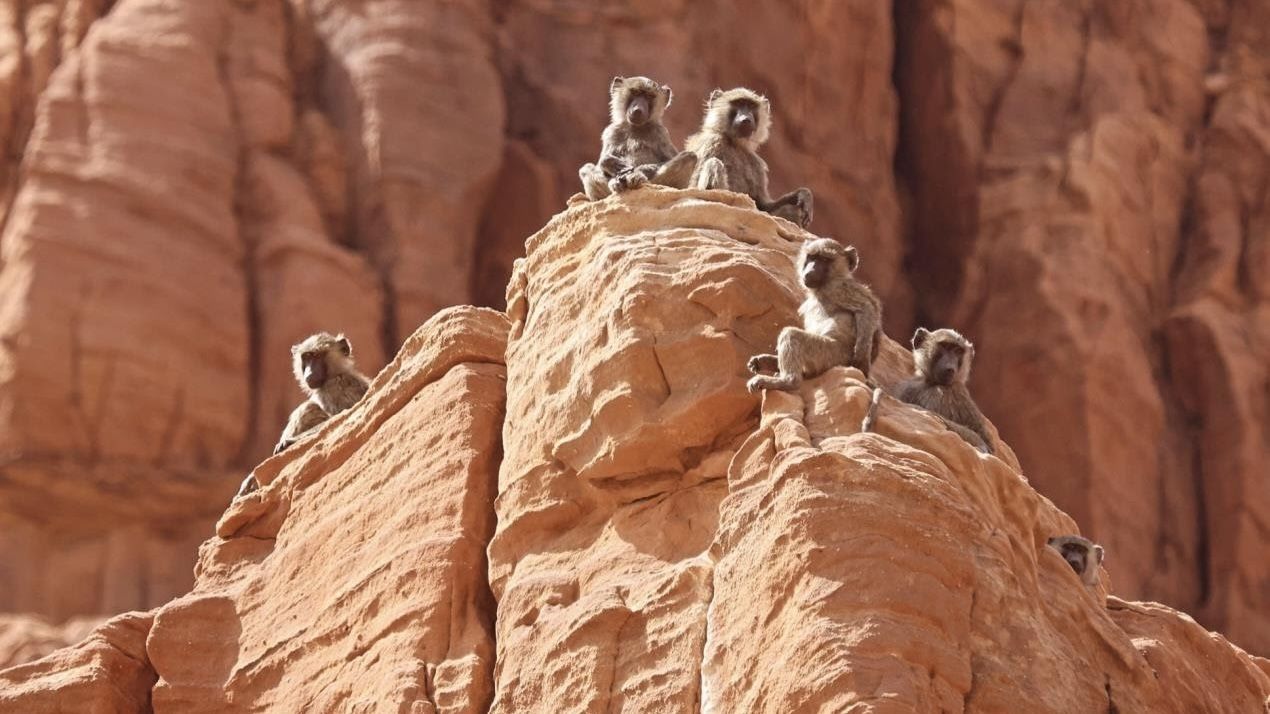
Studies find eagle talon marks on large baboon bones in Chad, challenging assumptions about prey limits
Multiple outlets report that a new study finds evidence—specifically eagle-associated talon marks—on the bones of adult...
7 sources
4 days ago