


The Supreme Court dismisses a plea by an Economically Weaker Sections (EWS) candidate challenging Rajasthan’s medical college fee framework for EWS admission. The petitioner argued that the EWS income ceiling of Rs 8 lakh does not align with the tuition fees charged by private medical colleges in Rajasthan, which are reported to range from about Rs 18.90 lakh to Rs 25 lakh per year. A Bench of Justices B.V. Nagarathna and Joymalya Bagchi upholds a Rajasthan High Court ruling that refused to order fee reductions for EWS students. The Supreme Court holds that private, self-financing institutions cannot be directed to charge fees at the same level as government medical colleges, noting that government colleges receive grants from the State while private colleges follow a different financial model. The Court reiterates that while capitation fees are banned, private colleges may charge regular tuition fees within the applicable regulatory framework. Addressing the affordability concern, the Bench states that assistance mechanisms such as scholarships or subventions are available if students cannot pay. It also observes that EWS reservation operates at the stage of admission and does not, by itself, create a right to concessional fees in private colleges. The Court keeps any question of law open while dismissing the special leave petition.
Supreme Court dismisses EWS fee challenge for private medical colleges in Rajasthan
The Supreme Court dismisses a plea by an Economically Weaker Sections (EWS) candidate challenging Rajasthan’s medical college fee framework for EWS admission. The petitioner argued that the EWS income...
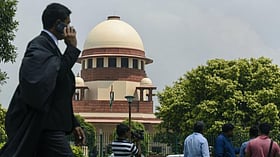
- The Supreme Court dismisses the challenge to Rajasthan’s EWS criteria/fee issue for private medical college admissions.
- The EWS income ceiling at issue is Rs 8 lakh annually; the plea questions its compatibility with private colleges’ high tuition fees.
- The Court states EWS reservation applies at the admission stage and does not automatically entitle candidates to concessional or subsidised fees.
- The Court distinguishes private self-financing colleges from government colleges, noting government colleges receive State grants.
- The Court emphasizes that capitation fees are banned but regular tuition fees allowed under regulatory rules can still be charged, and suggests scholarships/subventions for affordability.
The Supreme Court on Wednesday dismissed a plea filed by an Economically Weaker Sections (EWS) candidate who argued that private medical college fees are beyond the reach of students eligible under the EWS category.Refusing to interfere with a Rajasthan High Court order, a Bench of Justice BV Nagarathna and Justice Joymalya Bagchi upheld the validity of the fee structure fixed by the State Fee Regulatory Committee. The Court reiterated that EWS reservation applies only at the stage of admission and does not automatically entitle candidates to subsidised or concessional fees in private medical colleges, Live Law and Bar & Bench report.“We don't find reason to intervene with the High Court order. Dismissed. Question of law, if any, is kept open,” the Bench said.‘Private Colleges Cannot Charge Government Fees’During the hearing, the petitioner argued that it was unfair to allow private medical colleges in Rajasthan to charge annual tuition fees ranging from ₹18.9 lakh to ₹25 lakh when the EWS income limit is ₹8 lakh a year.However, Justice Nagarathna said private institutions and government colleges operate under different models and cannot be treated alike.“You cannot say private educational institutions shall charge the same as government institution. That cannot be. One person cannot come and say that private is exorbitant, so make it like government. These are self-financing institutes. For government ones... they get grant (subsidies) from the State. There is a vital difference,” she observed.Referring to the TMA Pai judgment, she added, “Capitation fee is banned... but that does not mean general college fees cannot be taken.”The Court also warned that forcing private colleges to charge government-level fees could affect medical education itself.“Assistance of private medical colleges to the State in the field of medical education will stop then... We need doctors,” Justice Nagarathna said.EWS Candidate Said Quota Becomes MeaninglessThe petitioner, a 22-year-old candidate from Rajasthan, appeared for NEET-UG 2025 under the general category and held a valid EWS certificate. He did not opt for private medical colleges in the first two rounds of counselling because of their high fees.After obtaining an interim order from the Rajasthan High Court, he participated in the third round of counselling under the EWS category and submitted preferences for 73 colleges. However, he was allotted a general seat in a private medical college.Before the High Court, he argued that the allotment was arbitrary because EWS seats remained vacant in a college of his choice. He also challenged the fact that EWS candidates were being charged the same fees as general category students.The petitioner contended that the fee structure effectively defeats the purpose of EWS reservation because candidates whose family income is below ₹8 lakh cannot realistically afford annual fees of up to ₹25 lakh.The Rajasthan High Court rejected the argument, noting that the fee structure had been fixed by the State Fee Regulatory Committee in line with the Supreme Court’s ruling in Islamic Academy of Education v. State of Karnataka.The High Court held that EWS reservation operates only at the admission stage and does not create any right to differential or concessional fees in private colleges. It also observed that the absence of a statutory provision mandating fee concessions meant that high fees alone could not be treated as a denial of EWS reservation, even if they limited practical access for eligible students.During the hearing before the Supreme Court, the petitioner’s counsel argued that the constitutional goal of reducing the gap between the rich and the poor must be preserved.“Those who have, will pay,” Justice Nagarathna responded.When counsel submitted that the petitioner could not afford the fees, the judge remarked, “That is different. Get a scholarship or subvention or get into a government college...”ICAI CA Foundation May 2026 Results To Be Declared On July 3; Check Details HereThe petitioner also relied on a National Medical Commission Office Memorandum dated Feb 3, 2022, which recommended that fees for 50% of seats in private medical colleges and deemed universities should be at par with government medical colleges in the concerned state or Union Territory.However, Justice Bagchi noted that Rajasthan had not adopted the memorandum. The Bench was also not persuaded by the argument that the memorandum had statutory force under the National Medical Commission Act.The Supreme Court ultimately declined to interfere with the Rajasthan High Court’s ruling.A separate writ petition challenging the National Medical Commission memorandum relating to government-level fees for 50% of seats in private medical colleges remains pending before the Supreme Court.
2 months agoNew Delhi: The Supreme Court on Wednesday dismissed a plea challenging the Economic Weaker Sections (EWS) criteria in the context of admissions to private medical colleges, refusing to accept the contention that the annual income ceiling of Rs 8 lakh for EWS candidates becomes meaningless when private medical colleges charge tuition fees running into lakhs of rupees. A Bench of Justices B.V. Nagarathna and Joymalya Bagchi declined to interfere with a Rajasthan High Court judgment that had rejected the challenge mounted by Rajasthan domicile candidate Harshvardhan Singh, who had argued that the fee structure of private medical colleges effectively rendered EWS reservation illusory for economically weaker students.[Harshvardhan Singh vs State of Rajasthan]Singh had challenged the EWS criteria, noting that private medical college tuition fees (ranging between Rs. 18.9 to 25 Lakhs per year) heavily contradict the Rs. 8 Lakh EWS income limit.Rajasthan HC had held that the fee structure… pic.twitter.com/AgYcR2AgT7— Bar and Bench (@barandbench) June 24, 2026 During the hearing, the Justice Nagarathna-led Bench orally observed that self-financing private institutions could not be compelled to charge fees at par with government medical colleges merely because seats are reserved for EWS candidates.The apex court highlighted the distinction between government and private educational institutions, remarking that government colleges receive financial support from the public exchequer while private colleges operate on a self-financing model. “These are self-financing institutes. For government ones, they get grants from the State. There is a vital difference,” the Justice Nagarathna-led Bench said.It further said that while capitation fees are prohibited, that does not mean private colleges cannot charge regular tuition fees fixed under the applicable regulatory framework.Uttar Pradesh: Yogi Govt Unveils ‘Teachers First’ Education Reform Roadmap; Council Schools To Reopen From June 25 When the petitioner argued that EWS candidates from families earning less than Rs 8 lakh annually could not realistically afford annual tuition fees ranging between Rs 18 lakh and Rs 25 lakh in private medical colleges, the top court suggested that financial assistance mechanisms were available. “If you are unable to pay, get a scholarship,” the Justice Nagarathna-led Bench said.The special leave petition (SLP) arose from a Rajasthan High Court judgment delivered in May this year.The petitioner, an EWS candidate who appeared in NEET-UG 2025, had contended that private medical colleges in Rajasthan were charging tuition fees between Rs 18.90 lakh and Rs 25 lakh per annum despite the EWS income ceiling being fixed at Rs 8 lakh annually.#BREAKING "If you are unable to pay, get a scholarship": #SupremeCourt dismisses plea questioning how #EWS quota's Rs 8 lakh income cap squares with private medical colleges charging up to Rs 25 lakh a year in feesJustice BV Nagarathna says self-financing colleges can't be made… pic.twitter.com/cOofzLLksm— Bar and Bench (@barandbench) June 24, 2026 He had argued that charging EWS candidates the same fees as general category candidates defeated the purpose of the 10 per cent reservation introduced through the Constitution (103rd Amendment) Act, 2019, and sought directions for affordable fee structures for EWS students.Rejecting the plea in May this year, a Division Bench of Justices Arun Monga and Sandeep Shah of the Rajasthan High Court had held that EWS reservation operates only at the stage of admission and does not, in the absence of any statutory provision, create a right to concessional fees in private medical colleges.The High Court had observed that the fee structure of private medical colleges in Rajasthan had been fixed by the State Fee Regulatory Committee in accordance with the principles laid down by the Supreme Court in the Islamic Academy of Education v. State of Karnataka judgment, and that the underlying fee fixation order itself had never been challenged by the petitioner.Maharashtra Education Minister Dadaji Bhuse Lauds Tribal School For 12-Hour Learning, Innovative Practices It further ruled that no statutory provision or binding policy in Rajasthan entitled EWS students to fee relaxation and that a National Medical Commission office memorandum relied upon by the petitioner was merely recommendatory and had not been adopted by the state government.The Rajasthan High Court also found that all available EWS seats in the concerned college had already been exhausted during earlier rounds of counselling and that subsequent allotments were made in accordance with the applicable counselling regulations.(Except for the headline, this article has not been edited by FPJ's editorial team and is auto-generated from an agency feed.)
2 months agoThe Supreme Court has dismissed a plea challenging the Rs 8 lakh income limit for EWS medical college admissions, upholding Rajasthan's fee structure. Justices noted private colleges, being self-financing, cannot match government fees. While capitation fees are banned, general college fees are permissible. The court emphasized private institutions' crucial role in medical education, suggesting scholarships or subventions for affordability concerns. The EWS quota applies to admission, not fee reduction
2 months ago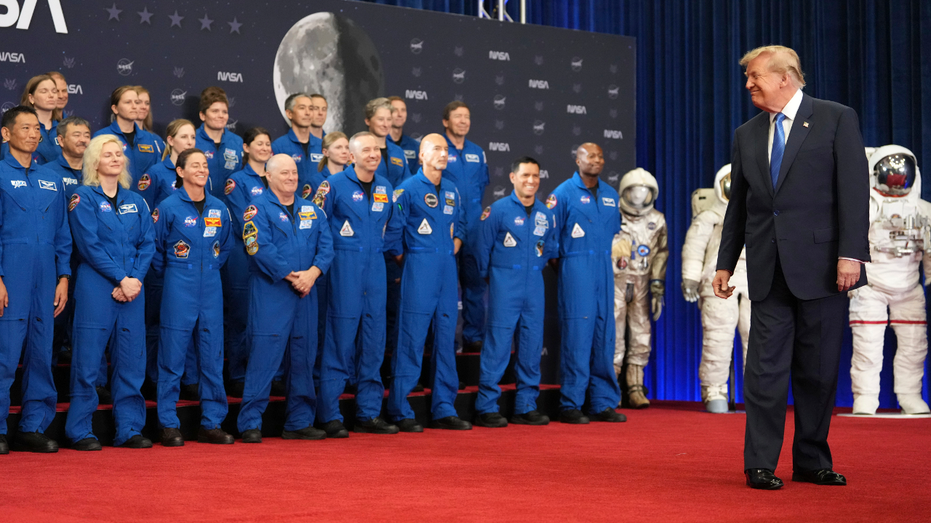
Trump signs order creating U.S. Space Academy for Space Force, NASA, and civilian space sector
President Donald Trump signs an executive order creating the U.S. Space Academy, a new space-focused school intended to...
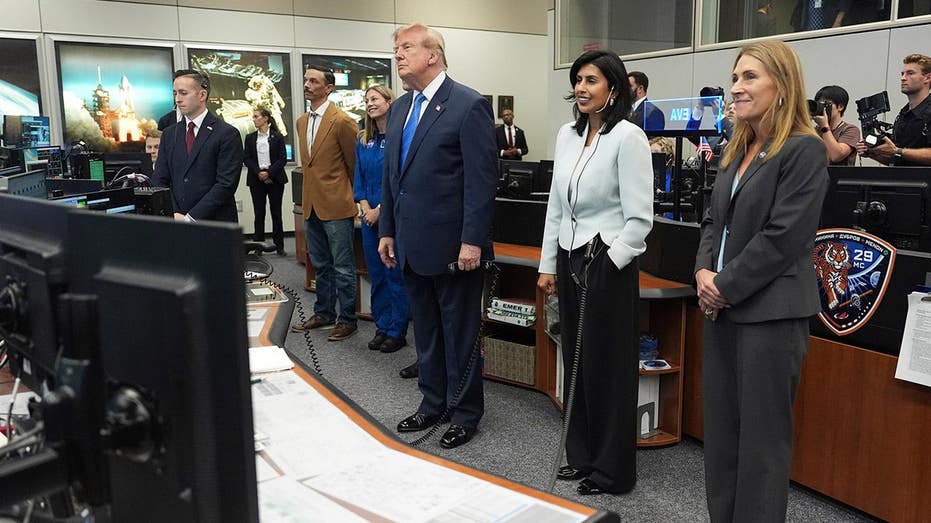
Trump speaks with ISS crew during NASA Mission Control visit in Houston
President Donald Trump speaks by phone with astronauts aboard the International Space Station during a visit to NASA fac...

Serbia to hold state-honours funeral for Ratko Mladić after his death in The Hague
Serbian officials say Ratko Mladić, the former Bosnian Serb commander convicted of genocide and other war crimes, has di...