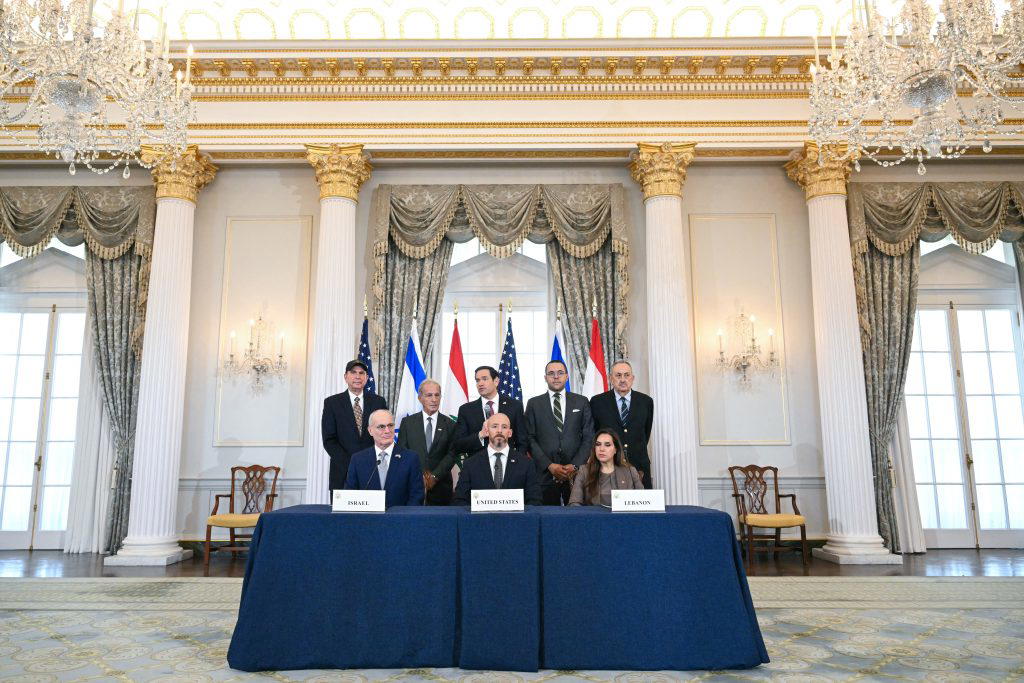
Israel, Lebanon and the United States sign a trilateral framework in Washington to reduce tensions and end ongoing hostilities described as a “second front” of a wider Middle East war. The agreement sets out a path toward “lasting peace and security” and includes steps to formally conclude any state of war between Israel and Lebanon. Under the framework, progress toward resolving outstanding issues is to occur through direct bilateral talks, mediated and supported by the United States.
A central element is “verified disarmament” of non-state armed groups in Lebanon, with Lebanese Armed Forces (LAF) aiming to restore effective sovereignty over Lebanese territory after the process begins and is verified. The framework provides for a phased Israeli redeployment out of Lebanon. It establishes “pilot zones” where Lebanese forces gradually assume full and effective security responsibility, with two initial zones agreed and additional zones to be set by mutual consent. Internationally supported reconstruction is to begin, and Lebanese civilians are intended to be able to return safely to areas under exclusive Lebanese state control.
Israel says its actions are linked to threats posed by non-state armed groups, particularly Hezbollah, and it states it has no territorial ambitions in Lebanon. Both governments also plan working groups and parallel engagement tracks to draft a comprehensive peace and security agreement.