


A new preprint paper examines the real physics behind the long-standing sci-fi idea of placing giant mirrors in space. The work is authored by Shauna Sallmen of the University of Wisconsin–La Crosse and Eric Korpela of UC Berkeley. While giant mirrors have often been discussed as potential passive technosignatures—observable signs of technology that does not actively emit signals—researchers say there has been limited effort to test the underlying orbital mechanics and related dynamics that such structures would require. The study is motivated by the need to understand what astronomers should look for if giant mirrors exist elsewhere. By focusing on orbital behavior, the authors aim to clarify how large mirror systems could move and persist in space, and how that would affect detectability. The outlets reporting on the preprint agree that, although such mirrors are not yet feasible with current technology, modeling their physics is a necessary step toward interpreting any future observational evidence. The paper is available as an arXiv preprint.
Study models orbital mechanics of hypothetical giant mirrors in space
A new preprint paper examines the real physics behind the long-standing sci-fi idea of placing giant mirrors in space. The work is authored by Shauna Sallmen of the University of Wisconsin–La Crosse a...

- A preprint on arXiv investigates the orbital mechanics of hypothetical giant mirrors in space.
- The authors are Shauna Sallmen (University of Wisconsin–La Crosse) and Eric Korpela (UC Berkeley).
- The work addresses a gap in prior research on the physics of space-based mirror concepts.
- Giant mirrors are discussed as a potential passive technosignature.
- The study is intended to inform what researchers might look for observationally.
Giant mirrors in space have been a staple of science fiction for decades. But so far, there's been very little work looking at the actual physics behind the concept—possibly because we're still so far from making them ourselves. Still, they could potentially serve as a passive technosignature if we manage to find one. In order to do that, though, we have to understand what we're looking for. That is the purpose of a new paper, available as a preprint on arXiv, by Shauna Sallmen of the University of Wisconsin–La Crosse and Eric Korpela of UC Berkeley.
1 month agoGiant mirrors in space have been a staple of science fiction for decades. But so far there’s been very little work looking at the actual physics behind the concept - possibly because we’re still so far from making them ourselves. Still, they could potentially serve as a passive technosignature, if we manage to find one. In order to do that, though, we have to understand what we’re looking for. That is the purpose of a new paper, available in pre-print on arXiv, by Shauna Sallmen of the University of Wisconsin - LaCrosse, and Eric Korpela of UC Berkeley.
1 month ago
General Mills ends artificial colors in U.S. cereal lineup, targets full removal by 2027
General Mills says it stops using artificial coloring in its U.S. cereal portfolio. The company says it has moved all U....
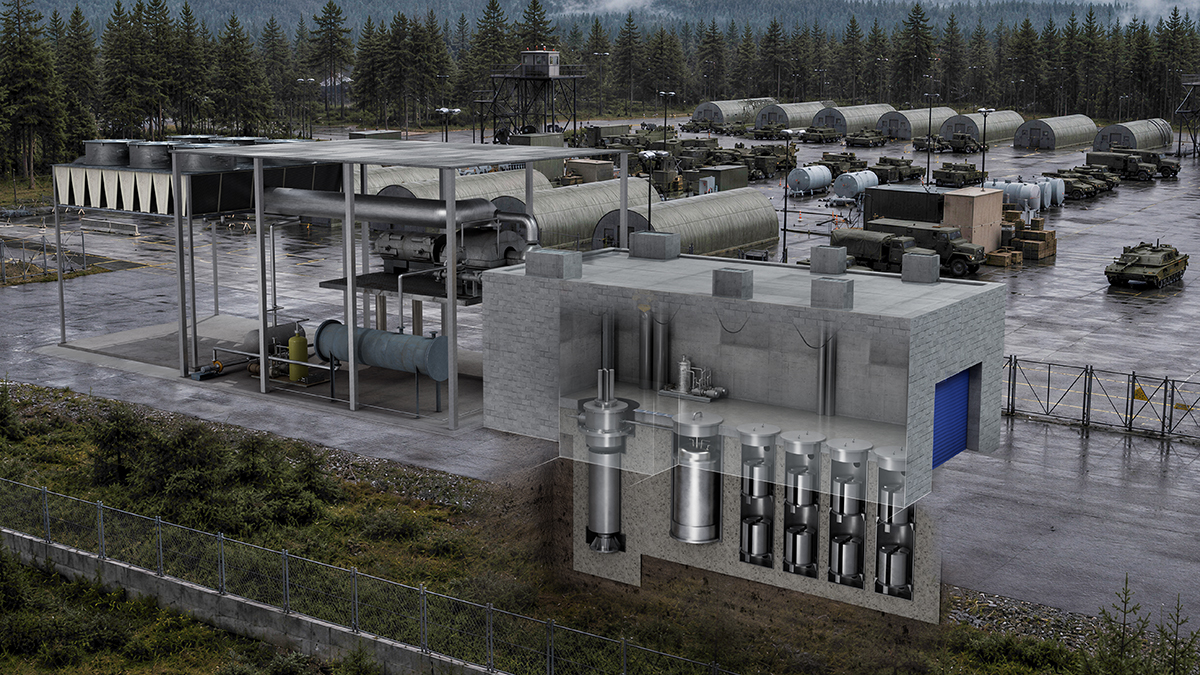
US Army awards contracts to five firms for on-base microreactors under Janus
The US Army selects five firms for agreements to build on-base microreactors, part of a broader push to provide nuclear-...

Galápagos snapdragon population rebounds from six wild plants after 30 years of conservation
Conservation efforts are leading to a rebound of the critically endangered Galápagos snapdragon (Galvezia leucantha subs...