


The Gujarat High Court rules that registration alone is not sufficient to validate a Hindu marriage if the required rituals and ceremonies are not performed. In its order, the court emphasizes that, for a Hindu marriage to obtain spiritual, social and legal standing, essential ceremonies must be carried out. The court refers to religious rites such as saptapadi, describing them as conferring the marriage with the character of a sacrament and samskara. It also notes that customary and traditional rituals may vary across regions and cultures, but they generally serve a transformative and purifying purpose within the marital process. The court’s reasoning ties the legal recognition of a Hindu marriage to the performance of key ceremonies rather than to documentation or registration procedures alone. The ruling clarifies that statutory or administrative steps cannot substitute for the religious ceremonies that are considered fundamental to the marriage under Hindu customary practice. The court therefore treats the absence of essential rituals as a factor that prevents the marriage from being treated as valid, even if it has been registered.
Gujarat High Court says Hindu marriage registration alone cannot validate without essential rituals
The Gujarat High Court rules that registration alone is not sufficient to validate a Hindu marriage if the required rituals and ceremonies are not performed. In its order, the court emphasizes that, f...
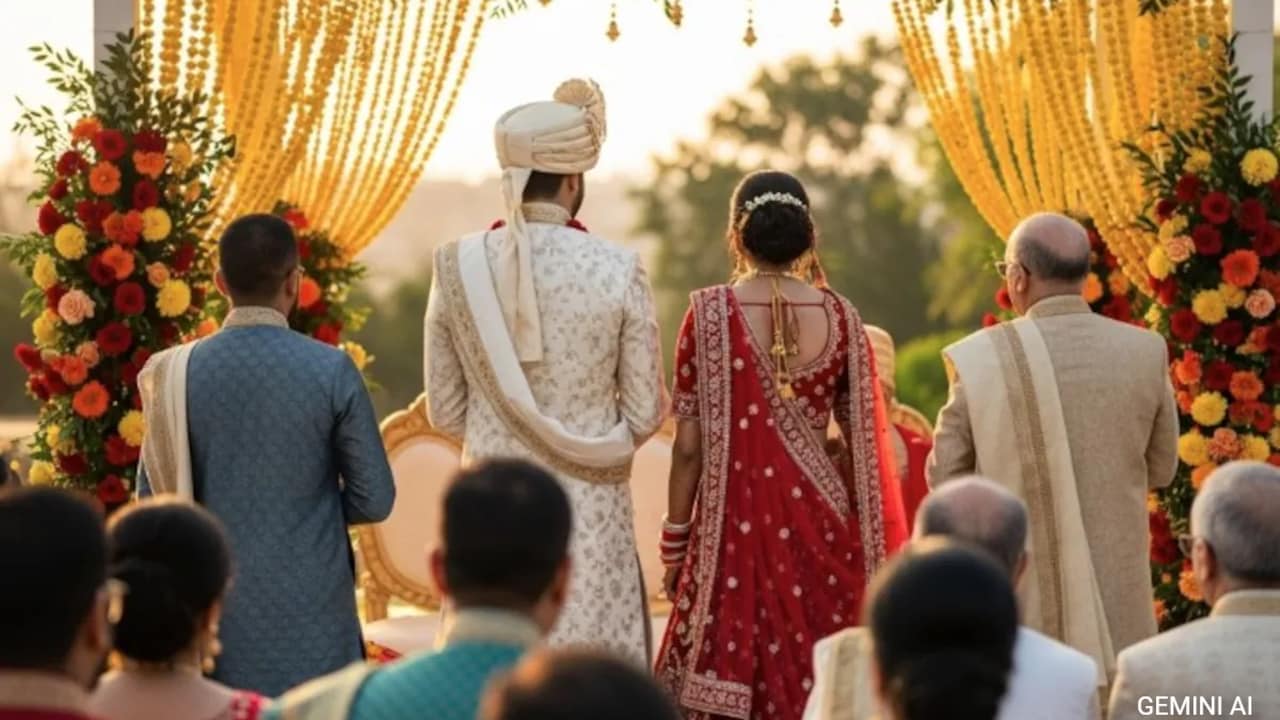
- The Gujarat High Court holds that registration alone does not validate a Hindu marriage if essential rituals are not performed.
- The court says key ceremonies such as saptapadi are central to a Hindu marriage’s validity.
- It links the performance of rituals to a Hindu marriage’s status as a sacrament/samskara.
- The court notes rituals can vary geographically and culturally but still must be performed to meet essential requirements.
- The ruling indicates documentation/registration cannot replace the required ceremonies for legal recognition.
Ceremonies like saptapadi provide a marriage with the spiritual, social, and legal status as a sacrament and samskara, the court said
1 month agoThe customary traditional rituals, despite their geographical and cultural variations, are believed to purify and transform the spiritual being of an individual, the HC said in its order.
1 month agoGujarat High Court says Hindu marriage needs essential ceremonies for legal validity
1 month ago
Girl and man killed in German school attack; suspect arrested
Police respond to a reported attack at a secondary school in Gosen-Neu Zittau, near Berlin, and a schoolgirl and a man a...

Two men arrested after alleged dangerous driving in head-on crash
An Audi crashes head-on with another car after the Audi travels onto the wrong side of the road, following what police d...

Mike Ashley calls Andy Burnham’s high street plans “delusional”
Businessman Mike Ashley says Andy Burnham’s plans to revive the high street are “delusional,” according to multiple outl...