
Recent earthquakes in Venezuela renew attention on the limits of existing earthquake early warning systems, which can provide alerts but cannot reliably prevent damage. Across accounts, researchers note that even with years of progress—including improved computer modeling and artificial intelligence methods, satellite-based monitoring, and denser ground-based seismic networks—earthquakes often still occur with little or no warning for people in affected areas. The central challenge is that warning depends on quickly detecting a triggering event and accurately estimating key parameters in time to broadcast useful alerts. When the necessary information is incomplete or when seismic waves reach populations faster than alerts can be issued, warnings may be delayed or fail to help. Sources emphasize that while early warning technology can sometimes reduce impacts by giving seconds to minutes of notice, it is not a guarantee. They also point to scientific and operational constraints, such as variability in earthquake behavior and the difficulty of forecasting exactly when and where an earthquake will occur. Together, the reports present early warning as a developing capability that can help in some scenarios, while still falling short of fully predicting earthquakes.
Venezuela earthquakes underscore challenges of earthquake early warning systems
Recent earthquakes in Venezuela renew attention on the limits of existing earthquake early warning systems, which can provide alerts but cannot reliably prevent damage. Across accounts, researchers no...

- Earthquakes in Venezuela renew focus on the limitations of earthquake early warning systems.
- Despite advances such as AI, satellite monitoring, and expanded seismic networks, alerts are not consistently issued in time.
- Scientific uncertainty and variable earthquake behavior make accurate prediction difficult.
- Early warning systems can provide some lead time in certain cases, but they do not prevent all earthquakes from being detected too late to reduce impacts.
Earthquakes still arrive without warning. That is the hard truth scientists have been forced to accept, despite a decade of advances in artificial intelligence, satellite monitoring and dense seismic networks.
2 hours agoWhy it’s still difficult to accurately predict earthquakes.
9 hours ago
FBI says all Nancy Guthrie ransom notes are fake after disappearance investigation
The FBI says three ransom notes connected to the disappearance of Nancy Guthrie are fake, according to multiple reports....
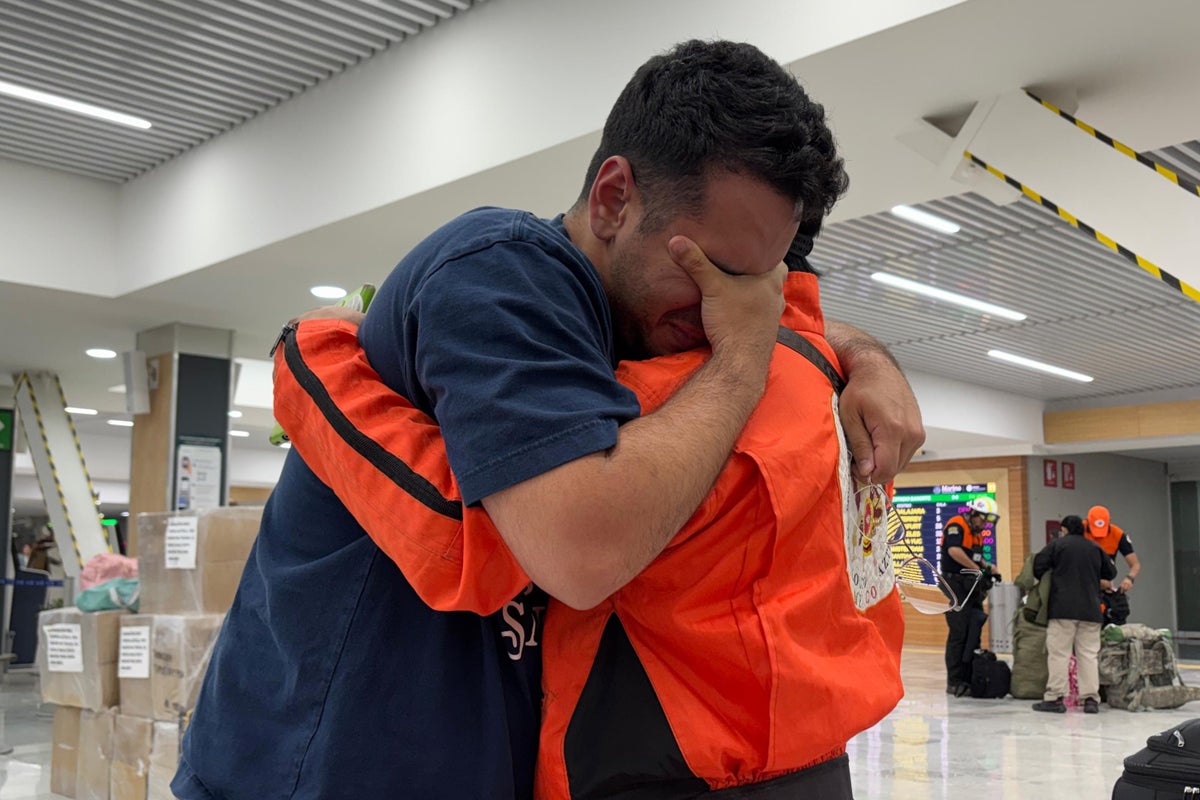
Mexico’s Topos Azteca rescue brigade heads to Venezuela after major earthquakes
Mexico’s international search-and-rescue brigade, Topos Azteca, is traveling to Venezuela to help respond to the afterma...

Death toll rises in Venezuela as rescuers search for survivors after twin earthquakes
Rescue teams continue searching for survivors after two powerful earthquakes strike Venezuela this week, with authoritie...