


Research reported by multiple outlets says honeybee queens can pass pesticide contamination to their eggs through a process scientists call “maternal offloading.” The studies describe how worker bees initially remove much of the contamination from the colony environment, but some pesticides remain in the queen’s body. Over time, the queen absorbs the remaining compounds and concentrates them in her ovaries. When she lays eggs, the contamination is carried into developing embryos. One explanation discussed in the reporting is that this behavior may function as a protective strategy for the queen herself under chronic pesticide exposure, even as it exposes her offspring. Because queens can lay large numbers of eggs, the effect can be distributed across many developing bees, potentially increasing long-term risk to colony health. The findings raise questions about how pesticide exposure influences reproduction in honeybee colonies and what that could mean for colony survival and, more broadly, food production that depends on pollinators.
Honeybee queens transfer pesticide contamination to eggs, study finds
Research reported by multiple outlets says honeybee queens can pass pesticide contamination to their eggs through a process scientists call “maternal offloading.” The studies describe how worker bees...

- Honeybee queens can take up pesticides from chronic exposure and pass contamination into eggs, a process described as “maternal offloading.”
- Worker bees remove some pesticide contamination, but not all of it reaches the queen.
- Researchers report pesticides accumulate in the queen’s ovaries and then transfer into developing eggs.
- The effect can be spread across many eggs when queens lay prolifically.
- Studies suggest this could pose a long-term risk to colony survival and pollinator-dependent food systems.
Honeybee queens are passing pesticide contamination to their eggs, a phenomenon termed 'maternal offloading' by UC Davis researchers. While worker bees initially filter most pesticides, the queen's body absorbs the remainder, concentrating it in her ovaries and then into developing eggs. This slow accumulation, spread across more eggs when a queen lays prolifically, could pose a long-term threat to colony survival and global food production.
1 month agoWorker bees are the first line of defense when it comes to removing contamination in honeybee colonies, but a queen has her ways, too. A honeybee queen facing chronic exposure to pesticides will take up that contamination and pass it along to her eggs, a process researchers call maternal offloading.
1 month ago
UNICEF says women and children released after kidnapping in Haiti attack
Women and children who were kidnapped during a deadly attack on a farming community near Haiti’s capital are released, U...

Haitian gang releases women and children after mass kidnapping and deadly attack
A Haitian gang releases women and children after a mass kidnapping and a deadly attack on a community near Port-au-Princ...
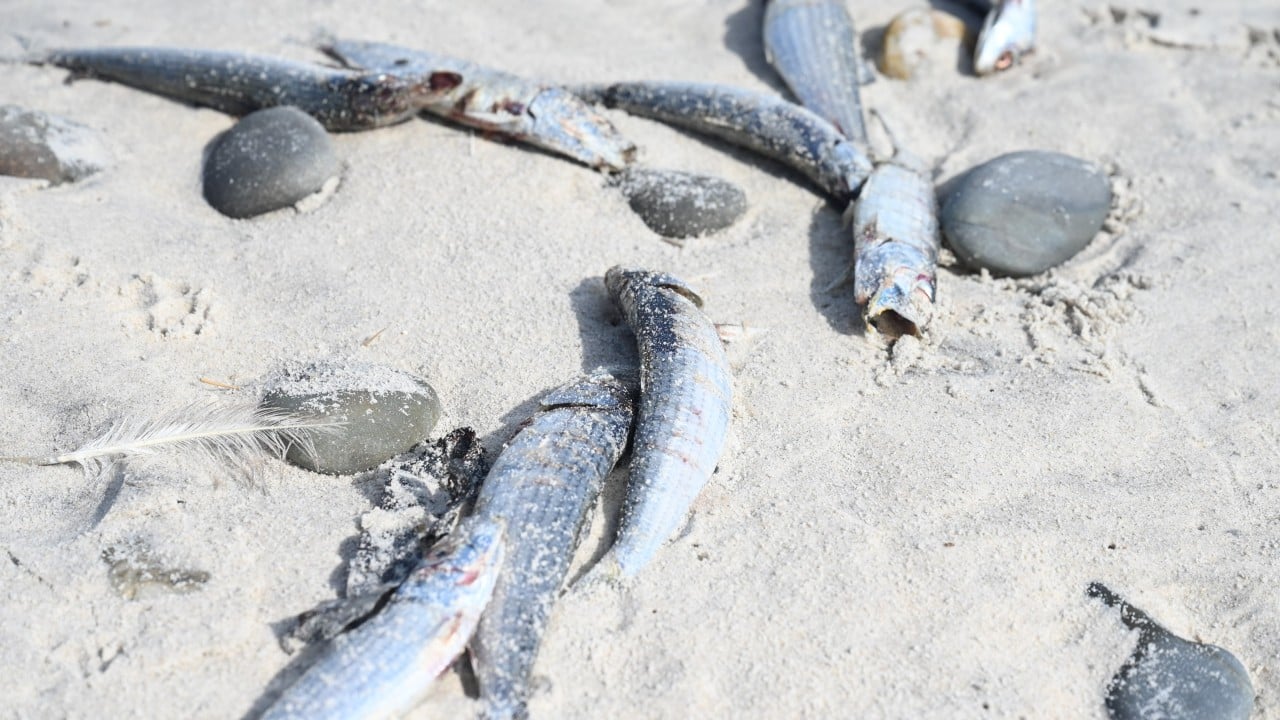
Scientists investigate herpes virus after mass sardine deaths along South Africa’s coasts
Scientists in South Africa investigate why large numbers of sardines are washing up dead or dying along parts of the cou...