


NASA and Phys.org report a new image from the Hubble Space Telescope showing the globular cluster Messier 3 (M3). The picture highlights more than 500,000 stars, which appear in red, white, and blue colors in the released visualization. M3 is described as one of the Milky Way’s most massive globular clusters—an approximately spherical collection of stars held together by gravity. Sources explain that globular clusters consist of ancient stars that formed around the same time from the same cloud of gas, giving the stars similar ages. The outlets add that globular clusters are found in the Milky Way’s outer regions, with about 150 known examples. NASA characterizes the image as a “star-spangled” cosmic scene and notes that the release aligns with the United States’ 250th anniversary. Overall, both sources focus on Hubble’s ability to resolve individual stars within M3 and provide a detailed view of a long-lived stellar population in the Milky Way.
Hubble captures color-detailed view of globular cluster Messier 3
NASA and Phys.org report a new image from the Hubble Space Telescope showing the globular cluster Messier 3 (M3). The picture highlights more than 500,000 stars, which appear in red, white, and blue c...
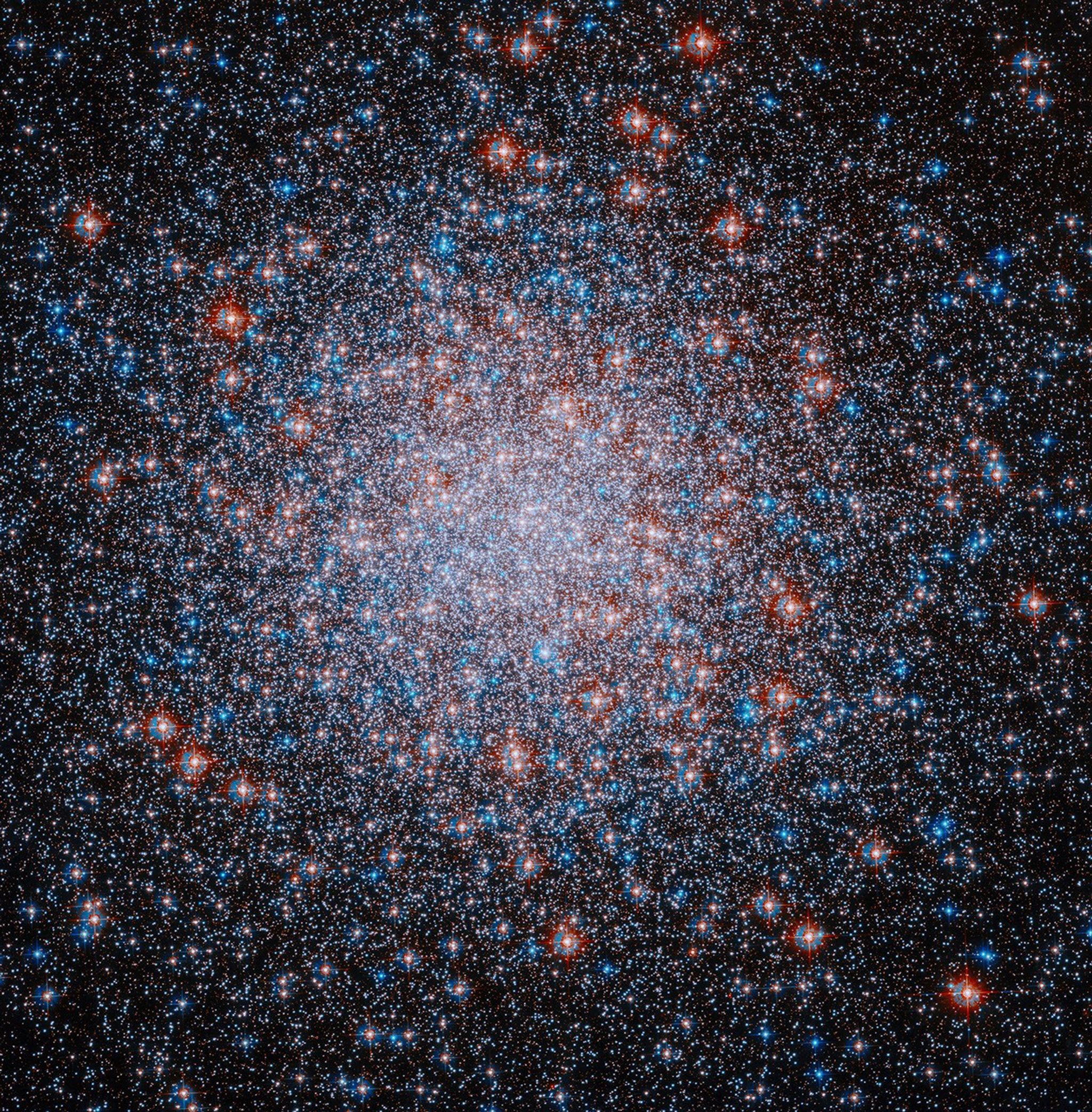
- Hubble Space Telescope imagery shows the globular cluster Messier 3 (M3).
- The image displays more than 500,000 stars in red, white, and blue colors in the released visualization.
- Messier 3 is described as one of the Milky Way’s most massive globular clusters.
- Globular clusters are gravitationally bound, roughly spherical collections of stars that formed at similar times from the same gas cloud.
- Around 150 globular clusters are known to surround the outer regions of the Milky Way.
More than 500,000 stars blaze red, white, and blue in this image from NASA's Hubble Space Telescope, released in celebration of the United States' 250th anniversary. The image showcases Messier 3 (M3), one of the Milky Way galaxy's most massive globular clusters, or spherical collections of gravitationally bound stars. Globular clusters are made up of ancient stars that formed at roughly the same time from the same cloud of gas, giving those stars similar ages. Around 150 known globular clusters are sprinkled around the outer regions of the Milky Way.
1 month agoMore than 500,000 stars blaze red, white, and blue in this NASA Hubble image of the globular cluster Messier 3 (M3).
1 month ago
Young collectors drive renewed interest in vinyl, CDs and other physical music formats
Young people are increasingly collecting and buying physical music media such as vinyl records, CDs and even cassettes,...
NASA’s Nancy Grace Roman Telescope prepares for launch on a SpaceX Falcon Heavy
NASA is preparing to launch the Nancy Grace Roman Space Telescope on Sunday, Aug. 30, 2026, from NASA’s Kennedy Space Ce...

Haitian gang releases women and children after kidnapping during deadly Port-au-Prince attack
A gang in Haiti releases some of the people it kidnapped after a deadly attack on a community near Port-au-Prince nearly...